Scale And Proportion: Your Key To Better And Easier Decorating
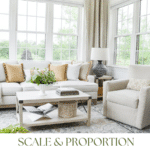
Decorating becomes so much easier when you understand a few key principles of interior design. Today, I’m breaking down scale and proportion in decorating so you can create a home that looks beautiful, polished, and pulled together.

When it comes to designing a room you love, it is not about how much you spend. It is about how all the elements in your space work together. That is where scale and proportion come in. These two simple principles make the difference between a room that feels off and one that looks just right.
You might think design terms like scale and proportion sound complicated or even intimidating. But here is the good news: they are not. Once you understand what they mean and how to use them, you will see your decorating confidence soar. And best of all, you will start to notice results in your own home right away.
So, are you ready to add scale and proportion to your decorating toolbelt? These easy, repeatable techniques will help you create a space that feels harmonious, balanced, and beautiful every single time.
This post may contain affiliate links. See our Discloser Policy.
Welcome To Decorating School
Decorating School is a free resource for the everyday home decorator who wants to create a comfortable, beautiful home that meets the needs of their unique family. Every decorating post is filled with tried-and-true interior design tips and advice, broken down into easy, repeatable, and actionable steps.
What Is Scale

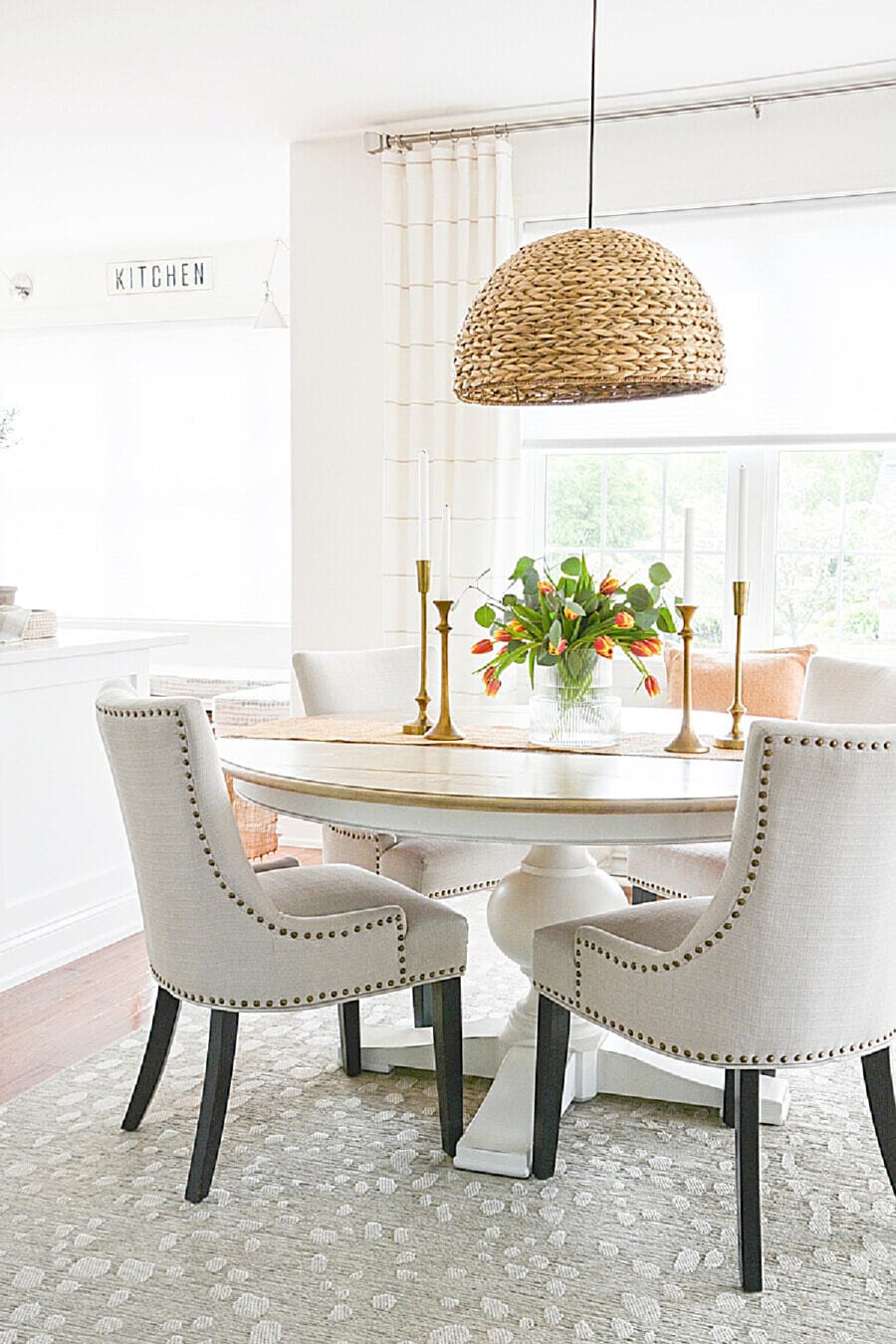
SCALE refers to how an item fits a space.
Scale refers to the size of one item compared to the space it lives in. It is about choosing furnishings and decor that feel “just right” for the room. If something is too large, it can overwhelm the space. If it is too small, it can look lost or out of place.
Here are a few simple examples of scale in decorating:
- A large sectional sofa in a spacious, open-concept living room
- A small bistro table in a cozy breakfast nook
- A round 60-inch dining table in a medium-sized square dining room
- A king-size bed in a generously sized master bedroom
- A compact loveseat in a small apartment living area
- An oversized armchair in a large reading corner
- A long, narrow console table in a wide hallway
- A tall, slender bookcase in a small home office
- A wide coffee table in front of a large sofa
- A deep soaking tub in a spacious bathroom
This is a simplified way to look at scale, but it gives you a good working definition. Once you begin to notice how the size of a piece relates to the size of a room, decorating decisions become so much easier.
What Is Proportion
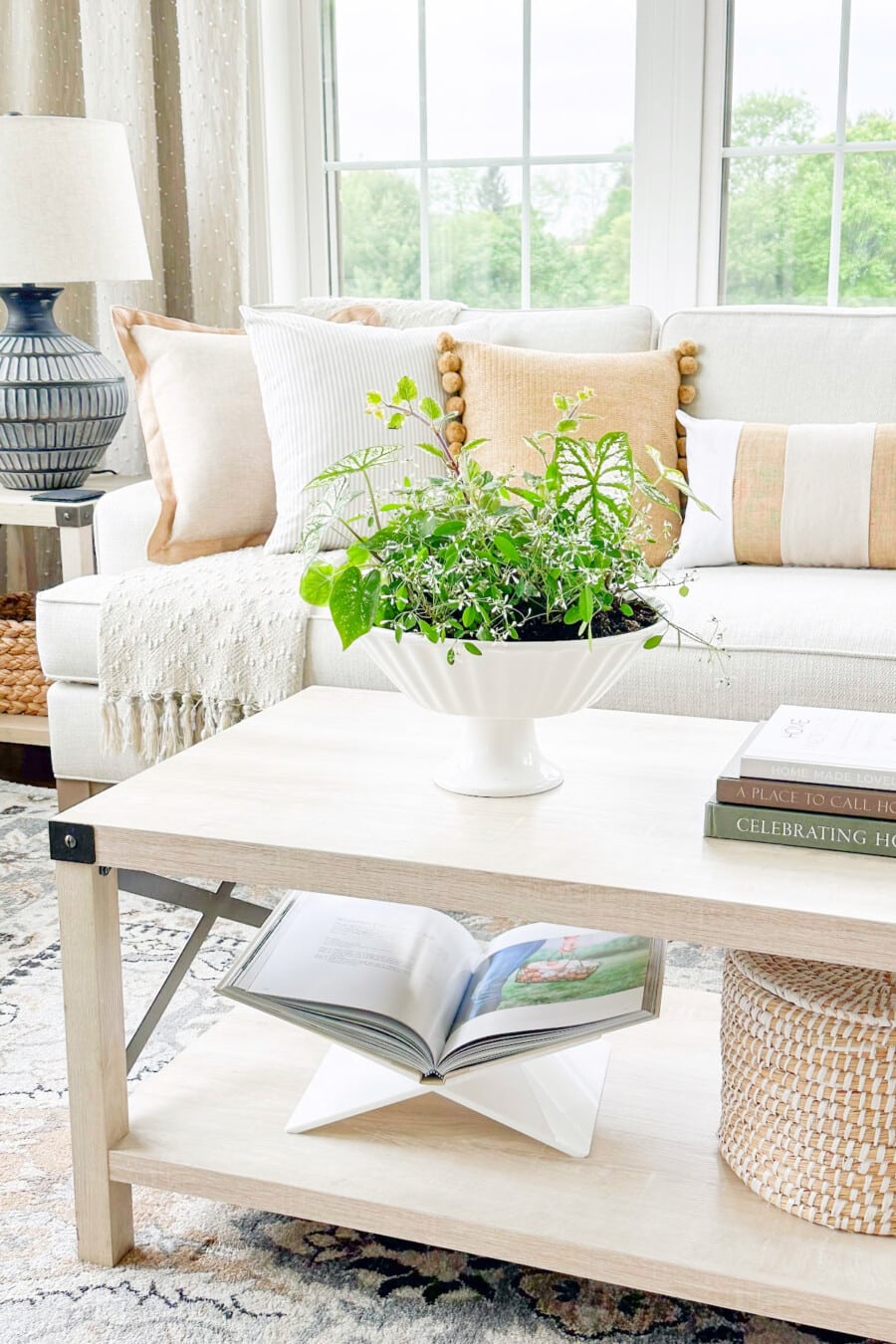
PROPORTION is how different objects relate to one another in a room.
Proportion is all about how the size and shape of one item relates to another within a space. Think of it as the relationship between pieces. When the proportions feel right, a room looks balanced and comfortable. When they are off, the eye knows it immediately.
Here are some easy examples of proportion in decorating:
- Pair a large sofa with equally substantial armchairs to maintain visual balance
- Place a tall floor lamp beside a high-back chair for complementary height
- Hang a series of small artworks together to create a balanced gallery wall
- Use a large coffee table with a big sectional sofa for scale compatibility
- Match the height of bedside tables to the height of the bed for visual harmony
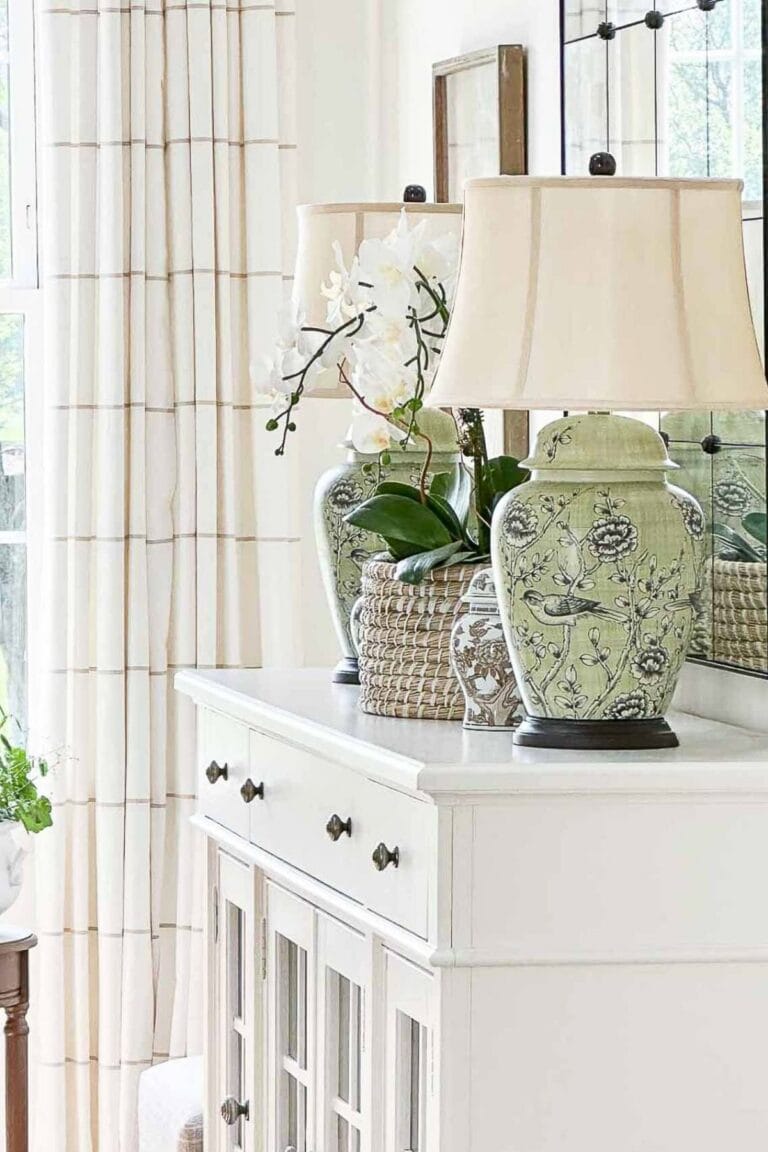
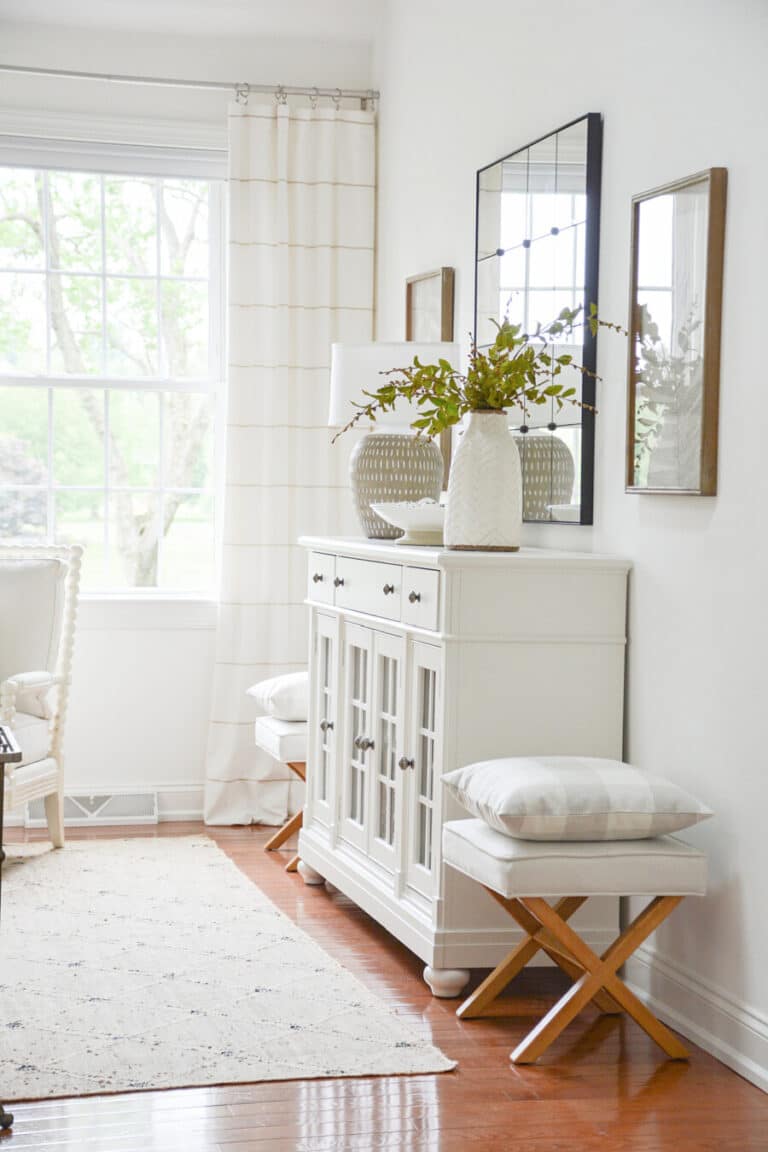
- Choose table lamps that are proportionate to the size of the side tables
- Place a wide mirror above a wide console table for balanced proportions
- Use large throw pillows on a big sofa to keep the proportions consistent
- Pair a tall headboard with high ceilings to complement the room’s height
- Place a sizable centerpiece on a large dining table to maintain scale and proportion
This is a very simple way of looking at proportion, but it works. Once you begin noticing how furnishings and accessories relate to one another, decorating becomes much less stressful and so much more fun.
Why You Should Use Scale And Proportion Interchangeably

Unless you are working as a professional interior designer, it is not necessary to separate scale and proportion in your mind. What matters most is understanding how these principles work together to create beauty and harmony in your home.
For practical decorating purposes, you can think of scale and proportion as the same concept. Both guide you in choosing furnishings and accessories that look balanced in a room and feel comfortable to live with. When the size of items works well in relation to the space and to one another, the result is a room that feels natural and welcoming.
Easy To See Examples
Have you ever watched a circus act with a clown car? The doors of a tiny car swing open and, one after another, clowns keep piling out. It is funny because something feels off. The car is the wrong scale and proportion for so many clowns.
Now, picture a grand piano in a tiny studio apartment. Not so funny. The apartment does not feel right because the piano overwhelms the space, unless it is the only thing in the room.
That is exactly how scale and proportion work in decorating. Home decorators should always consider how furnishings and accessories look together. Do the sizes make sense in relation to each other? Does the visual space each item takes up feel balanced within the room? When the answer is yes, the room will feel inviting and harmonious.
A Mathematical Formula To Know
Scale and proportion are really driven by math. One concept worth knowing is called the Golden Ratio. It shows up in nature again and again, and it is exquisitely beautiful to our eyes and minds.
The ratio is about 1:1.618. That number might not mean much at first, but when you see it in objects, you notice it right away. Think of faces, the seed head of a sunflower, a seashell, spiral galaxies, or even the image of a hurricane. All of these follow the Golden Ratio. And we naturally find beauty in things that reflect this magical balance.he Golden Ratio into our decorating, we can create spaces that feel balanced, cohesive, and visually appealing.

Now, I know you might not have expected math to show up in a decorating post, but it plays a big role in how we perceive scale and proportion. The Golden Ratio, often represented by the Greek letter phi (φ), has been recognized for centuries as the formula behind forms that look universally pleasing.
Here is the best part. You do not need to measure everything with a calculator. With a little practice, you can start to recognize this balance with your eyes. Most of us already have an inborn sense of beauty, scale, and proportion. Even if you think you cannot decorate, chances are you have a built-in intuition for what feels right.
By combining this natural ability with a bit of common sense, you can use scale and proportion to create rooms that feel balanced, cohesive, and beautiful. And that is very good news for every home decorator.
Practical Tips For Almost Perfect Scale And Proportion When You Decorate
Here are some very savvy and useful tips for working scale and proportion into any room.
LET YOUR EYES BE YOUR GUIDE
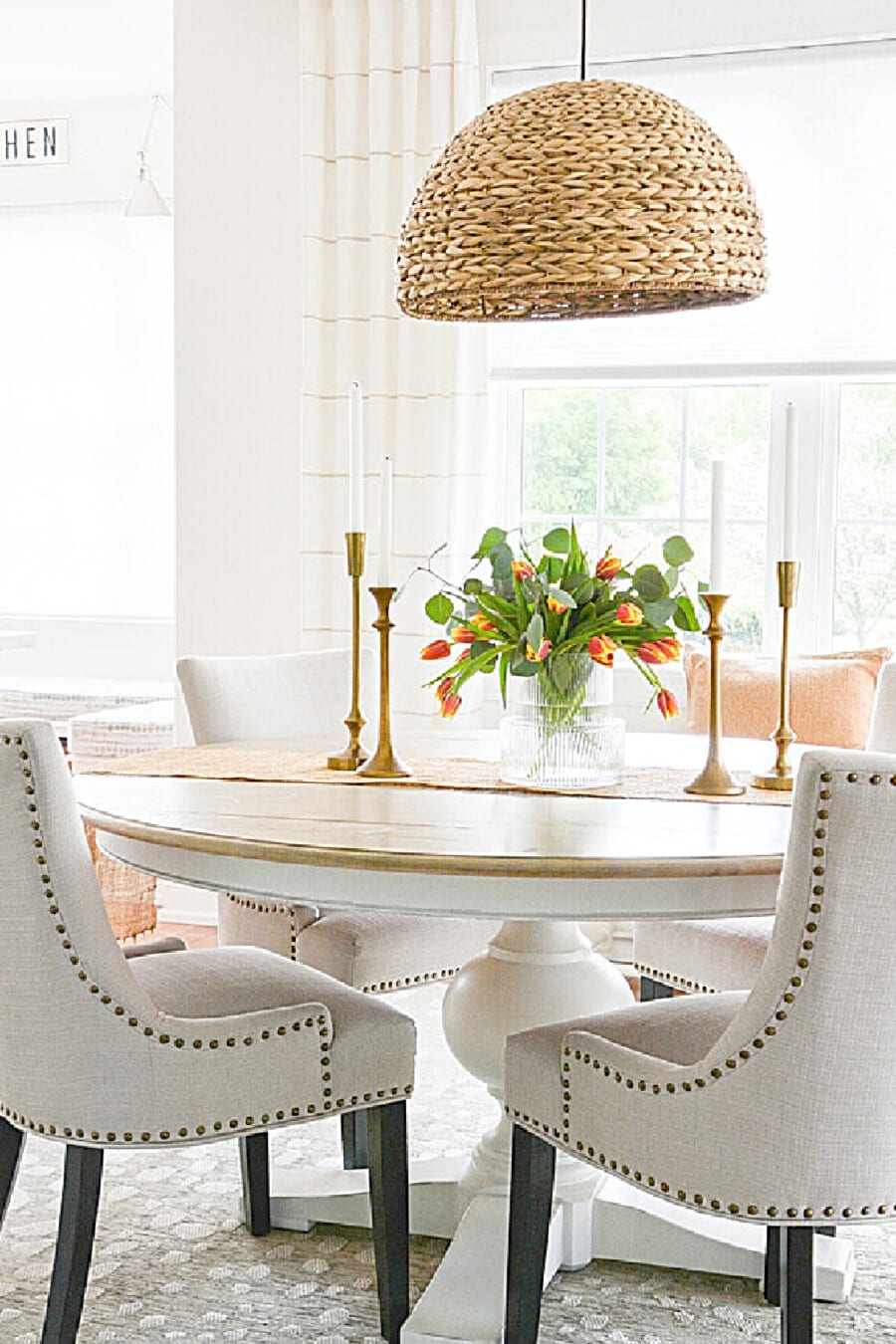
If something in a room looks off, out of place, awkward, or overwhelming, then it probably is. If it looks right and pleasing to your eye, it usually is. Trust yourself. And if you are not sure, the tips below will help you fine-tune.
A Lesson From Goldilocks
Here’s a lesson from a famous girl with a great sense of decorating style…
A Lesson From Goldilocks
Goldilocks was looking for a chair and bed that were not too big and not too small, but just right! You should be looking for furnishings that are just right for a room and just right in relation to other things in the room. That should be your BIG GOAL!
Keep Furniture Proportional To The Room.
Large furniture typically works best in spacious rooms, while smaller, more delicate pieces feel at home in smaller spaces. This makes sense, doesn’t it?
Avoid Extreme Contrasts.
Heavy, oversized furniture usually does not mix well with slim, dainty pieces in the same room. The contrast can throw off the balance and harmony. On the flip side, delicate furnishings can look out of place next to bulky, weighty items.
It really is that simple. Once you start noticing how scale and proportion work together, decorating becomes less confusing and a whole lot more enjoyable.
Numbers Don’t Lie
Do not guess the size of that chair you want to tuck into your bedroom. Know its measurements and then measure the space in your room. This simple step will save you countless headaches.
There’s an old carpenter’s adage, measure twice, cut once.
As a decorator, I say:
Measure correctly because the numbers don’t lie!
If you measure a piece of furniture properly, trust what the numbers tell you. If the measurements show it is too big, believe it. If the numbers suggest it is too small, trust that too.
One of the biggest mistakes home decorators make is buying pieces simply because they love them, without considering size or fit. Something that looks perfect in the store or online might not look perfect in your home.
Always know how a piece will fit into a room and how it will work with the other furnishings around it. I cannot stress this enough. Measurements matter, and they can mean the difference between a room that feels pulled together and one that feels awkward and cluttered.
Negative Space
No one likes to be crowded in an elevator. It feels awkward, doesn’t it? We all appreciate a little personal space. Well, furnishings do too! They need room to breathe.
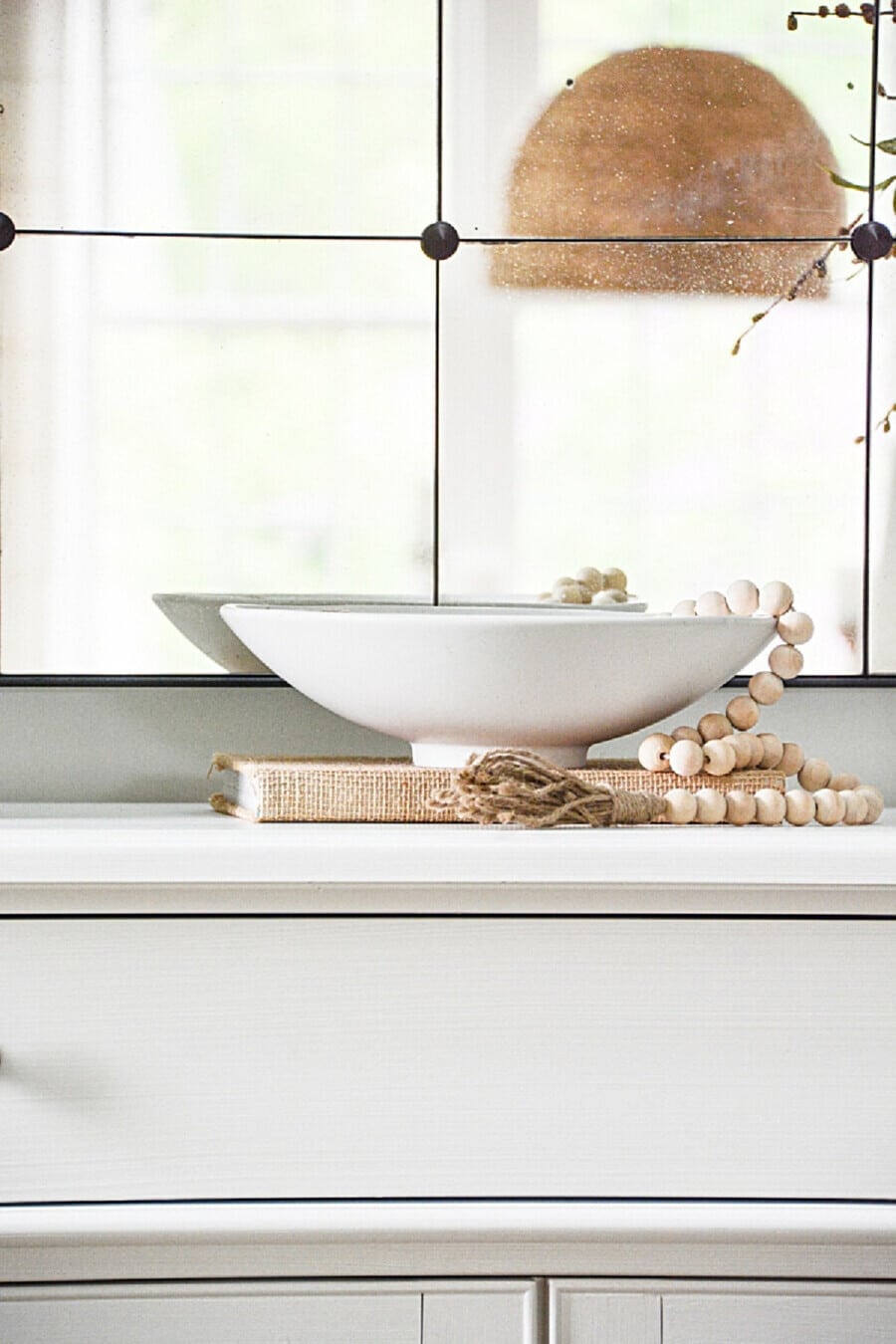
Negative space in interior design is the empty space around and between furniture and decor. It allows a room to breathe, making it feel open and uncluttered. Negative space highlights the beauty of the items in the room by giving them room to stand out.
A common mistake many home decorators make is adding too much to a room. You can get scale and proportion right, but if there are simply too many items, the space will still feel overwhelming.
Try this: remove a few accents or even a piece of furniture and see how the room feels. Most often, it will look more open and comfortable right away.
Even empty space should relate to the size of the room and the other furnishings in it. When you make sure there is enough negative space, a room feels balanced, open, and inviting. Sometimes less really is more.
Using Patterns And Colors

Scale and proportion do not just apply to furniture. They also come into play when you are choosing patterns and colors for a room.
Here’s an easy rule of thumb to remember:
- Patterns: As a general rule, larger patterns look best in bigger rooms, while smaller patterns work well in smaller spaces. The exception is pillows. Big, bold patterns on pillows can add interest even in a small room without overwhelming it. In contrast, a large-scale wallpaper or rug pattern in a tiny room can make the space feel cluttered. And when small patterns are used in a large room, they can disappear and fail to make an impact. Choose pattern sizes that make sense for the size of the room to create harmony.
- Color: The size of a room also influences how many colors you can use. In a large space, you can layer multiple colors and still keep the room feeling calm and balanced. In a smaller room, it is best to limit the palette. Too many colors in a tight space can feel busy and overwhelming. Instead, stick to a few complementary colors for a cohesive look.eeling cohesive and balanced.
When you are working with patterns and colors, always think about how they interact with the size of the room and with each other. Done well, they will add depth, interest, and beauty without overpowering the space.
Where Science Meets Art
Just like so much of decorating, scale and proportion are part science and part art.
The science side comes from understanding the basics of interior design. The Golden Ratio, the Rule of Three, color theory, and balance all have roots in math and science. These principles guide you toward creating rooms that look pleasing and harmonious.
But science alone is not enough. The art comes from you. Your personality, preferences, and style are the artistic touches that make every space in your home feel warm, inviting, and uniquely yours.
There is no beauty without a synergistic mix of science and art!
Now you can see why scale and proportion are such powerful tools for any home decorator.
So, get acquainted with the elements of design and practice them in your home while pursuing a curated style all your own! This is the sweet spot of decor and the way to create a home that is truly comfortable, beautiful, and looks like you!
My Home Sources

FAQs About Scale And Proportion
Decorating School, Part 1
Learn easy, and doable interior design principles to use over and over again in your home to create beautiful and curated spaces.




Happy Decorating, Friends!

Hey Yvonne! I just wanted to tell you how much I appreciate all the decorating/craft/shopping tips you share. I have been struggling with my living room for awhile but with your help I think I finally got it right! Your house is the house I would LOVE to have, it’s so beautiful. I do have a question though, I have a taupe sofa with white walls…can I put tans in that room without making it look “off”. Hope you know what I mean. Thanks for everything.
I adore taupe. Why not find pillows that have both tan and taupe in them. I think it is a nice way to add a bit of warmth to a cool color. Hope this helps.
Love your tips and neutral, textured home. Do you only use 4 chairs for your dining table or are there another 2 chairs that can be added? Are the ends of the table usable? Admiring your set!
Hi Carol, I only have 4 upholstered chairs that stay with my table all the time. When we have company we bring up other dining chairs that work with the upholstered ones from the basement. Hope this help.
It does help! There are just 2 of us empty nesters and a large dining room table w 6 chairs is really too much for day to day. I like considering an option of just 4 chairs like you have…with a leaf and additional chairs as needed. Thank you.
This article about proportion in a room/rooms has been one of the most helpful articles I have ever read. Definitely will follow this advice. Thanks Yvonne!
I wish every home decorator would read this. I really think it would help.
I would love to get a rug like yours please advise me where Imight find one please.
LOVE this new series!!! Thank you!!! Im learning so much
You are welcome.
I love your drapes. Would you mind sharing where you got them?
Hi Judy, they are from Ballard Designs. You can find them online.
Hi Yvonne,
This is such a helpful article! I live in a townhouse and my living room is dominated by a baby grand piano. No place else to put it and I struggle with furniture placement around it. Any ideas? You have given me such great ideas with other articles!
I’m disappointed you didn’t give any examples of how to use the golden ratio – those of us with more of a maths bent than an “eye” or natural talent really appreciate hard and fast rules to follow. I was excited when you said that maths was an essential part of decorating – “woohoo, this is something I can do!” But then you didn’t tell us how to apply it. I hope you can do a post on how to use the golden ratio and other maths based rules. I do love your home, it’s my ideal, so classic and sophisticated, but also cosy, friendly and relaxed. The only way I could achieve a space like that is to copy you slavishly, haha. Please, give us some rules with numbers in them, for those that don’t have an “eye” for decorating, but do have a tape measure.????
Thanks, Karen. I appreciate your comment. I did talk about the golden ratio. You must have missed it. Here’s just a little excerpt:Mathematics basically influences scale and proportion. One key principle is the Golden Ratio. This ratio, often symbolized by the Greek letter phi (φ), is approximately 1:1.618 and appears repeatedly in nature, creating forms that are universally recognized as beautiful.
This ratio appears in many natural phenomena and structures, such as faces, flower seed heads, shells, spiral galaxies, and even hurricane patterns. When objects follow this ratio, they universally appear more harmonious and aesthetically pleasing to our eyes.