How to Stop Overdecorating and Create the Beautiful Home You Really Want
Most home decorators use too much, and it keeps rooms from looking their best. Learn the signs of overdecorating and the simple fixes that will change your home.
QUICK START BOX
Most home decorators use too much, and it quietly keeps rooms from looking their best. The fix is simpler than you think. Edit your clutter first, then your furniture, then your accessories. Use the 60-30-10 rule to bring balance to any room. Know your decorating style so you stop bringing home things that do not belong. Give your rooms time to become what they should be. Small changes make a big difference, and you will feel it the moment you start.
Most of us who love decorating share a secret problem. We use too much stuff.
It is not that we have bad taste. It is not that we cannot decorate. It is that we love pretty things, we get excited about new finds, and before long, our rooms are working harder than they should. Instead of feeling pulled together and beautiful, they feel busy, heavy, and a little unsettled.
I know this firsthand. I have been decorating for decades, and overdecorating has been my most persistent habit. The HomeGoods in our town opened years ago, and I still remember walking those aisles feeling like I had found paradise. My cart overflowed with beautiful things. The problem was not that they were not pretty. They were. But once I got them home, they did not always work together, and my rooms ended up feeling crowded instead of curated.
We are all drawn to those beautifully styled rooms we see in magazines and on Pinterest. They look effortless and collected, and we wonder why our own spaces never quite measure up. The truth is, those rooms are not more beautiful because they have more in them. They are beautiful because they have less.
Overdecorating is one of the most common decorating problems, and the really good news is that it is also one of the easiest to fix. You do not need to redecorate. You do not need to spend money. You just need to know what to look for and what to do about it.
Let’s walk through the most common overdecorating habits, why they happen, and the simple fixes that will make a real difference in your home.
Too Much Clutter
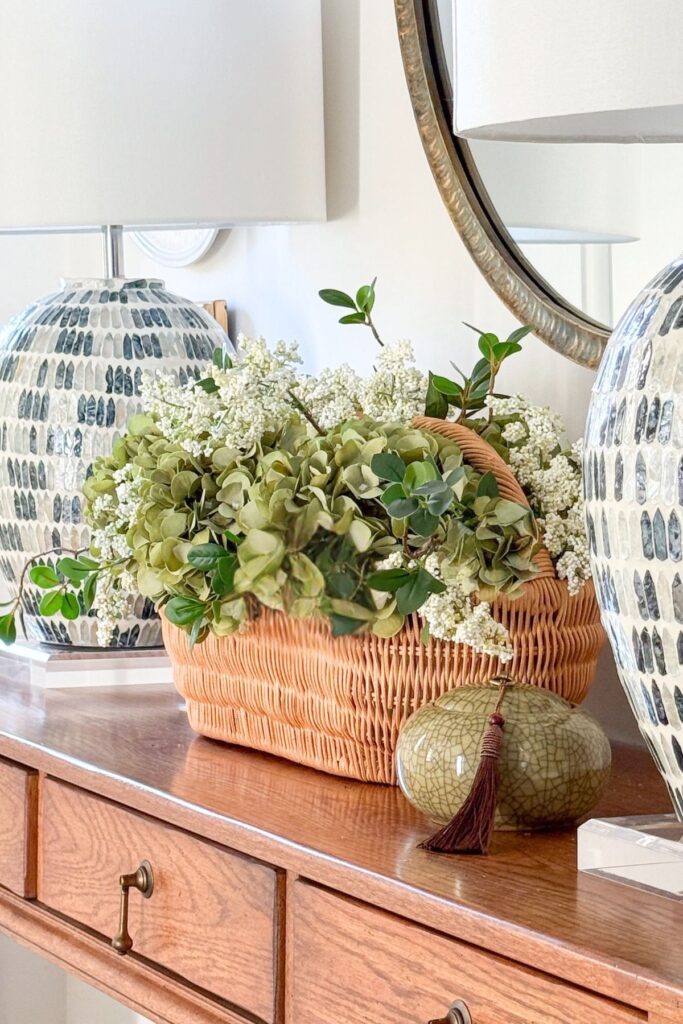
When a room has too much decor, clutter is never far behind. The two feed each other in a way that sneaks up on you. Decorative books, trinkets, and little collections start to blend right in with everyday clutter until it all becomes one big visual jumble that weighs a room down.
Most of us have at least one surface that is meant to look beautiful but ends up being a landing pad for whatever comes through the door. Console tables, bookshelves, coffee tables, and kitchen counters are the biggest offenders. They start out styled and end up buried.
In my home, the foyer is the greatest challenge. It is a natural drop zone for mail, packages, coats, and shoes. No matter how much I decorate that space, clutter always wins if I am not on top of it.
The Easy Fix
The best way to handle clutter is to deal with it the moment it appears. In my foyer, I keep the decor simple and minimal so that anything out of place stands out immediately. That makes it easy to put things back where they belong before a small pile becomes a big problem.
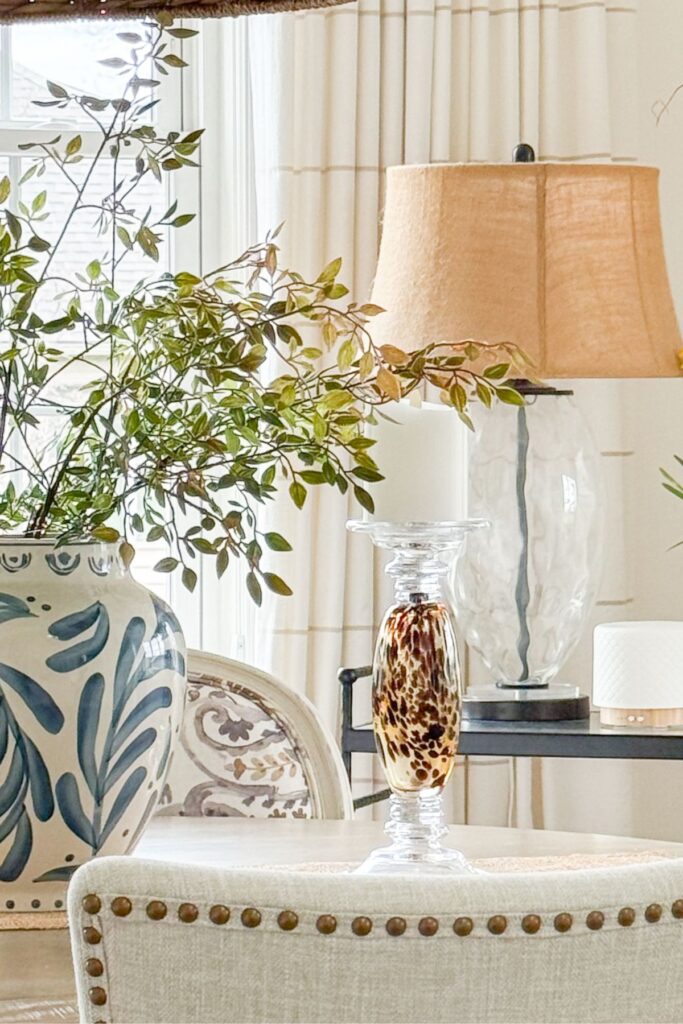
The second fix is to edit your decor regularly. If you tend to add new pieces often, try this simple rule: every time something new comes in, something else goes out. Editing is one of the most effective habits you can build as a home decorator.
🌿 TIP BOX: Flat surfaces are clutter magnets. Coffee tables, kitchen counters, nightstands, and entryway tables all invite piles. The moment you see clutter collecting on a surface, deal with it. A tidy surface is the single best defense against an overdecorated look.
Too Much Furniture
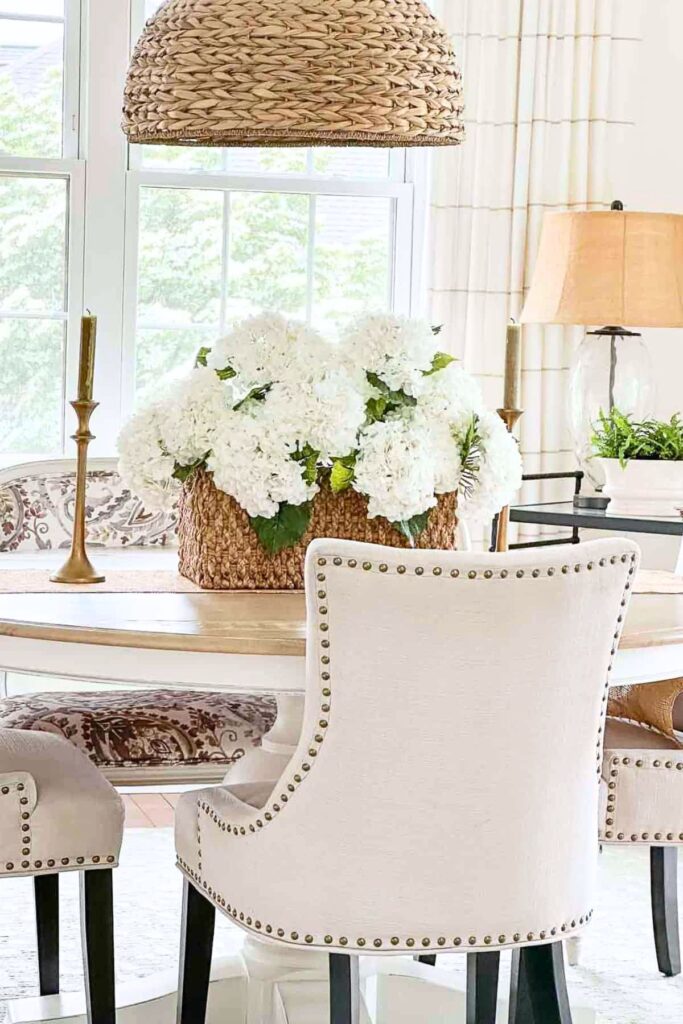
Knowing which furniture belongs in a room is important, but knowing how much furniture to use is just as critical. One of the most common overdecorating mistakes is trying to fill every wall, corner, and open space with a piece of furniture. Rooms almost never need that much.
Every space in your home should have room to breathe. Too many chairs, tables, or cabinets can suffocate the beauty of a room and make it feel cramped and unsettled. Empty space is not a decorating failure. It is an essential design element.
Designers call this negative space. It is the visual pause that allows your eyes to rest and take in what is beautiful. Without it, a room looks busy and hard to enjoy. With it, your eye travels naturally through the space and lands on what matters.
Think of negative space as the quiet background that makes everything else look better. A well-decorated room always includes it, even if you never consciously notice
The Easy Fix
The best cure for too much furniture is simply to take something out. If a room feels crowded, start by removing one piece and live with it for a week. You may find the room feels lighter and more inviting right away.
Rearranging can also make a surprising difference. Sometimes furniture just needs better placement to give the room balance and flow. Give each piece space to breathe, and let it play its part without crowding everything else.
In our dining area at Tanglewood, I added a bar cart to the corner when we first moved in because I had always wanted one. But the longer I looked at the space, the more I realized it was not working; it was too big. Instead of adding charm, it competed with the dining table, which should always be the clear focal point of a dining room. Once I removed it, the whole room felt lighter and more like itself.
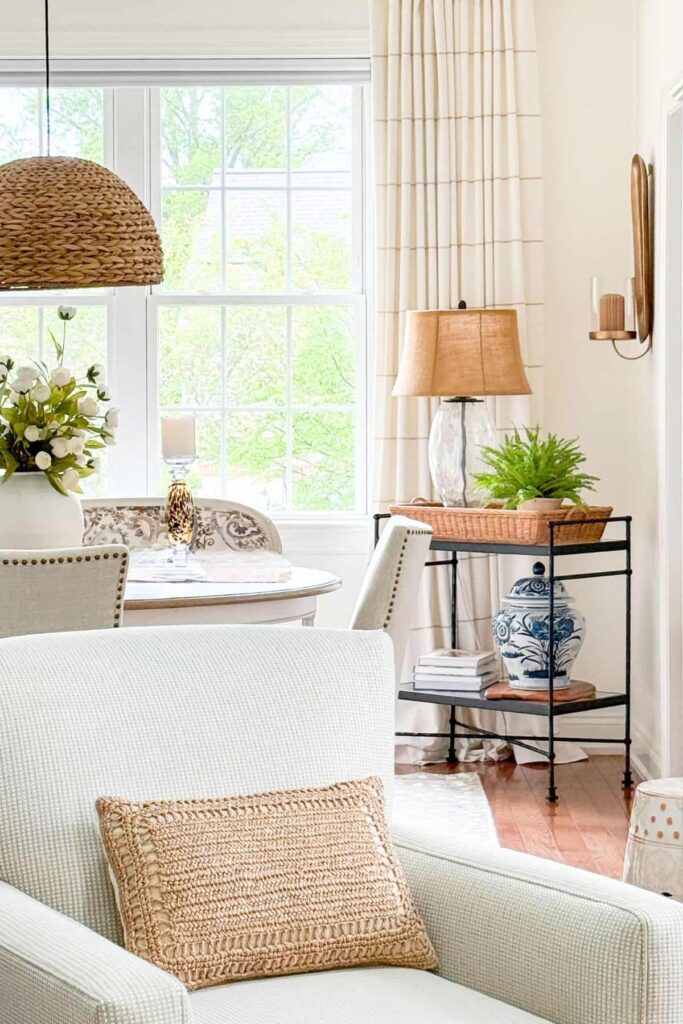
I still wanted something in this area, so I eventually got a smaller bar cart, and it is still there today.
🌿 TIP BOX: Walk into each room and ask yourself honestly: does every piece of furniture need to be here? If a piece is not adding beauty, function, or comfort, it may be doing more harm than good. Removing just one unnecessary piece can completely change how a room feels.
Too Much of One Thing
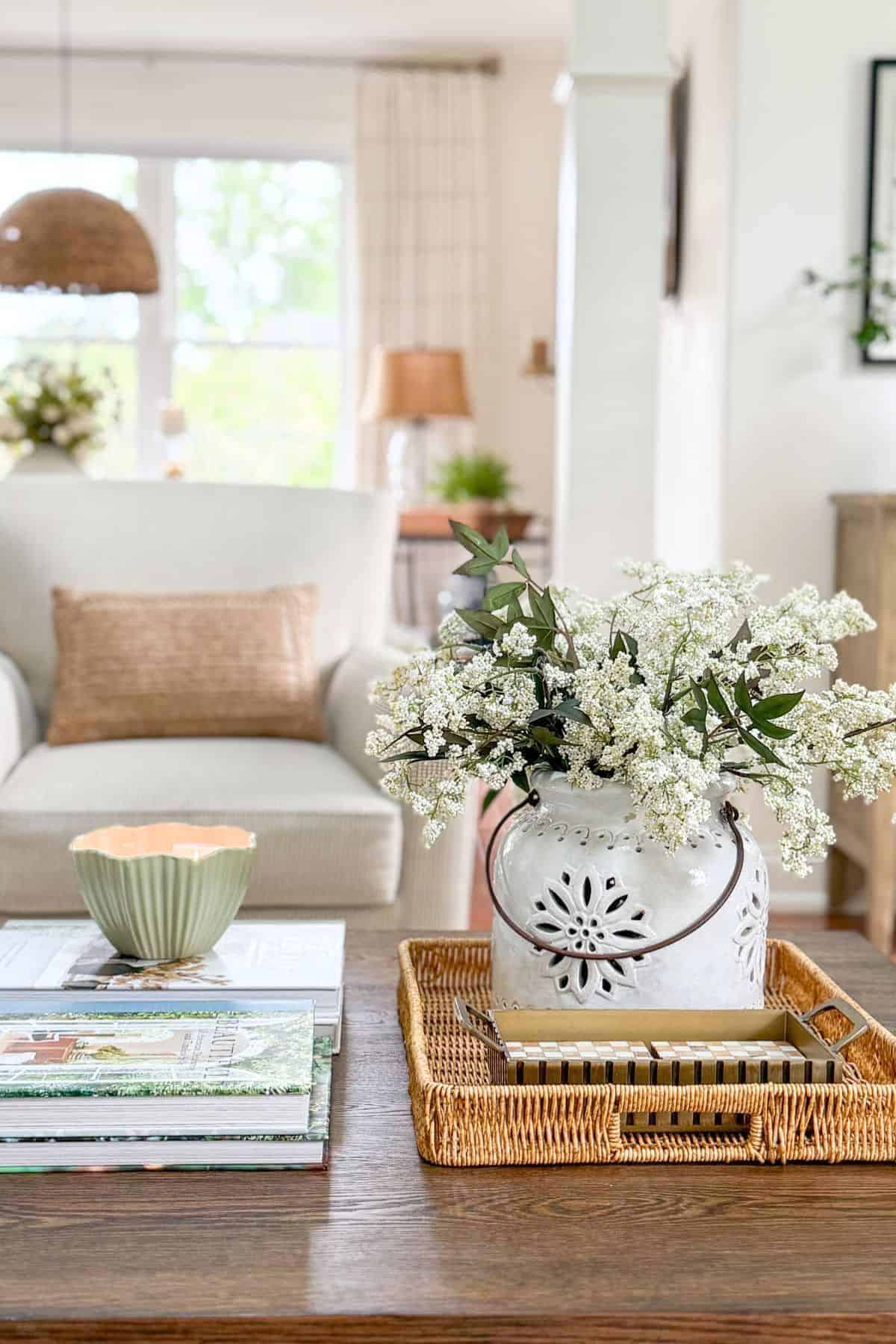
One style, one era, one color, one wood finish, one category of decor you simply cannot resist. When we get too focused on one decorating element, we keep adding more of it, thinking it will make the room look more interesting. It usually has the opposite effect.
A room filled with only one thing tends to look flat and uninspired. Think about the matchy-matchy trap, where everything in the room is the same style and color. Or a home filled with nothing but farmhouse decor, Mid-Century Modern pieces, or 18th-century antiques. Instead of looking curated, it can feel more like a furniture showroom than a home.
Collections fall into this category, too. They are wonderful to have, but when you keep adding without editing, they can overwhelm a room. We often become decor blind when too much of the same thing surrounds us. Our eyes stop registering it, so we keep adding more without realizing it.
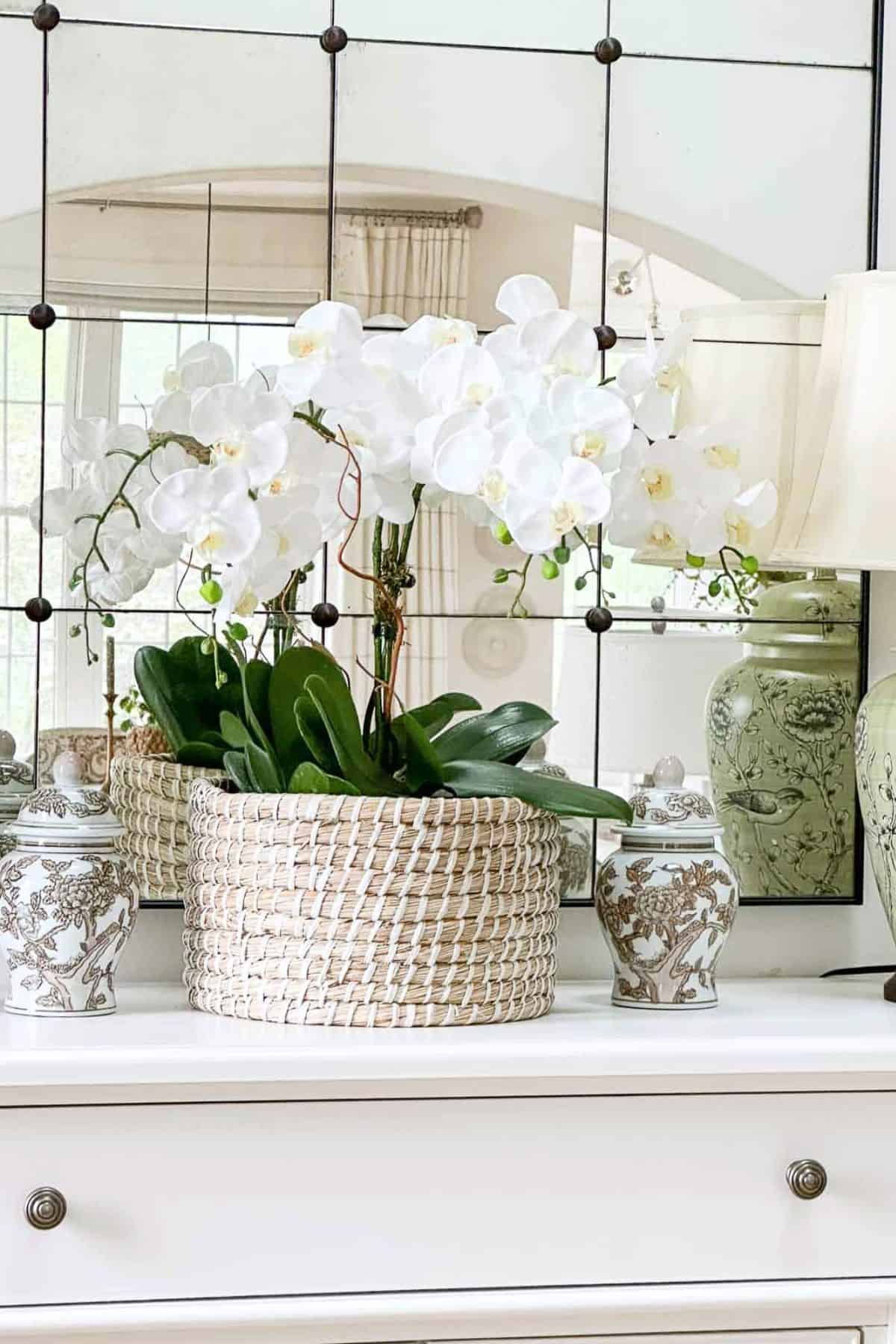
For me, that one thing is baskets. I love them. They are pretty, textural, and functional, and I think they are close to decorating perfection. But I have to remind myself regularly that too much of a good thing is still too much.
The Easy Fix
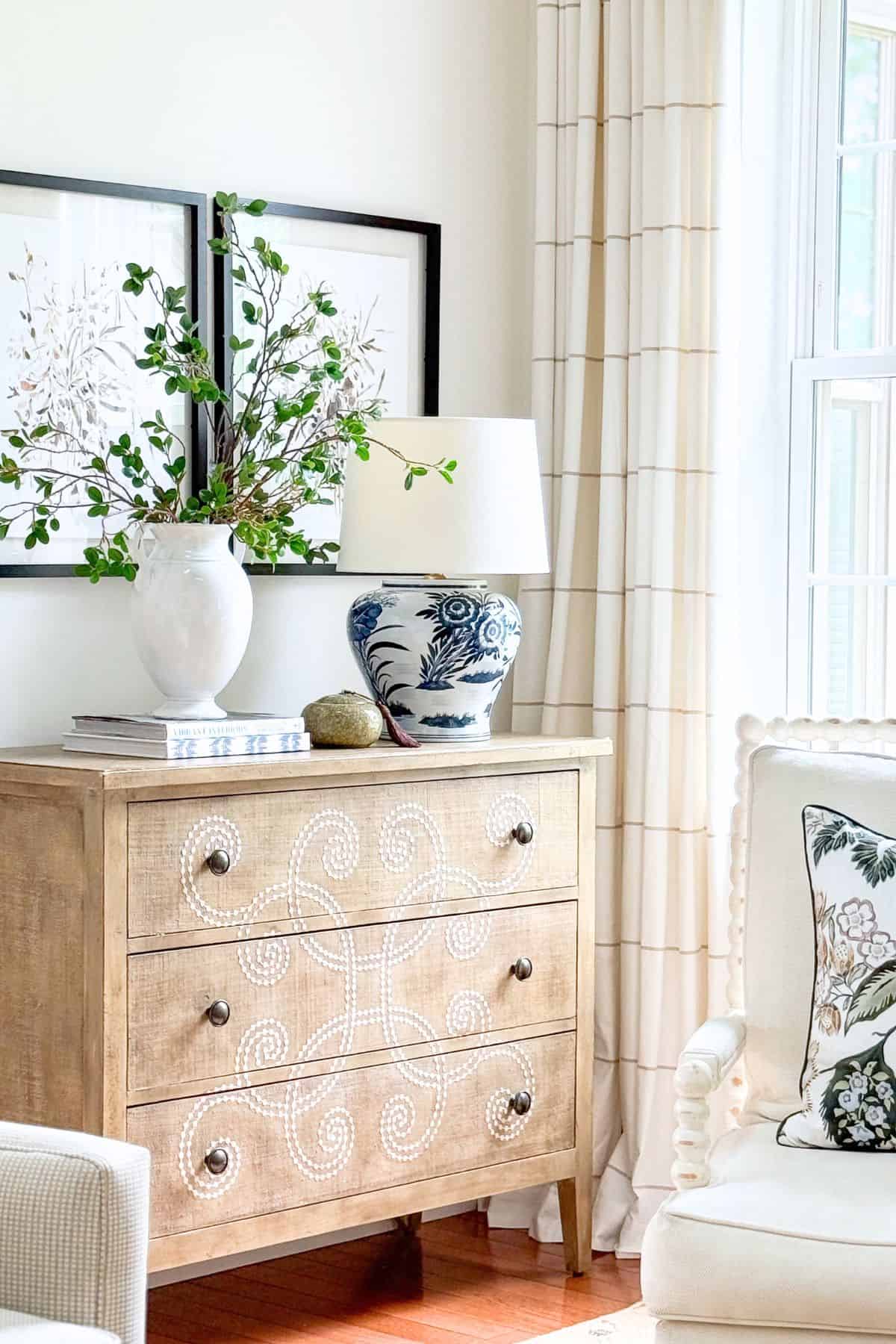
The cure for too much of one thing is balance, and the simplest way to achieve it is the 60-30-10 rule.
60-30-10 is an easy way to think about how much of each element belongs in a room.
- Sixty percent is your primary element. This might be your main style, your dominant color, or your primary wood or metal finish.
- Thirty percent is your secondary element. This supports the first and adds variety without competing with it.
- Ten percent is your accent. This is the finishing touch that adds personality and interest without overwhelming everything else.
Here is how it might look in a real room:
- Sixty percent New Traditional style, thirty percent Modern Farmhouse, ten percent French Country touches.
- Sixty percent neutral tones, thirty percent warm caramels, ten percent black accents.
- Sixty percent classic furniture pieces, thirty percent trend-forward accessories, ten percent baskets.
The ratio can shift slightly. Sometimes 70-20-10 works better for a particular space. But keeping 60-30-10 in mind will help you bring balance to any room that feels like it has too much of one thing.
🌿 TIP BOX: Not sure if you have too much of one thing? Step back and squint at the room. If one element jumps out and dominates everything else, that is your sign to edit. The goal is a room where your eye moves comfortably from one thing to the next without stopping on any single element.
Too Many Layers
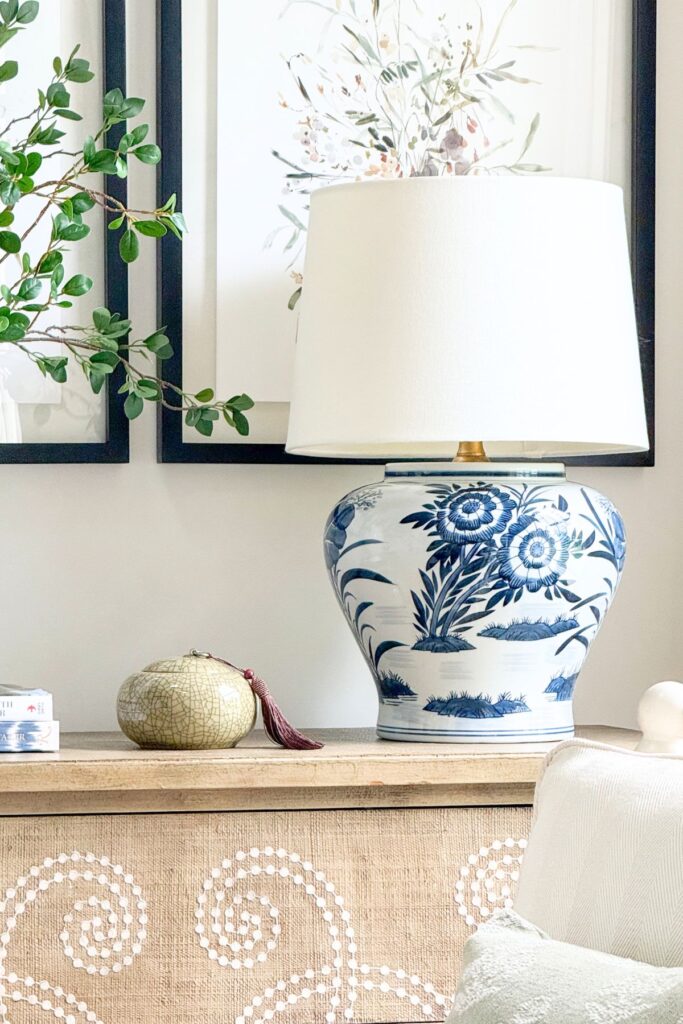
One of the easiest ways to spot overdecorating is by looking at how a room is layered. If you have to look through layer after layer of decor on a mantel, a coffee table, or a sofa, that space is likely overdecorated.
Many of us add extra layers to hide decorating insecurities. It feels safer to keep adding, as if more will somehow make it better. But more layers rarely make a room look polished or professional. More often, they make it look busy and hard to rest in.
I am very guilty of this with pillows. I love fabric, texture, and pattern, and pillows are an easy way to bring all three into a room. But I have learned that my living room looks much prettier when I use a lighter hand. When the sofa starts to disappear under the pillows, I have gone too far.
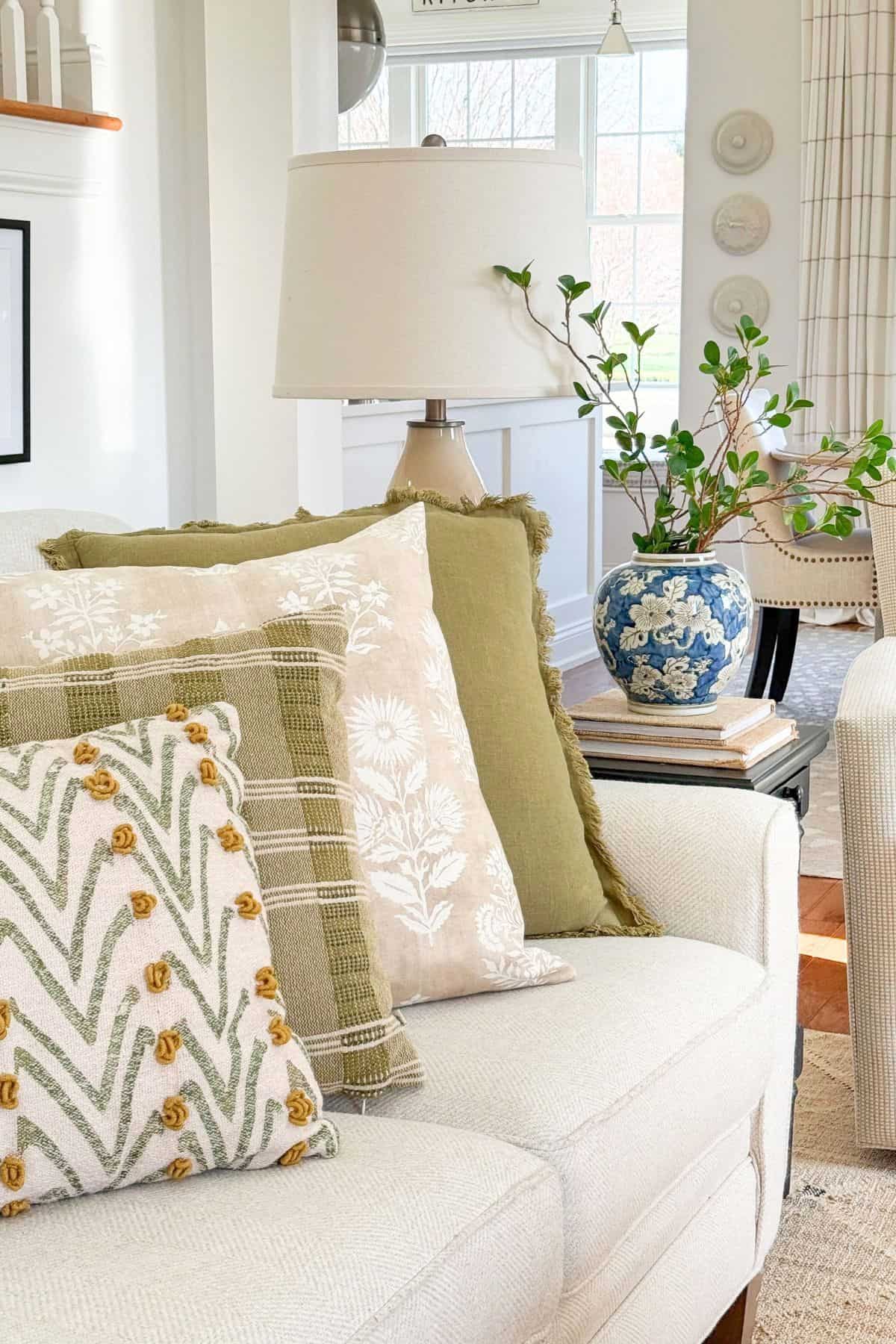
The same principle applies to patterns. A little pattern mixing can be beautiful, but too many competing prints in one room create visual noise rather than visual interest.
The Easy Fix
This fix is simple but sometimes uncomfortable. Stop adding layers, and start removing them.
Choose quality and beauty over quantity. This is a decorating principle worth living by. My decorating has improved more from embracing this one idea than from almost anything else.
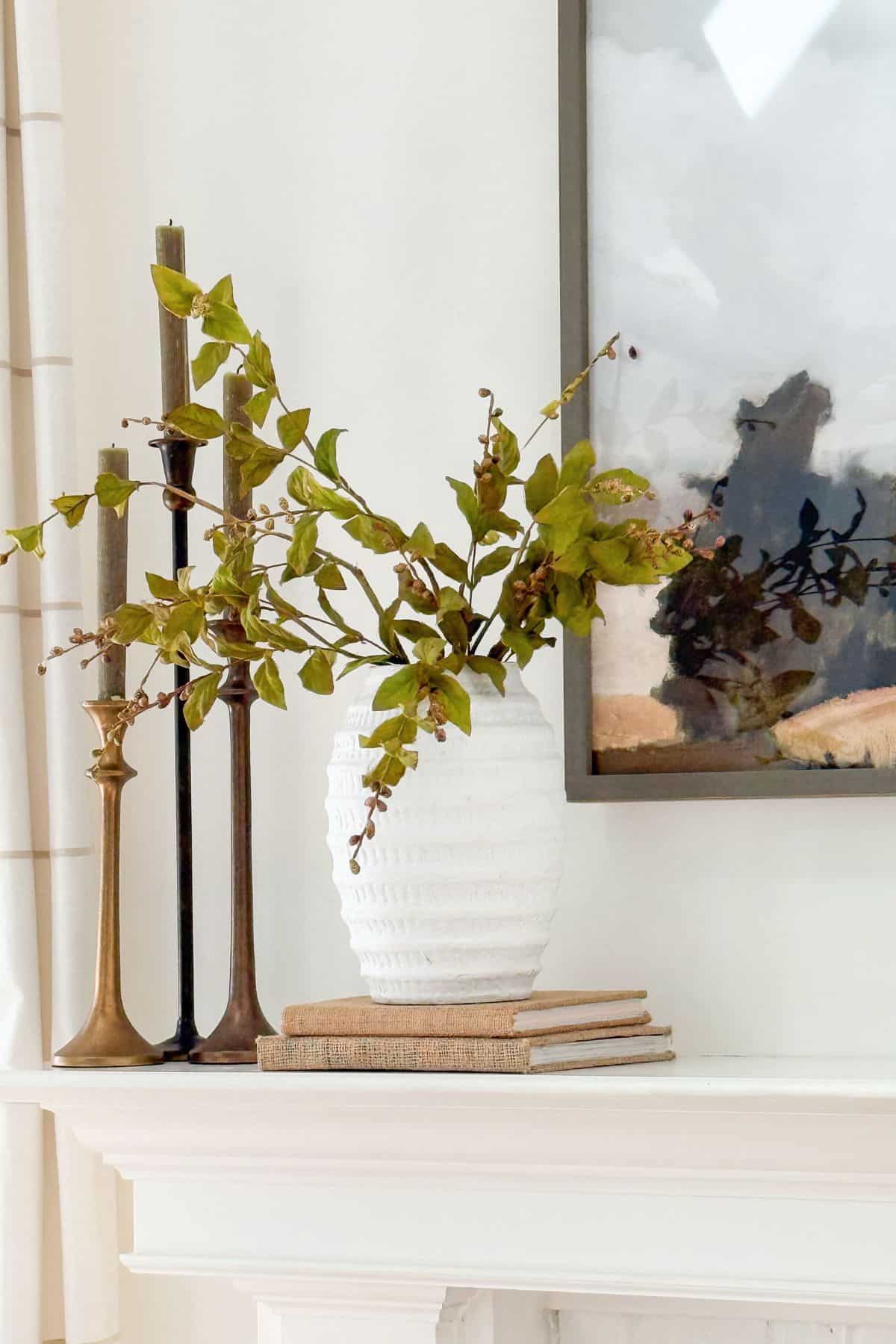
If you love to layer, scaling back will feel strange at first. Rooms may look a little bare to your eye, and you might feel like something is missing. That feeling is normal. What you are doing is retraining your decorating instincts, learning to choose the better option rather than the extra one. That is the heart of what it means to stop overdecorating.
🌿 TIP BOX: Before you add anything to a room, ask yourself what you could take away instead. This one question will change how you decorate. The best rooms are not the ones with the most in them. They are the ones where everything that remains truly belongs.
The Rush to Look Curated
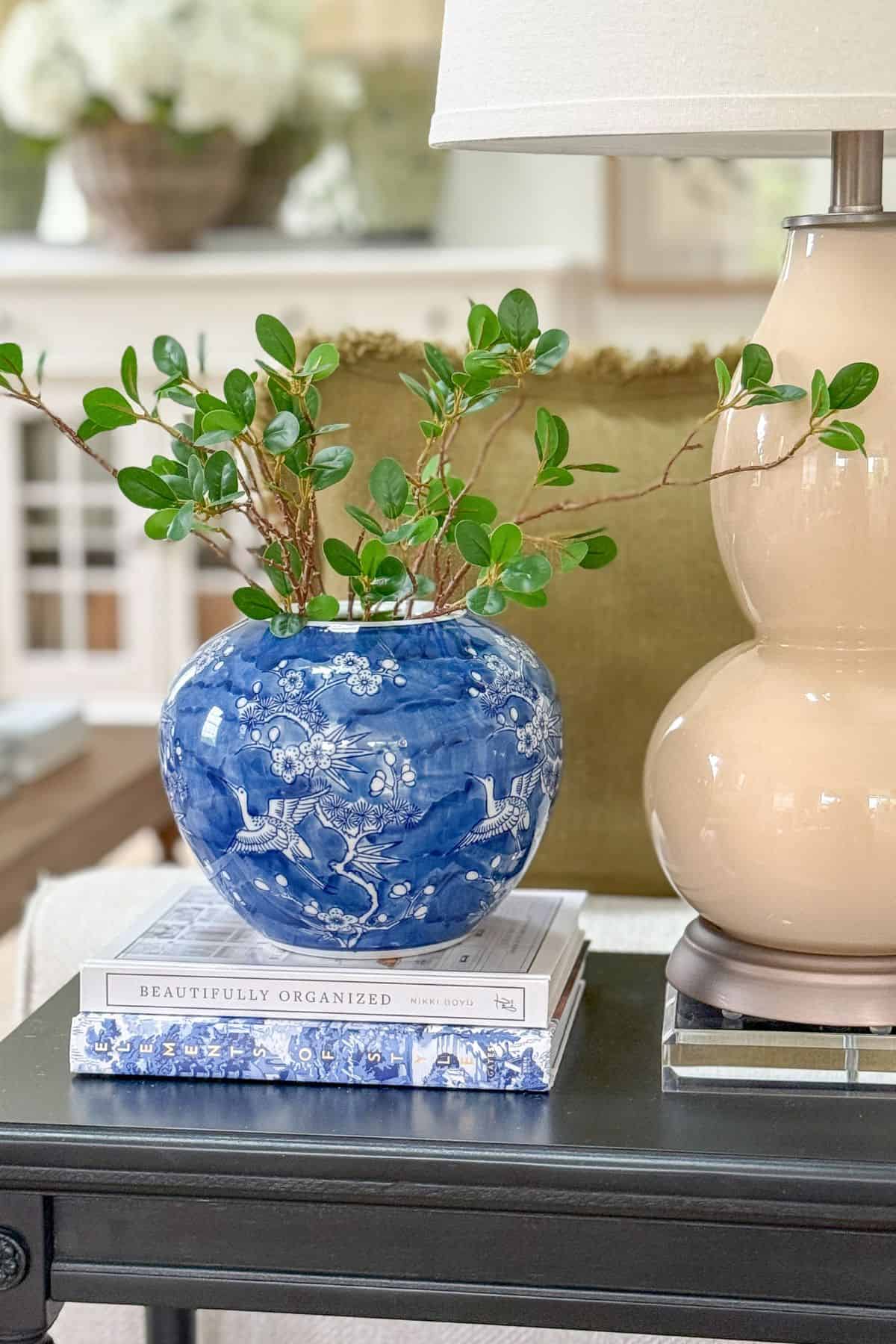
We live in a world that wants everything finished right now, and decorating is no exception. We want a beautiful, collected room immediately, even though the very idea of curation goes against quick and all-at-once decorating.
To curate a room means to carefully choose what belongs in it, piece by piece, over time. Every detail is tested, edited, and refined. That kind of layered beauty simply cannot be rushed, and when we try to rush it, we usually end up overdecorating to fill the gaps.
Most of the time I can tell when a room has been decorated all at once. Everything is perfectly placed and technically correct, but the room lacks warmth and the feeling that real people live there. A truly curated room tells a story that develops over time.
When we first moved into Tanglewood, my living room was far from finished. It took eighteen months to get it to where it felt right, and I am still adding and editing. That slow process is not a decorating failure. It is exactly how a beautiful home is built.
The Easy Fix
Give yourself permission to let your rooms evolve. Resist the urge to fill empty spaces just because they are empty. An unfinished room is not a problem. It is an opportunity waiting for the right piece.
When we rush, we end up with rooms full of stuff instead of rooms that feel genuinely collected and beautiful. The most important thing is not to rush the process or fake a curated look by overdecorating. Patience is one of the most underrated decorating tools.
How to Know Your Decorating Style
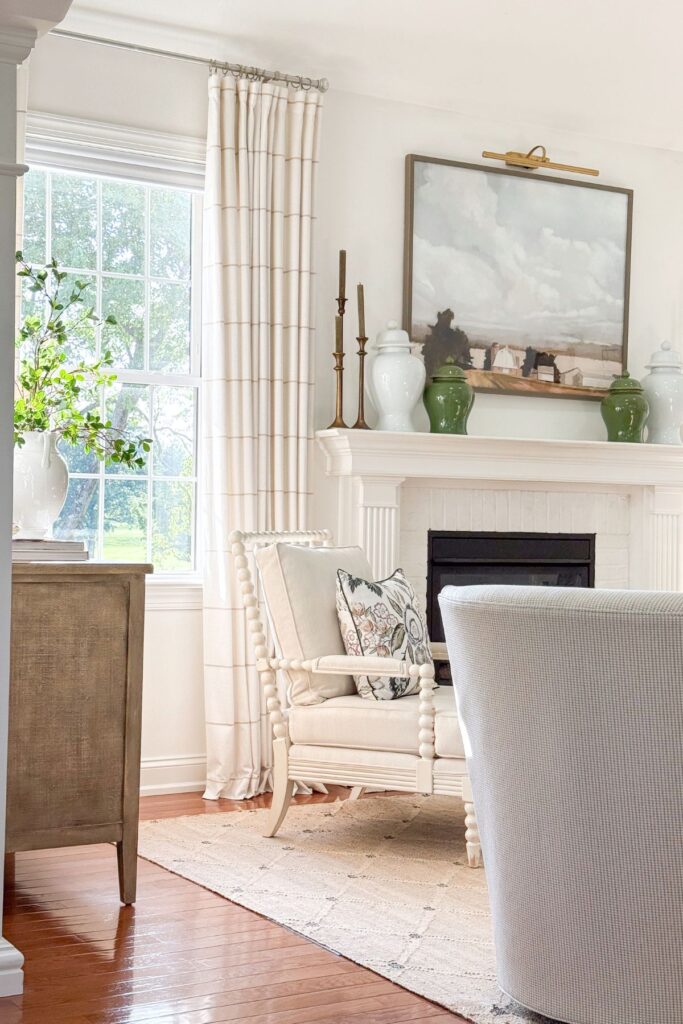
One of the biggest reasons we overdecorate is that we have not taken the time to truly define our decorating style. Without that clear foundation, every pretty thing looks like it belongs in our home, even when it does not.
A magpie is a bird known for collecting shiny, pretty things, gathering far more than it needs. Many decorators decorate the same way, drawn to beautiful finds without asking whether they belong. A copycat decorator is inspired by trends and what others are doing, adding each new look without editing what came before.
Neither tendency is wrong on its own. The problem comes when we bring things home without knowing whether they truly fit.
The Easy Fix
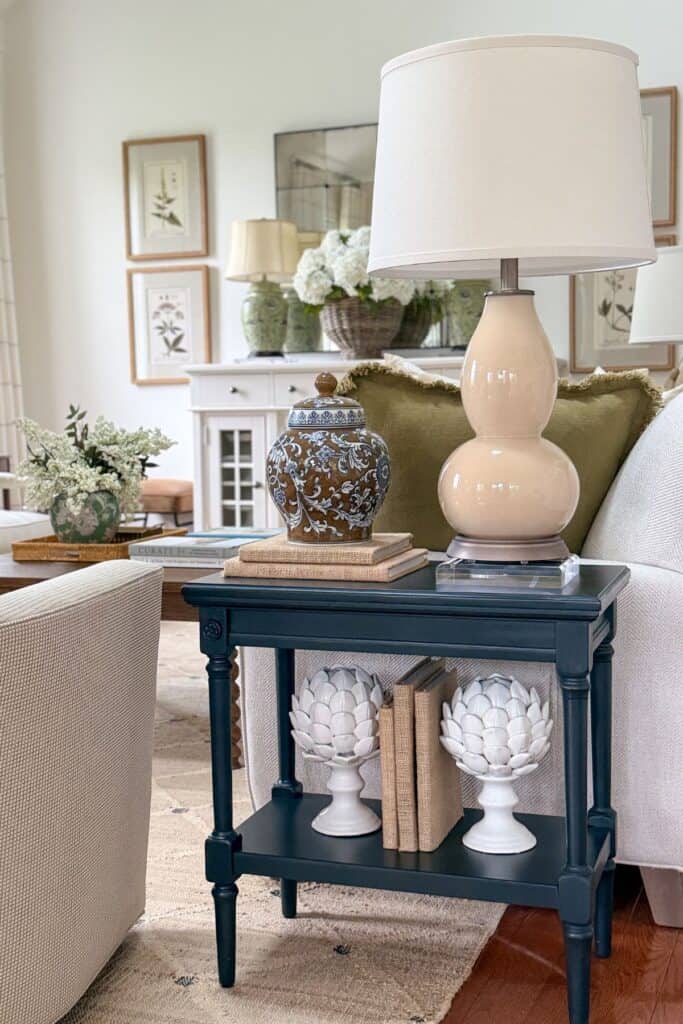
When you know your decorating style, everything changes. You can walk through a store full of beautiful things and enjoy them without needing to bring them home. You develop what I think of as a laser-focused decorating eye. You can quickly spot the pieces that truly belong in your home and let the rest go without regret.
My home is Transitional, which means updated traditional with a touch of Americana (Modern American Country) influence. My color palette is what I call Blond, rich neutrals, warm caramels, and lots of white. Lately, I’ve been adding more color to our home while keeping the base of it neutral. Because I know that clearly, I can shop with confidence and edit without guilt.
Take the time to define your style in specific terms, not just “I like cozy” or “I like classic.” The more precisely you can describe it, the easier every decorating decision becomes, including the decision to leave something behind.
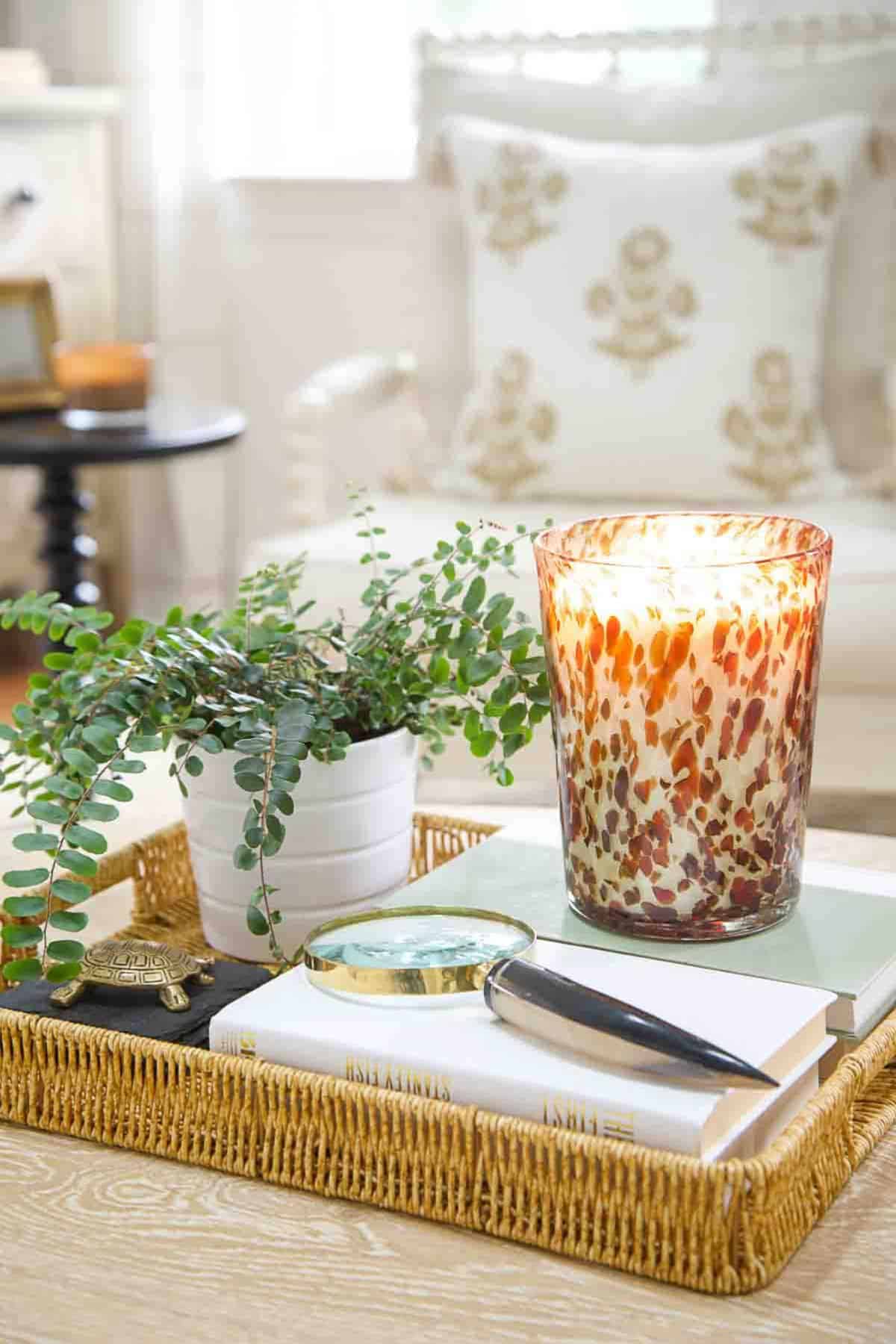
🌿 TIP BOX: Write down your decorating style in two or three specific sentences. Include your dominant style, your secondary influence, and your color palette. Keep it somewhere you can refer to when you are shopping or making decorating decisions. It is one of the most useful things you can do for your home.
Frequently Asked Questions About Overdecorating
Stand in the doorway and look at the room as a whole. If your eye does not know where to land, if it jumps from one thing to the next without resting anywhere, the room is likely overdecorated. A well-decorated room has a clear focal point and enough negative space for the eye to move comfortably through it.
Start with the surfaces. Clear everything off one surface completely, then put back only what truly belongs. Live with it for a few days before deciding what, if anything, to add back. This simple exercise often reveals how much better a room looks with less.
They are related but not the same. Clutter is the accumulation of everyday items that have no designated place. Overdecorating is using too many intentional decor items, too much furniture, too many layers, or too much of one thing. A room can be clutter-free and still be overdecorated.
They are related but not the same. Clutter is the accumulation of everyday items that have no designated place. Overdecorating is using too many intentional decor items, too much furniture, too many layers, or too much of one thing. A room can be clutter-free and still be overdecorated.
Negative space is the empty or open area in a room, the wall behind a lamp, the space between objects on a shelf, or the floor visible around a rug. It gives the eye a place to rest and allows the pieces you love to be seen clearly. Without negative space, even beautiful things get lost.
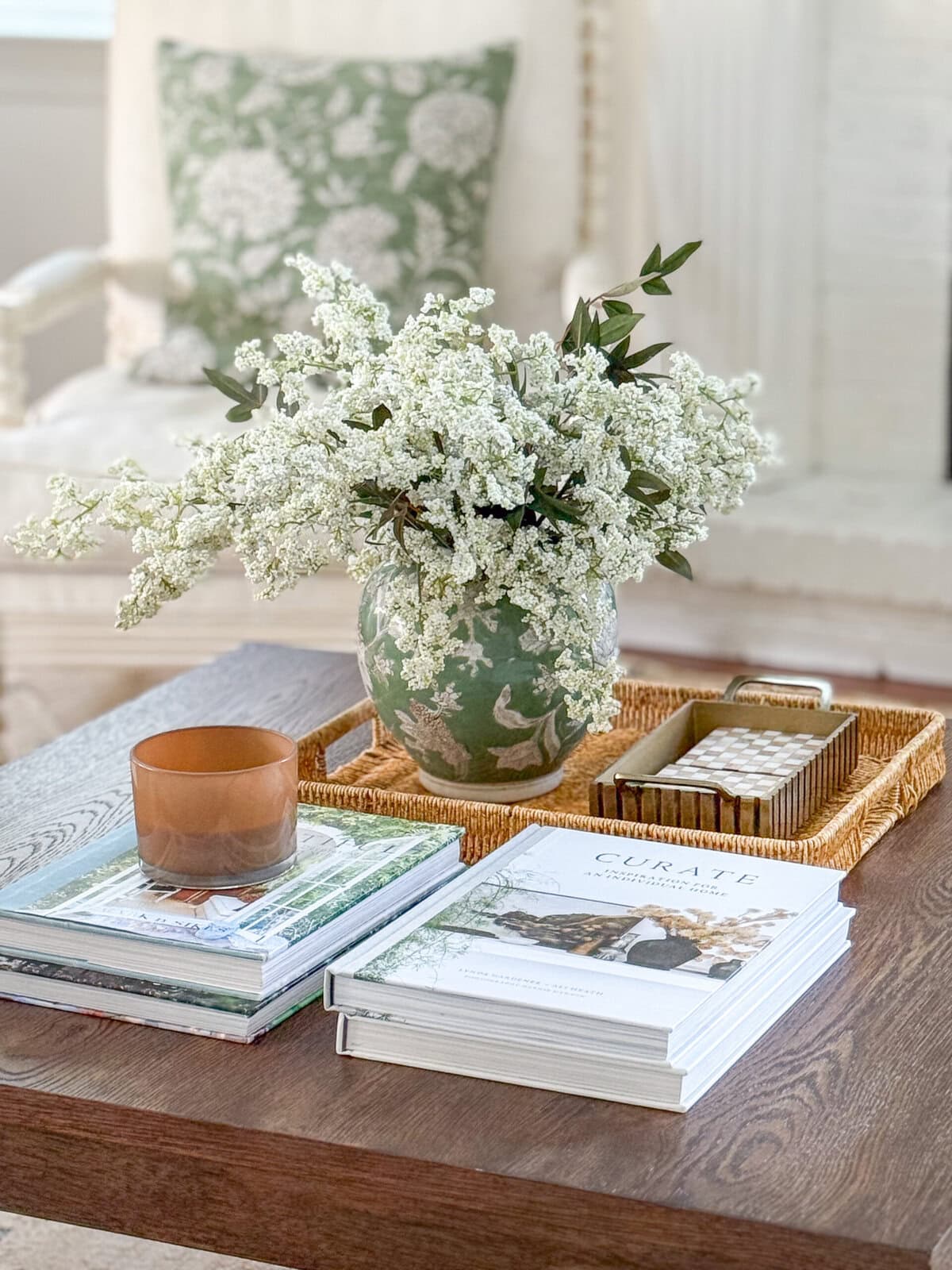
Overdecorating is one of the most common decorating habits, and recognizing it is the first step toward rooms that truly feel beautiful. The fix is never about spending more money or starting over. It is about editing with intention, knowing your style, giving your rooms room to breathe, and being patient enough to let them become what they should be.
Walk through your home today with fresh eyes. Look at each room honestly. Can you spot a surface that needs editing? A piece of furniture that is working against the room instead of with it? A collection that has grown beyond what the space can hold?
Small changes will make a bigger difference than you expect. And once you start editing, you will wonder why you waited so long.
More Ideas You Will Love
These posts go hand in hand with everything we talked about today. Whether you are still editing or just getting started, each one will give you practical, actionable ideas for creating a home you truly love.
Decorating With Less
Less Is Best Decorating
A warm and practical guide to embracing the less-is-more philosophy in your home. This post is full of sensible ideas for decorating with intention and editing with confidence.
Space Is Important In Design
A valuable look at how negative space works as a design element and why leaving room in your rooms makes everything in them look better.
Styling and Vignettes
10 Elements of a Vignette
Everything you need to know to create beautiful, balanced vignettes without overdecorating. A practical and inspiring read.
How to Style a Mantel
A step-by-step guide to creating a balanced, beautiful mantel with just the right amount of decor and nothing extra.
Know Your Style
How to Know Your Decorating Style
One of the most useful posts on StoneGable. Knowing your style is the foundation of every good decorating decision, including knowing what not to bring home.
Happy decorating, friends…



I can handle a bit of dust for a week or so, but clutter drives me crazy! I have actually stopped viewing different blogs because of the over the top decorating and excessive consumerism that they promote. I’ve also stopped viewing fashion blogs that promote too much stuff. I love the changes you made to your dining room. Lovely. Keep it simple!
Thanks Lyn! I enjoy so many different styles but I have to live in a calm house so that means not a lot of extra stuff.
Hi! Any chance of finding out where you purchased the Numbers 6 artwork? It’s one of my favorite verses and I like the size of the piece. Thank you!!
Yes, you can find it here:https://rstyle.me/+cyuXvGdVqIB4hSB3E_OdyQ
Thank you so much for insight and posts on decorating. I read your info every morning and haves used many thoughts and details to experience the happiness of a home and decorating it! Love love love this site and it’s at the top of my list! Thank you again I’m a faithful follower!
Roni
California
Thanks so much! xo
I agree that a room looks and feels so much better without it being over decorated and cluttered.
I’m finding the same is true for wall art. When I took wall art off my walls to paint, I decided to put less up. The room looks much better. Less is more.
I think you are onto something!
Yvonne, Was just looking at a table in my family room and something didn’t seem quite right. I finally removed one item I had set on some books and suddenly it looked better. So often removing rather than adding works for me.As our weather gets warmer I need more negative space in my home. Have a wonderful week and as always ,thankyou for inspiring me to make our home the best it can be.
Thanks for sharing Kathy!
Great post! One”decorator” in particular needs to read this post. She covers every flat surface with stuff! Does the same with wardrobe/jewelry. Love everything about your home. So inviting and calming! Thanks for
You have taught me to EDIT my decorating. I go into my rooms and I say Edit, Edit, Edit… it is like my Mantra. ? It is not a bad thing. Thank you for this post.
I love edit, edit, editing!
Thank you Yvonne, I learn something from your blog every day. I have had my eye on the drapery fabric in your living room. I have searched and searched for a light/white fabric with a horizontal stripe. Would you share where you found the fabric or the draperies?
Thank you Theresa. I’m so passionate about helping everyday decorators, like myself, learn decorating concepts to be better decorators. Yay! I found the curtains at Ballard Designs.
So glad I found your website… Looking forward to gathering many more ideas. My home is mainly on the oriental theme, lots of black and lacquer along with white and red accents. Hoping you will publish some ideas and photos to spur my imagination.
P
I am interested in the round glass side tables in your guest bedroom and where I can purchase them or similar ones Thanks
Hi Lorraine, I found it on Wayfair but they don’t have it any longer. Here is something similar:https://rstyle.me/+kK-WKtU_ztUku8eSMjskFQ
From reading your blogs, I’ve come up with a few of these strategies for myself to keep from overdecorating:
1. Put stuff away and then switch them out mid-season or monthly. I probably have 20 sets of candleholders (they are my obsession – much like yours is to baskets and pillows…although I have obsessions with those too)! I learned I didn’t have ALL of them out ALL the time. I have a box in the garage for my candleholders. One month, I’ll have the wooden ones out, then I’ll switch them for the silver or glass ones. It’s a special treat to find ones I’d forgotten about!
2. Take an inventory of flat surfaces that you COULD decorate. Then decide which of them you should just leave alone. For instance I don’t have a coffee table (little grandsons that use my living room as the Daytona 500), but if I did, I wouldn’t decorate it…just like I have minimal decor on end tables. These are places where my family puts their “stuff”…books, business cards, bp monitors…I’ve tried to keep after that clutter and it’s just a defeat every time. I use surfaces where they won’t likely lay their stuff – the mantel, the window box in the kitchen, top of the piano, the entry table (although that’s a challenge) etc. I decide what I’m willing to keep monitoring and what surfaces can be allowed to contain clutter.
3. Just because you buy something new, it doesn’t have to go out right away…it’s tempting but it might be best to leave it for awhile and make a wise choice of when to put it out. I’ve decided that I want to insert a blue/white pottery season before I put out all my late Spring/Summer turquoise stuff…because otherwise, winter and summer are just too long and I get bored with my decor. I’ve been collecting pieces and bits for a year now. When the time comes, I have three new huge vases, a new candle stick holder (I could only find one and I’ll pair it with some brass pair with blue candles), a solid cobalt blue vase, some cobalt vase filler and two new cobalt pillows. I’ve been itching to put it all out, but it’s not the right time.
4. For expensive and big investment items, do your research, buy what you can afford, for the quality and buy what you think you are willing to hang onto for quite some time. I really really want new drapes in the dining room, but I can’t see myself spending hundreds on panels…I know how high I’m willing to go. I know what I want, I just have to find it at the right prices.
Many good ideas here Carol, thanks!
Thank you so much for your helpful tips. Your home is lovely and I’ve enjoyed seeing how to apply those special touches in my own home. You’ve made it so easy to understand.
Your style is pleasing and well balanced with a nice interplay of neutrals. Unfortunately, your blog pictures and message is starting to feel a little like “neutral” and “edit” on replay. I strive to never say something if it is unkind…this is not meant to be hurtful. I know you have a creative mind…share something that will inspire us in these dark days of covid! Our lives are already gray and beige enough 🙁 I personally, am looking for inspiration not more tips on cleaning and decluttering.
Mary, I have literally thousands of posts that are not only how to decorate but pretty seasonal posts, recipes, and more! And of all the posts I do, I have the least amount of cleaning and organizing. Look around StoneGable and I bet you will find something that inspires you. Our home IS neutral and many of my readers want to learn how to decorate. Maybe you might like a blog with a more colorful color palette.
I’m going to be doing some major work in my Wyoming home this summer. I’m looking at the 70-30-10 and I’m also hearing that black and white don’t count. Could you clarify that for me? My walls will be whiteish. Floors will be new wood tone. My sofa will be off white to very pale beige. I have one wall that is travertine and it’s mixed tones from white to terracota. It’s open floorplan family room – kitchen – dining area. Where is all this at in the 60-30-10?
Joan, how wonderful! White does matter when you use it on furniture etc. A white wall does not count. I would say the wood tones of your floors don’t count but be careful of undertones! Make sure the travertine works with your color palette too. I would love to see the finished product.
Can you please tell me where to find your baskets? I’m particularly interested in longer, not very deep basket that sits in front of the clock. You listed it but I can’t find it now. I LOVE your blog! Thank you!!
Hi Mandy, I found these nesting baskets locally. I’ve looked around the internet for a source and I cannot find one yet. Sorry.
I over decorated before I made an active decision on what I loved. I know what I love now and am not “still figuring it out.”. I donated the extras and only kept my favorites, which were cohesive once I was left with ONLY them. I love the feeling of less but prettier things. Even my color scheme emerged once I donated the ” extras.”. I love the peaceful serenity of the house decorated with less. It is so calm!
My biggest dilemma right now is knowing how many walls to decorate in a room and how many to leave empty (for negative space). I already know not to put art on all walls and to mix it up using a variety of things (art, mirrors, sculpture, floor lamps, etc). I just don’t know which walls to leave empty. Any tips?
Hi Kristi, it really depends on what you also have in our room. If you have a sofa against a wall it is a good idea to put some kind of art above it. What really matters is that YOU like and feel looks attractive in your home. You don’t need to mix up things you put on a wall. If you like that look, great, but I think it is more important that you choose a look you like and make the overall look of the art you choose look balanced on a wall. I hope this helps.
This is an informative article that really gave me insight for decorating my home. Thank you for the great advice!
I’m so glad it helped. Happy decorating!
This was a great post! You touched on so many topics that I have questions about. Thank you!
I’m so glad. Most of us overdecorate. I tried to hit all the most common overdecorating mistakes.Happy decorating.