How To Create A Collected Look In Your Home Without It Looking Cluttered
This post may contain affiliate links. See my disclosure statement for details.
Learn how to create a collected look without clutter using simple decorating principles, thoughtful layering, and intentional styling.
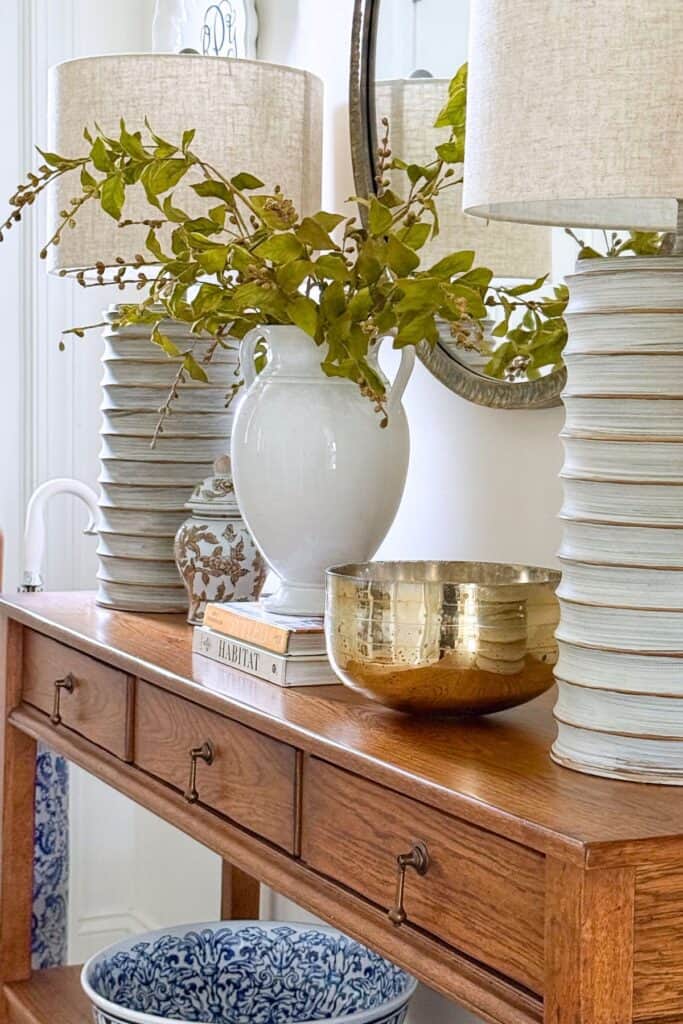
I think most of us who love to decorate are drawn to a collected look. I certainly am. I love rooms that feel layered, personal, and gathered over time.
But in our downsized, smaller home, I learned something quickly. Collected style can easily tip into clutter. It can start to feel fussy, crowded, or even confusing if I am not thoughtful about what I add and where I place it. That realization changed the way I decorate our home.
Now, when I create a collected look in one of our rooms, I pause and consider each piece. Does it add meaning? Does it support the room? Does it deserve the space it takes up? Because in a smaller home, every piece matters.
Creating a collected look without clutter is not about having less. It is about choosing well, editing with purpose, and letting what you love truly shine.
In this post, I want to show you exactly how to do that in your own home, no matter the size.
What Does A Collected Look Mean
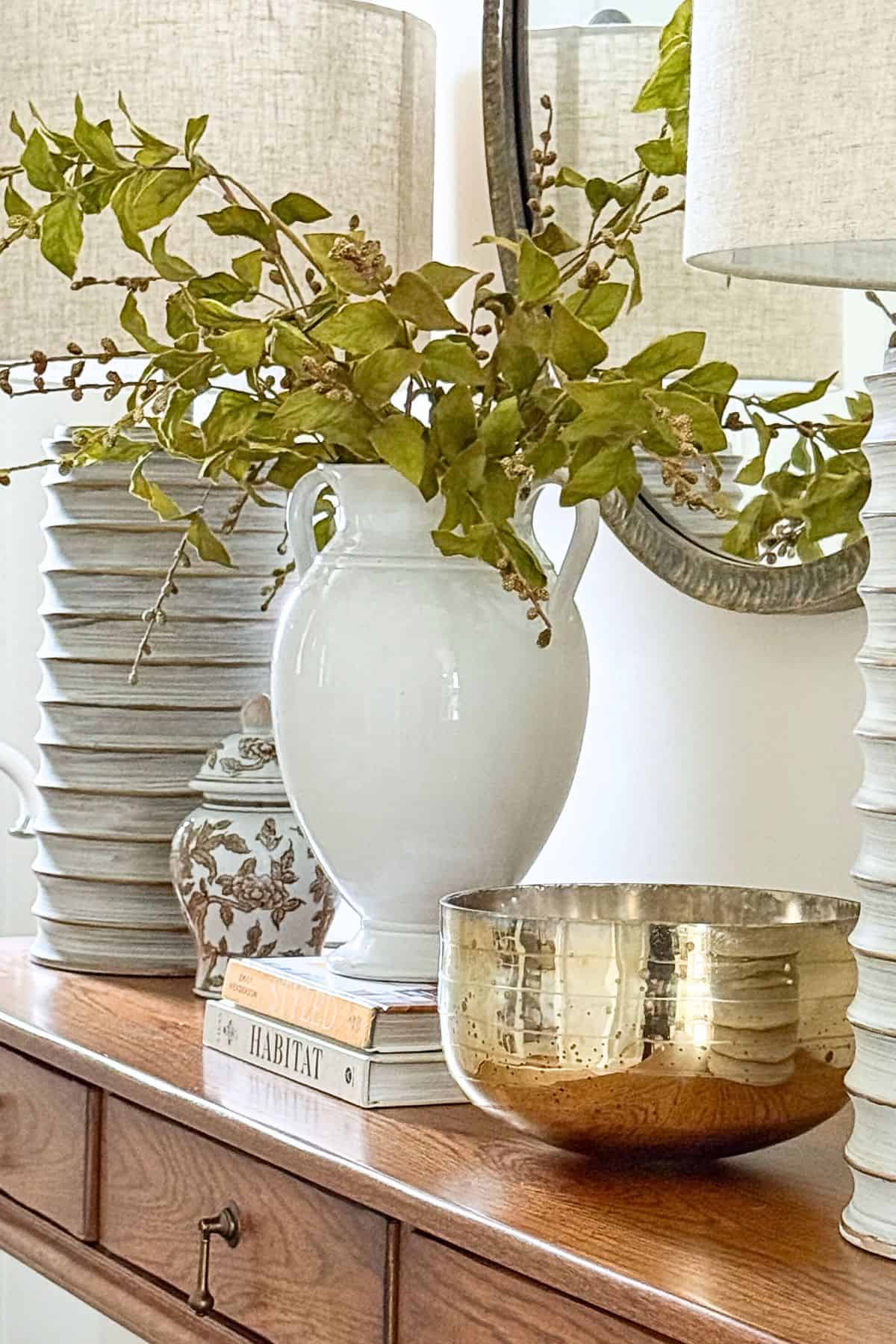
A collected home feels layered, personal, and thoughtfully gathered over time. It reflects your life, your experiences, and the things that matter to you. A collected home does not look rushed or overly decorated. It feels settled, everything looks like it belongs, and meaningful.
When someone walks into a collected room, they sense warmth and personality. The space feels curated rather than styled all at once. Nothing feels random, yet nothing feels stiff or overly arranged.
A collected room often includes:
• Pieces gathered over time
• A mix of old and new
• Items with personal meaning
• Layers of texture and depth
• Groupings that feel balanced
The beauty of a collected look is that it allows your home to grow naturally. You are not trying to copy a showroom. You are creating a space that tells your story. And don’t we all want a home that reflects who we are and tells our story?
Where many decorators get stuck is not in creating a collected look, but in knowing when to stop adding. That is where intention matters most.
This is where my THINK → DECIDE → DO method comes in.
THINK: What feeling do I want this room to have?
DECIDE: Which pieces truly support that feeling?
DO: Style them with space, balance, and restraint.
A collected home is never about how much you own. It is about choosing what deserves to be seen.
Why Collected Rooms Sometimes Feel Cluttered
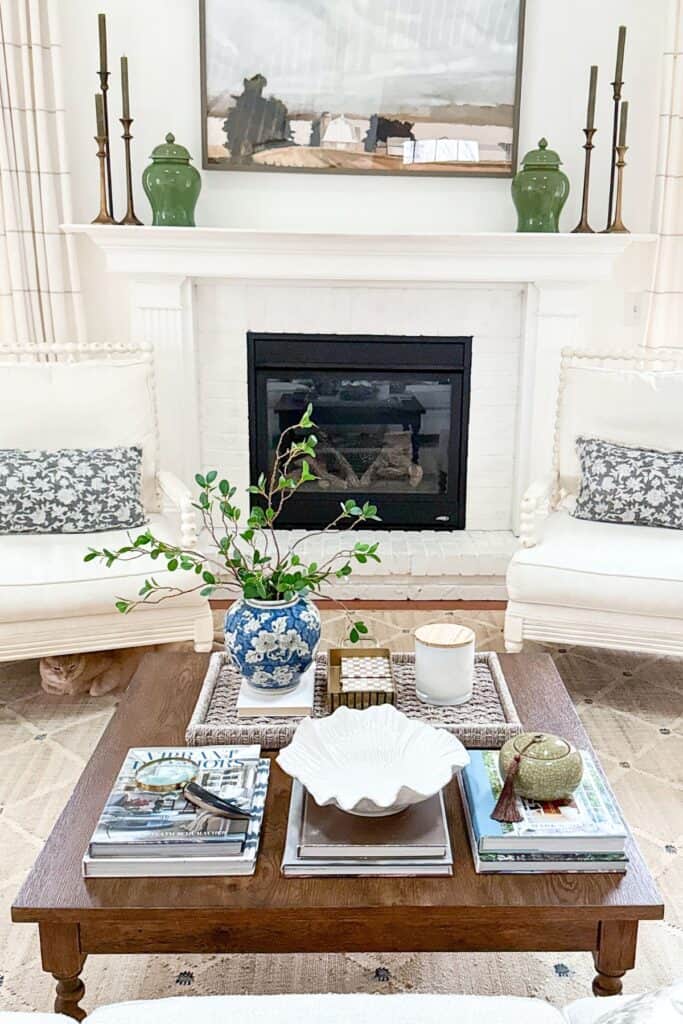
A collected room should feel layered and inviting. But when the layers are not created intentionally, the space can start to feel unsettled.
Most clutter does not come from owning too much. It comes from placing too much in one visual area without balance.
A room begins to feel crowded when:
• Small items are scattered instead of grouped
• There is no repetition of color or material
• Decorative pieces compete for attention
• Everything is the same height
• There is no visual resting space
When every item is asking to be noticed, the eye has nowhere to land.
This does not mean you need fewer meaningful pieces. It simply means they need structure. That is where decorating becomes thoughtful instead of reactive.
Here is how this fits into THINK → DECIDE → DO:
THINK: Is this surface supporting the room or overwhelming it?
DECIDE: Which pieces deserve to stay visible?
DO: Group them with intention and remove what distracts.
A collected home always feels calm, even when it is layered. The difference is not quantity. It is clarity.
The Decorating Principles That Keep A Room Looking Curated
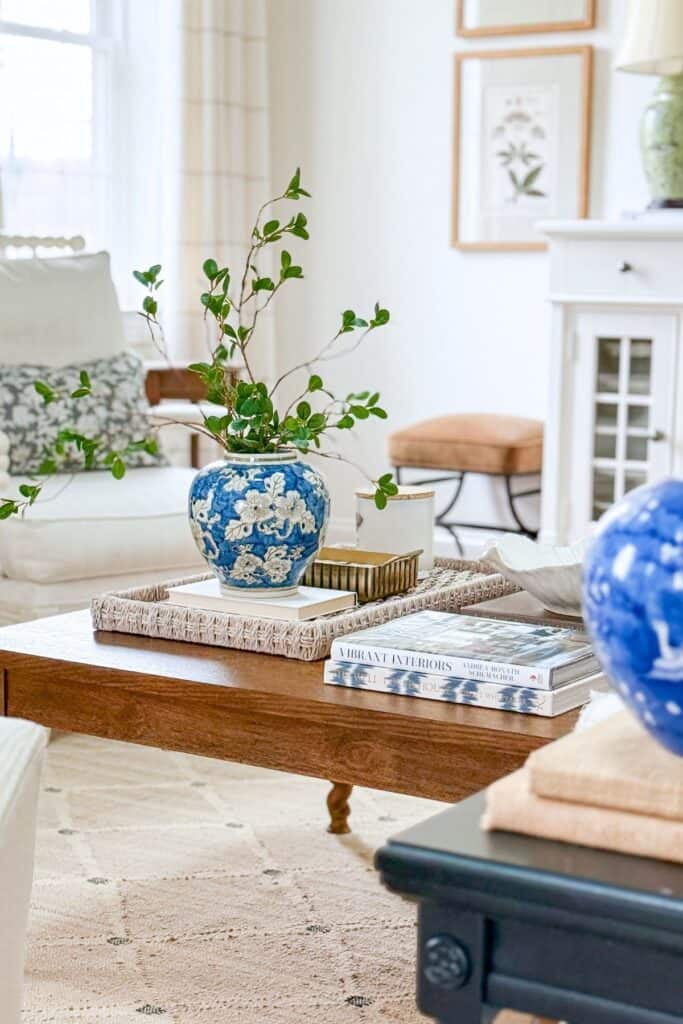
A collected look is not accidental. It follows simple decorating principles that bring order to the layers. When these principles are in place, a room feels calm and cohesive, even when it includes many meaningful items you display.
1. Scale And Proportion Matter
Every object in a room should relate in size to something else nearby. Large furniture anchors the room. Medium pieces support it. Smaller accessories add detail.
When everything is small, the room feels busy. When one piece is too large, it dominates.
Use your THINK → DECIDE → DO method here:
THINK: Is this piece the right size for this space?
DECIDE: Does it anchor or does it float?
DO: Replace, raise, lower, or remove until the scale feels balanced.
Scale is often the hidden reason a room feels unsettled.
2. Repetition Creates Calm
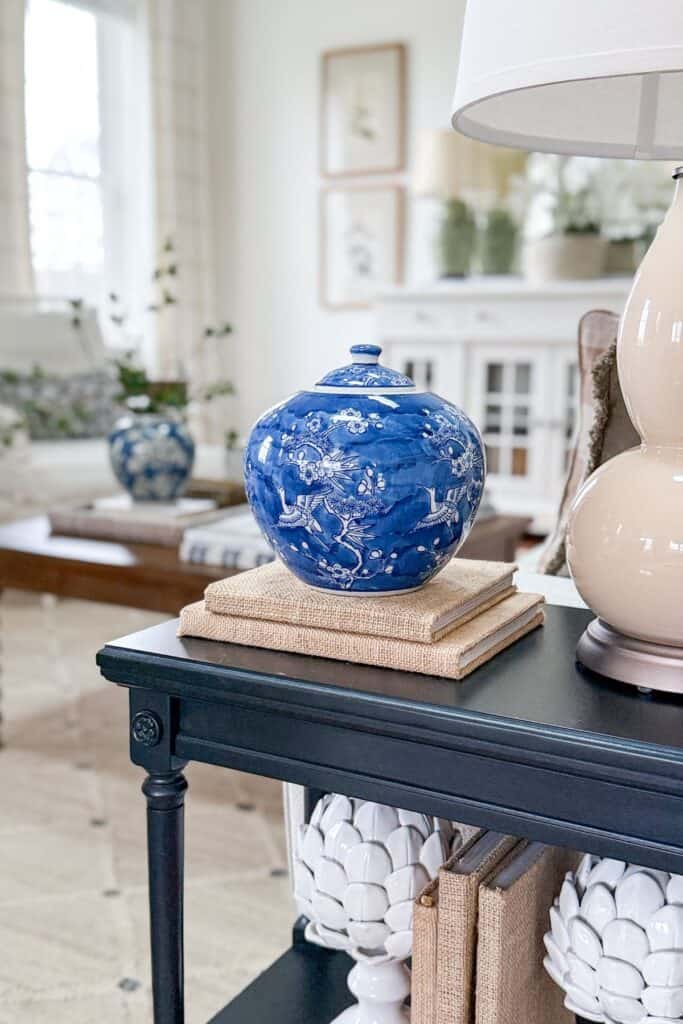
When colors, materials, or shapes repeat throughout a room, the space feels planned in the best way.
For example:
• A wood tone that appears in more than one place
• A color that shows up in pillows, art, and accessories
• Similar finishes across lighting or frames
Repetition connects pieces so they appear to belong together. Without repetition, a room can feel random.
3. Grouping Creates A Focal Point
Decor looks collected when it is gathered into intentional clusters.
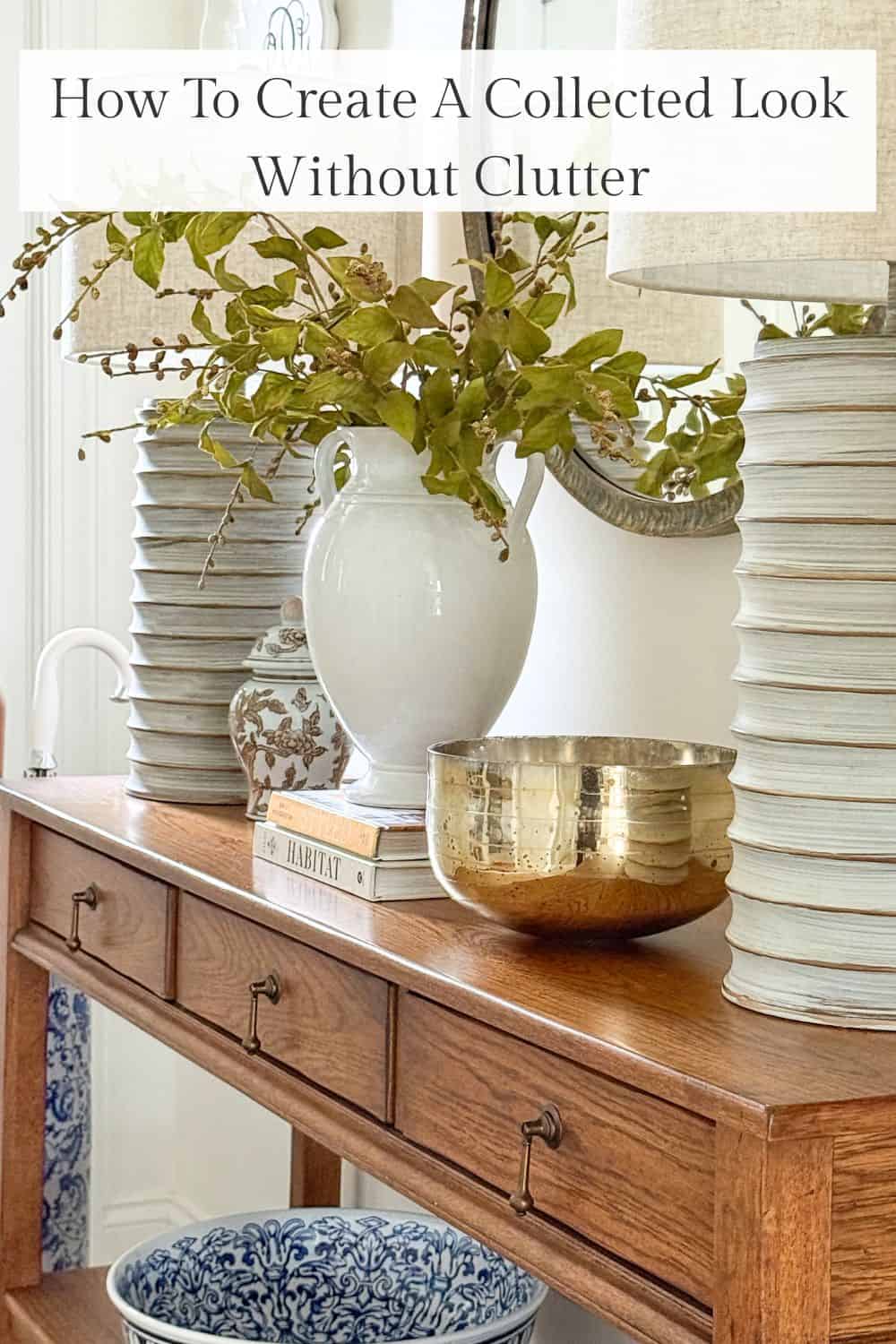
Instead of spreading five small items across a console, gather them into one balanced arrangement. Use a larger anchor piece, a medium supporting piece, and one or two smaller accents.
Grouping tells the eye, “Look here.” When items are scattered evenly across a surface, nothing feels important.
Grouping is about structure inside the arrangement.
4. Breathing Room Is Important
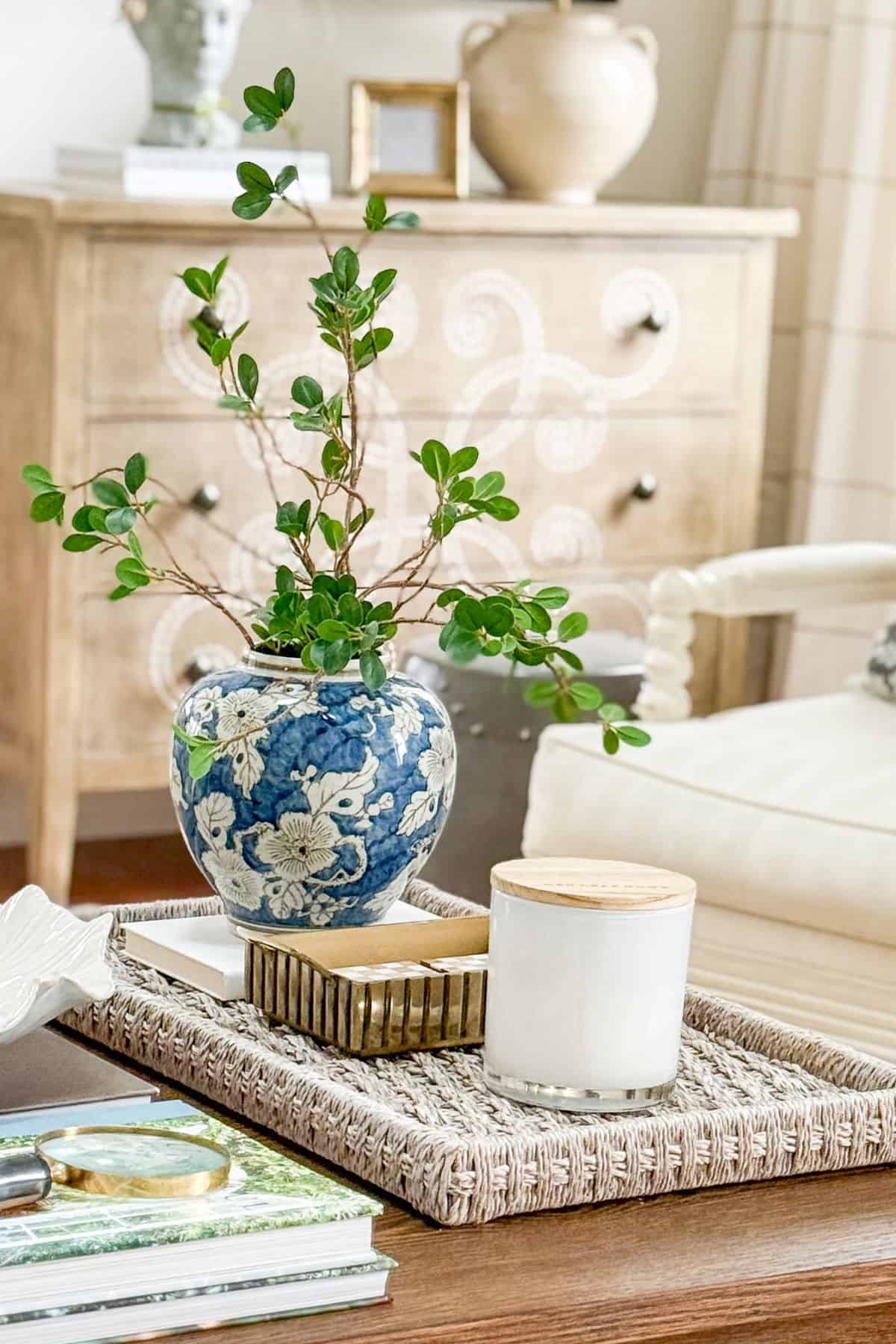
Once you create a grouping, stop. Leave visible space around it.
That empty space is not wasted. It is what makes the arrangement stand out. Without space around a vignette, even a well-styled grouping can feel crowded.
Breathing room is about restraint outside the arrangement.
A Simple Method For Styling A Collected Space
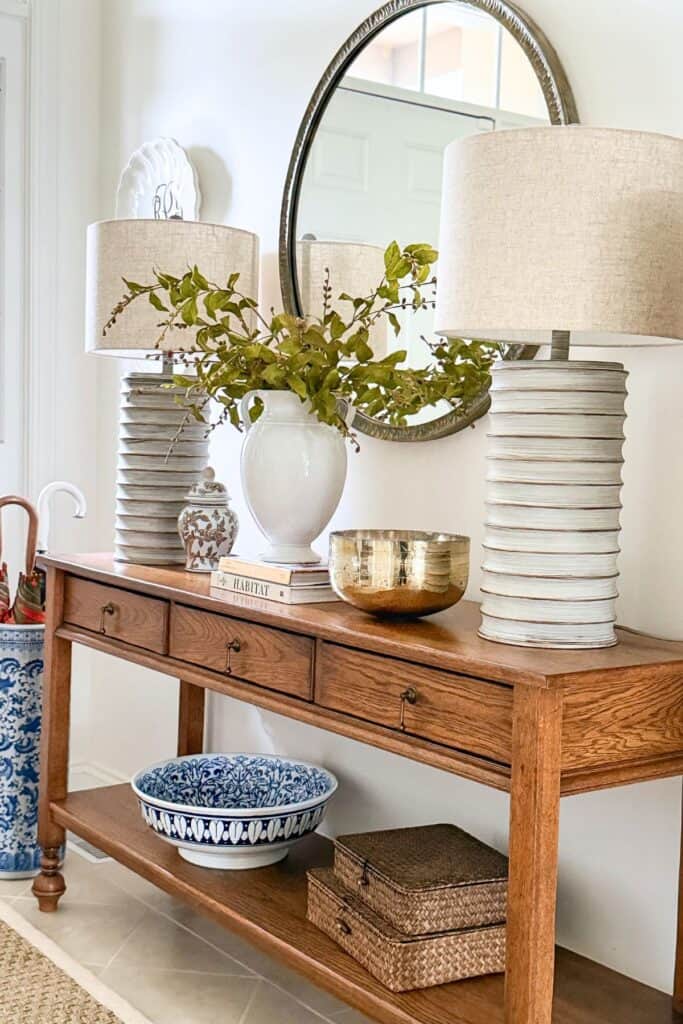
Once you understand scale, grouping, repetition, and breathing room, the next step is applying them in a simple way.
When I style a collected space, I do not start by adding more. I start by clearing the surface. This gives me a clean foundation so I can see what the space actually needs.
Then I build in layers.
Step 1: Start With One Anchor Piece
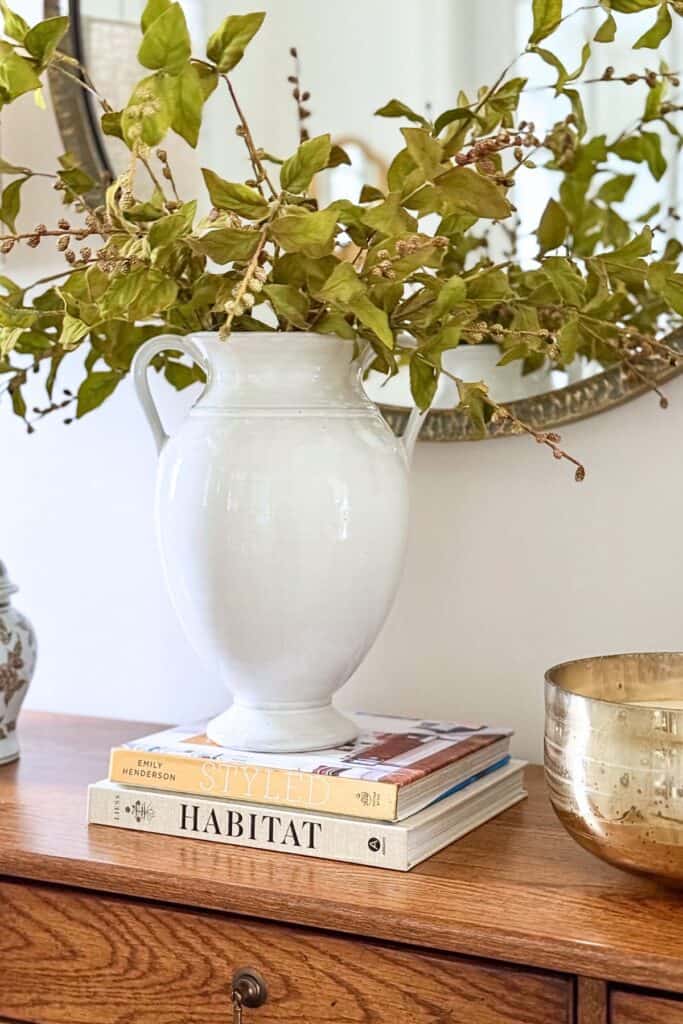
Choose one larger item that sets the tone. This might be a piece of art, a lamp, a large bowl, or a stack of books. The anchor gives the arrangement weight and direction. Without it, small items tend to float and look scattered.
Step 2: Add A Supporting Piece
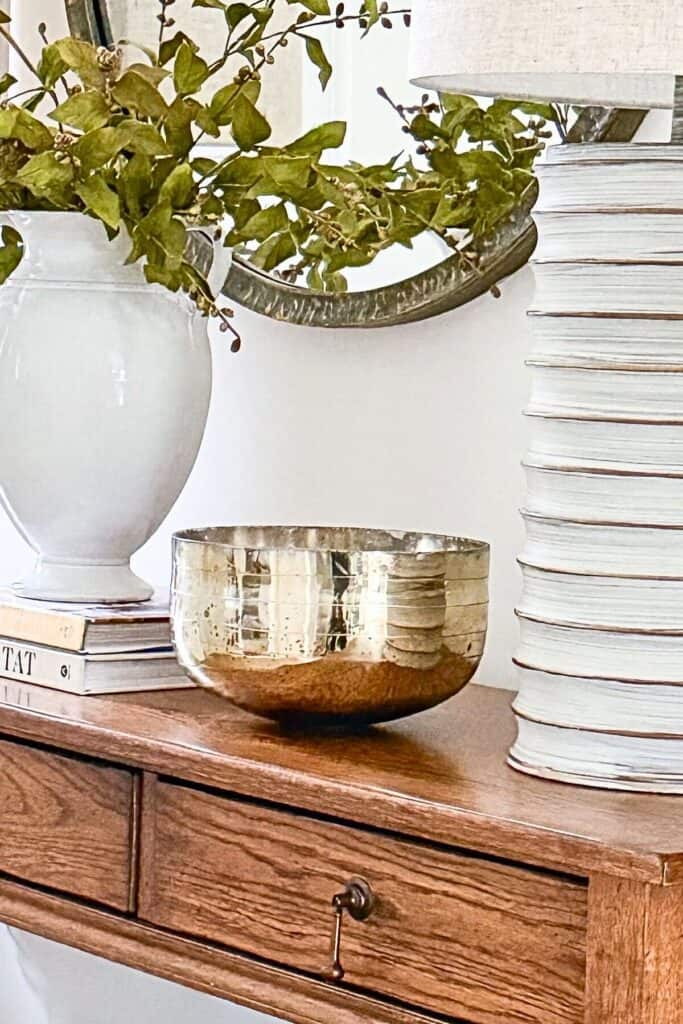
Next, add a medium-sized item that works with the anchor and begins to create a cohesive, collected look. This item could contrast in shape or material. If your anchor is tall, your supporting piece might be lower and wider. If your anchor is smooth, your supporting piece might add texture.
Now the arrangement begins to feel balanced.
Step 3: Add One Or Two Smaller Accents
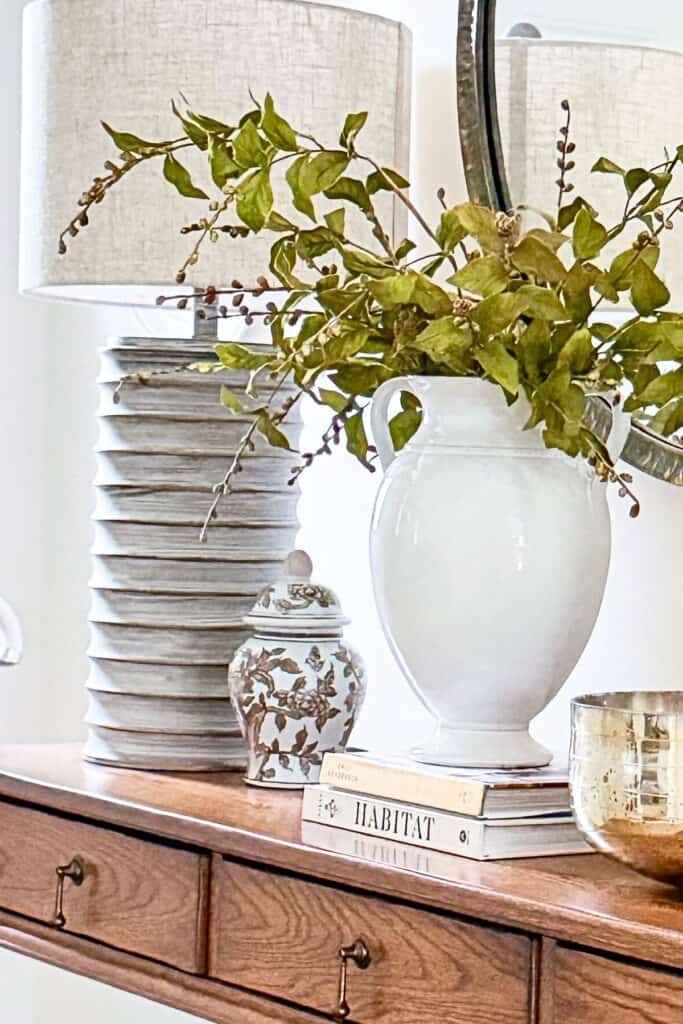
Finish with one or two smaller pieces that bring personality.
These are the details that make a space feel collected. But be thoughtful about what you choose. Too many small items are usually what push a surface toward clutter.
Step 4: Edit And Step Back
This is the most important part. After styling, step away for a few minutes. Then come back and look with fresh eyes.
Ask yourself:
• Does this feel balanced?
• Is there breathing room?
• Is anything competing for attention?
If something feels off, remove one item before adding another.
The Biggest Mistake That Turns A Collected Room Into Clutter
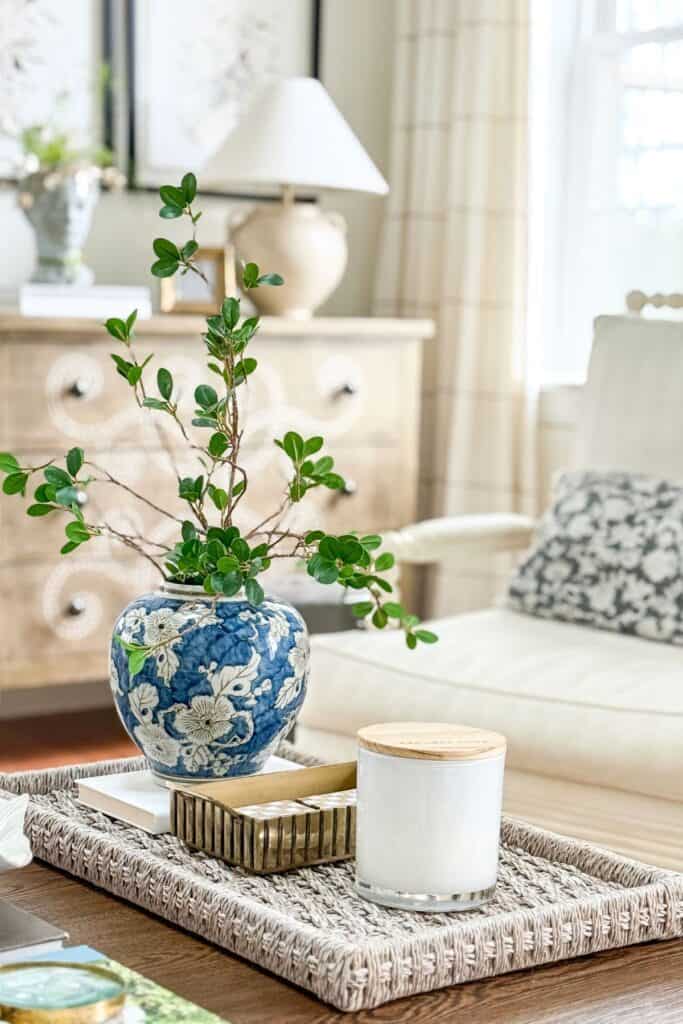
A collected look begins to feel cluttered when we keep adding things, even if we love them, without deciding what truly matters.
When too many items compete for attention, nothing stands out. The eye moves from piece to piece without landing anywhere. The room begins to feel busy, even if every item is beautiful on its own.
This often happens slowly. You add one more accessory. Then another. Then something seasonal. Then something sentimental. Before long, the room feels crowded, even though nothing seems wrong.
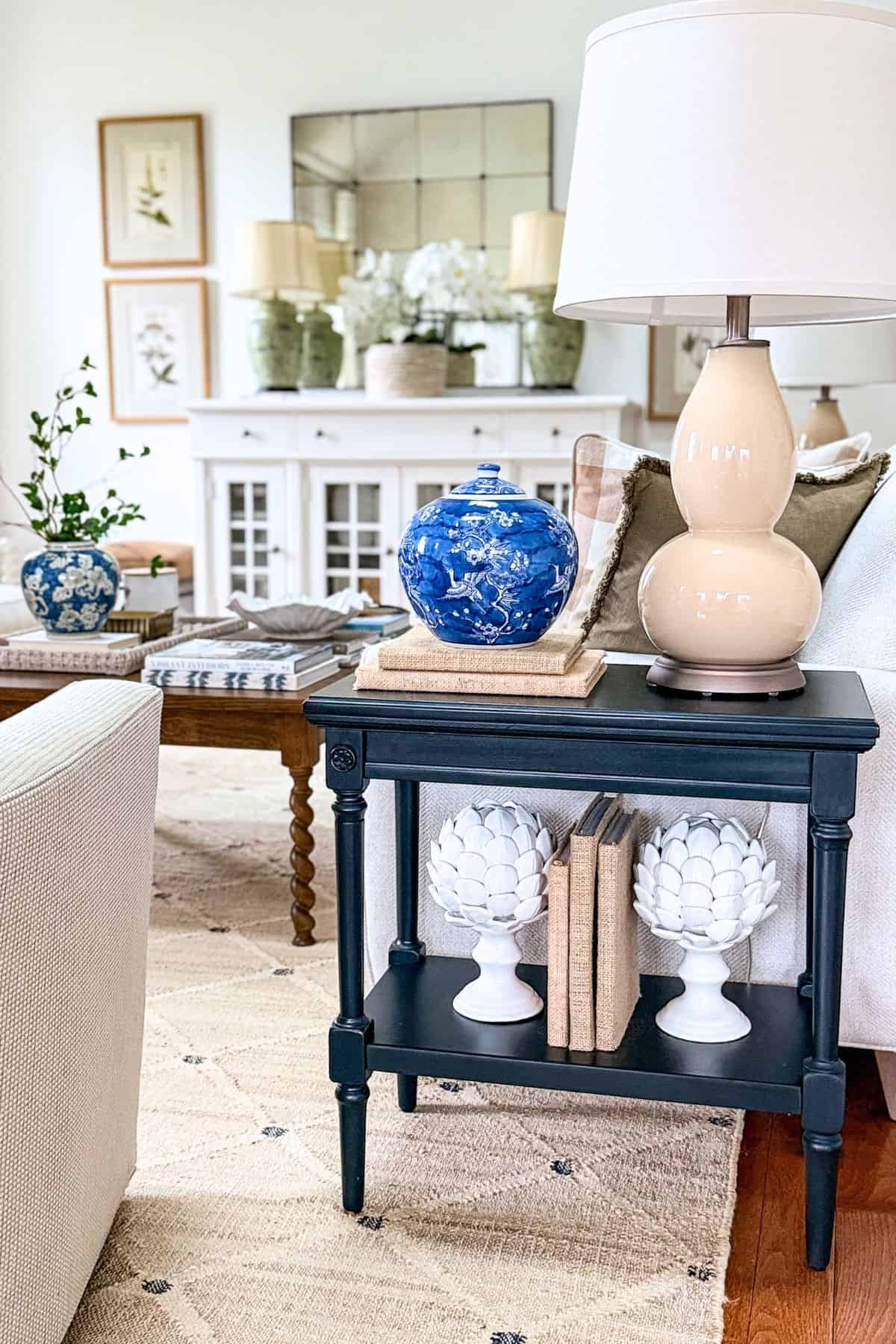
The real issue is not the objects. It is the lack of hierarchy.
Every collected room needs:
• A focal point
• Supporting pieces
• Space that allows those pieces to breathe
If everything grabs your attention, our room looks confusing and cluttered. This is where clarity matters most.
Pause and use THINK → DECIDE → DO.
Think about what you want to be the star of the room.
Decide which pieces support that focal point.
Do the edit that allows it to shine.
A collected home is not about displaying everything you love at once. It is about choosing what deserves attention today.
When you give importance to fewer pieces, the entire room feels calmer and more intentional.
Collected Or Cluttered? A Quick Checklist
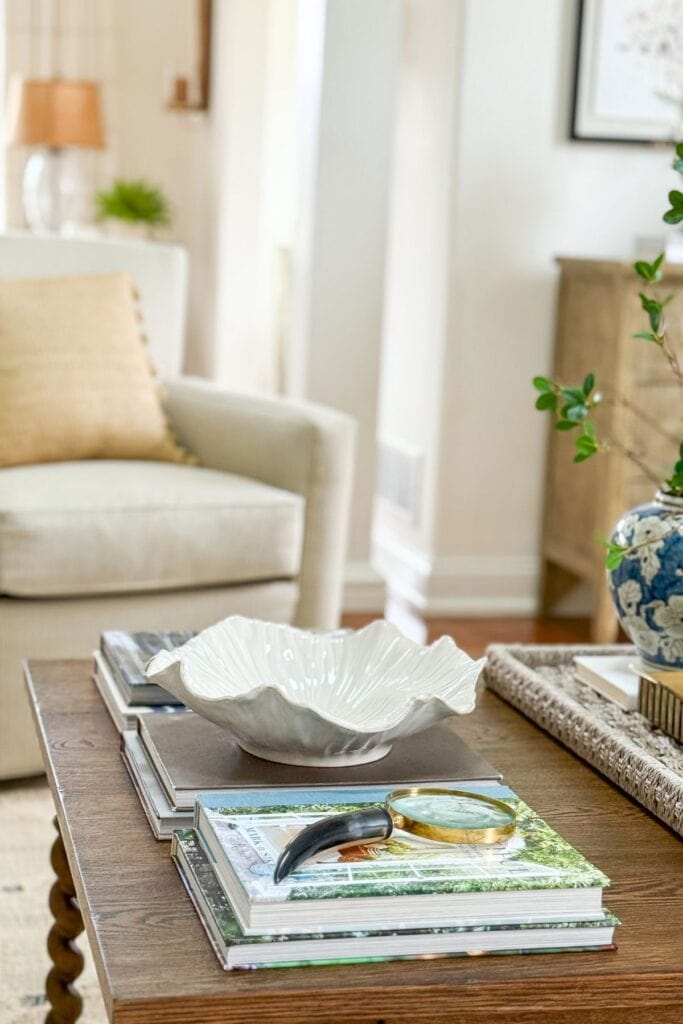
Walk into your room and pause. Use this simple checklist to decide whether your space feels collected or crowded.
A Room Feels Collected When:
• There is one clear focal point
• Large pieces anchor smaller ones
• Decor is grouped instead of scattered
• Color, material, or shape repeats in more than one place
• There is visible space between arrangements
• The eye can rest comfortably
• Not every surface is filled
A Room May Feel Cluttered When:
• Everything is asking for attention
• Small items dominate the space
• Nothing stands out as the main focus
• Accessories are similar in height and size
• Surfaces are filled edge-to-edge
• The room feels busy even though you love every piece
If your space leans toward clutter, do not panic. Collected rooms are refined over time.
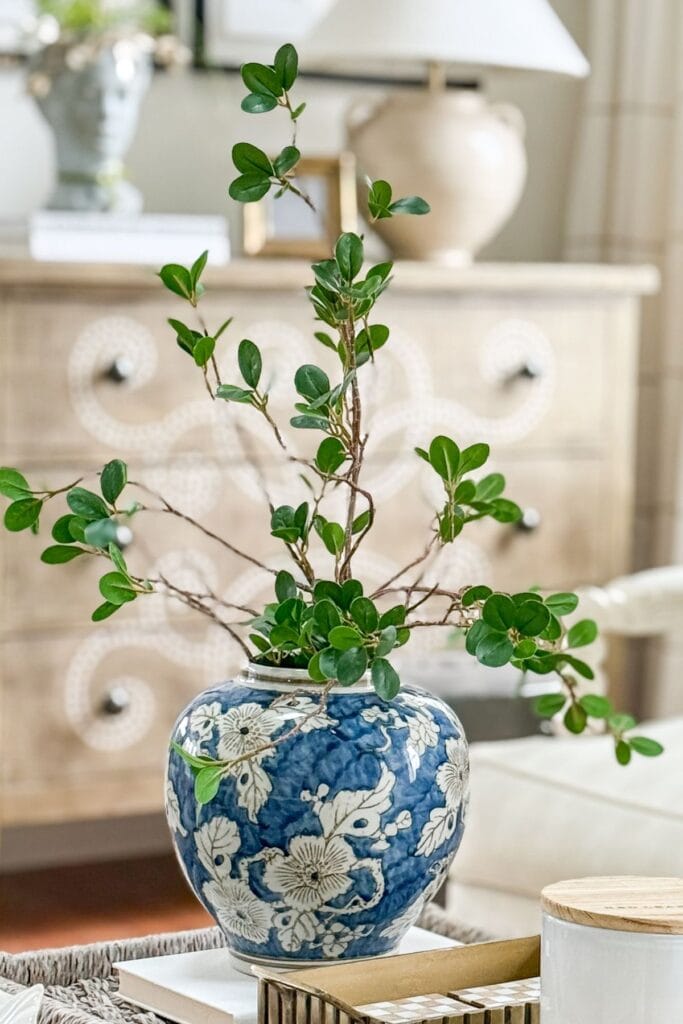
A collected home is not about how much you display. It is about what you choose to highlight.
When a room feels calm and balanced, it is usually because someone took the time to edit with purpose. Fewer, well-placed pieces will always feel more meaningful than filling every surface.
Your home probably does not need more. It needs clarity.
Shop The Collected Look
The number one question I get is, “Where did you get that?” So I’ve gathered similar pieces you can easily find and use in your own home. These are items that help create a collected look without adding clutter.

More Decorating Ideas To Create A Calm, Collected Home
If you love creating rooms that feel layered and beautiful without looking cluttered, these posts offer tips and decorating ideas to help you achieve a look you love.
How To Make Your Home Look More Expensive
Small, thought-out choices can completely change how a room feels. This post shares practical ways to create a polished, curated home without spending more money or filling your space with unnecessary decor.
7 Simple Decorating Tips For An Uncluttered Looking Home
If you want your home to feel calm and organized while still looking warm and inviting, this post walks you through simple strategies that make a big difference.
12 Decorating Rules You Should Never Break (or Almost Never)
These tried-and-true principles help you avoid common decorating mistakes and keep your rooms feeling balanced, intentional, and beautifully put together.
5 Simple Designer Tips For Creating The Perfect Focal Point
Every collected room needs a clear focal point. This post shows you how to create one that draws the eye and keeps the rest of the space from feeling busy or confusing.
Frequently Asked Questions About Creating A Collected Look Without Clutter
Creating a collected look can feel tricky, especially if you love beautiful things and want to display them. These are the questions I hear most often and the answers I’ve learned through trial, editing, studying, and living in a smaller home.
If your eye does not know where to land, the room probably feels cluttered. In a collected room, there is a clear focal point and defined groupings. In a cluttered room, everything competes for attention.
One simple test I use is this: can I quickly describe the main feature of the room? If I cannot, I know I need to edit.
There is no magic number, but there should be a clear hierarchy. I usually start with one strong piece, then add one or two supporting pieces if needed. I often use books as risers to help the main item have more presence.
If everything feels equally important, nothing truly stands out. That is often when a surface begins to feel busy.
Absolutely. In fact, small rooms benefit even more from thoughtful styling. In our downsized home, I learned that every piece must earn its place.
When space is limited, scale and breathing room matter even more. Editing becomes your best decorating tool.
I rotate pieces. I do not display everything at once. That one habit changed everything for me.
When you give special items space and time to shine, they feel intentional, or placed somewhere for a reason, instead of crowded together.
Adding too much.
It often happens slowly. One more vase. One more stack. One more decorative object. Eventually, nothing feels important.
When that happens, I remove three things before I add one. That simple rule keeps my rooms feeling calm and settled.
THINK about what the room truly needs.
DECIDE which pieces support that goal.
DO place them with intention and stop when the space feels balanced.
This pause keeps you from decorating on impulse. It turns styling into a thoughtful process instead of a reaction.
Happy decorating, friends…



Yvonne,
This was so helpful. I will keep it and refer to it when things are looking a little cluttered around the cottage. Great work, thank you!
Karen B.
Now I understand the difference in clutter and collecting. My den will be my first victim. LOL