How to Choose the Right Table Lamp: Size, Scale, and Style
This post may contain affiliate links. See my disclosure statement for details.
Learn how to decorate with table lamps room by room. Tips on size, placement, shades, and layered lighting to make every space feel warm and beautiful.
If there is one thing I have learned after years of decorating, it is that table lamps can completely transform the look and feel of a room. Not just the light they give off, but the mood, the warmth, the way they make a space feel finished and alive. I am a little bit lamp obsessed, if I am being honest.
I actually have a stash of lamps in my basement. A whole collection of ones I love but simply do not have room for at the moment. Over the years, friends and family have adopted many of them, and I love knowing they found a good home.
One of my most treasured lamps came from my mother-in-law. It is a beautiful large rabbit lamp, and I loved it from the moment she gave it to me. It held a special place in my home for years, and now it sits on the dresser in my oldest granddaughter’s bedroom. She loves it just as much as I did. That lamp has a precious little history all its own, a lineage of sorts, and every time I think about it, it makes me smile.
That is the thing about table lamps. They do so much more than light a room. They tell a story, set a mood, and when you know how to use them well, they become one of the most powerful decorating tools you have.
In this post, I am going to walk you through everything: from choosing the right size, scale, and style, to where to place them room by room, to how to style a beautiful vignette around them. By the time you are done reading, you will look at every lamp in your home a little differently.
How to Choose the Right Table Lamp: Size, Scale, and Style
Choosing the right table lamp is about two things working beautifully together: how a lamp functions in a space and how it looks. Get both right and a lamp can become one of the most hardworking and beautiful elements in a room.
Size And Scale
I am going to be completely honest with you. I have made some costly lamp mistakes over the years. All because I did not know the rules for size and scale. I would fall in love with a lamp in a store or online, bring it home full of hope, and then spend way too long trying to convince myself it worked in the room. More often than not, something was quietly bothering me about the look, even when I could not quite put my finger on what it was. I just kept rearranging things around it, hoping it would magically feel right.
It never did.
What I know now is that when a lamp feels off, nine times out of ten, it is a size-and-scale issue. And the good news is that once you know these simple rules, you can walk into any store or shop online with real confidence and choose a lamp that works beautifully every single time.
Here is what to keep in mind:
Lamp height
A table lamp should generally be between 24 and 34 inches tall, measured from the table surface to the top of the shade. When you are seated next to it, the bottom of the shade should fall right around eye level. This keeps the light comfortable and the bulb’s glare completely hidden. A lamp that is too short will feel insignificant. A lamp that is too tall will feel like it is looming over everything around it.
Shade width: The shade should be roughly twice the width of the lamp base. This creates the visual balance that makes a lamp look pulled together and intentional. A shade that is too narrow makes the whole lamp look top-heavy and a little awkward, even if you cannot immediately identify why.
Proportion to the surface
This is the rule I wish someone had told me years ago. The lamp must feel at home on the surface beneath it. A petite lamp on a large buffet or console will look timid and lost. A large commanding lamp on a small nightstand will feel overwhelming. Before you buy, measure your surface and know the footprint you are working with. Then step back and look at the whole picture. The lamp, the surface, and everything around it — before you decide.
The visual weight of the room: A lamp also needs to hold its own against the other elements in the space. A large mirror, a substantial piece of furniture, or a bold piece of art all demand a lamp with enough presence to stand confidently alongside them. This is something I learned firsthand with my buffet lamps, and I will share that story in just a moment.
🌿 TIP BOX: Before you shop for a lamp, take two minutes to measure the height and width of the surface it will sit on. Then use painter’s tape to mark the approximate height and width of the lamp you are considering on the wall behind it. This little trick will save you from bringing home a lamp that is the wrong size.
🌿 TIP BOX: Here is another little trick that made a big difference in my own home. I added 2-inch, 8-inch square clear acrylic risers under my lamps to give them more height and presence. It is such a simple thing, and the result was remarkable. You can find them HERE, HERE, HERE, and HERE. They can be a bit pricey, but so worth it and will last until you pass them down.
Proportion to the Surface
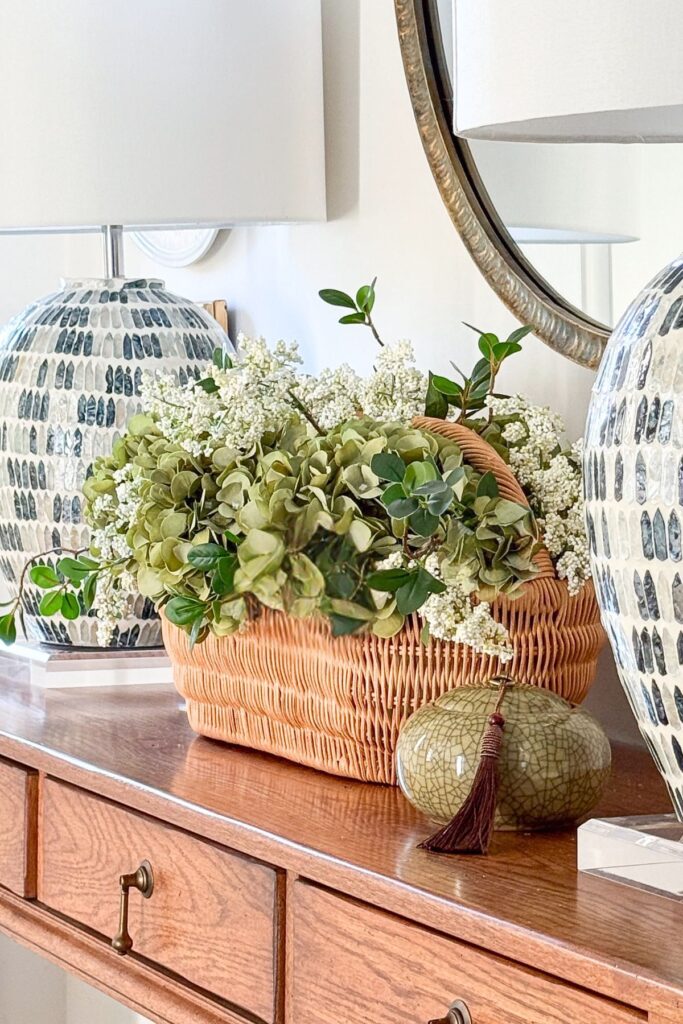
This is the rule I wish someone had told me years ago, and it would have saved me from more than a few lamp mistakes. The lamp must feel at home on the surface beneath it. A petite lamp on a large buffet or console will look timid and lost. A large commanding lamp on a small nightstand will feel overwhelming and out of place.
Before you buy, measure your surface and know the footprint you are working with. Then step back and look at the whole picture, the lamp, the surface, and everything around it, before you decide. A lamp that looks perfect in a store or beautiful in an online photo can feel completely wrong once it is sitting on your specific surface in your specific room. Knowing your measurements before you shop changes everything.
🌿 TIP BOX: Before you shop for a lamp, take two minutes to measure the height and width of the surface it will sit on. Then use painter’s tape on the wall behind the surface to approximate the height of the lamp you are considering. This simple trick will save you from bringing home a lamp that is the wrong size and scale for your space.
The Visual Weight of the Room
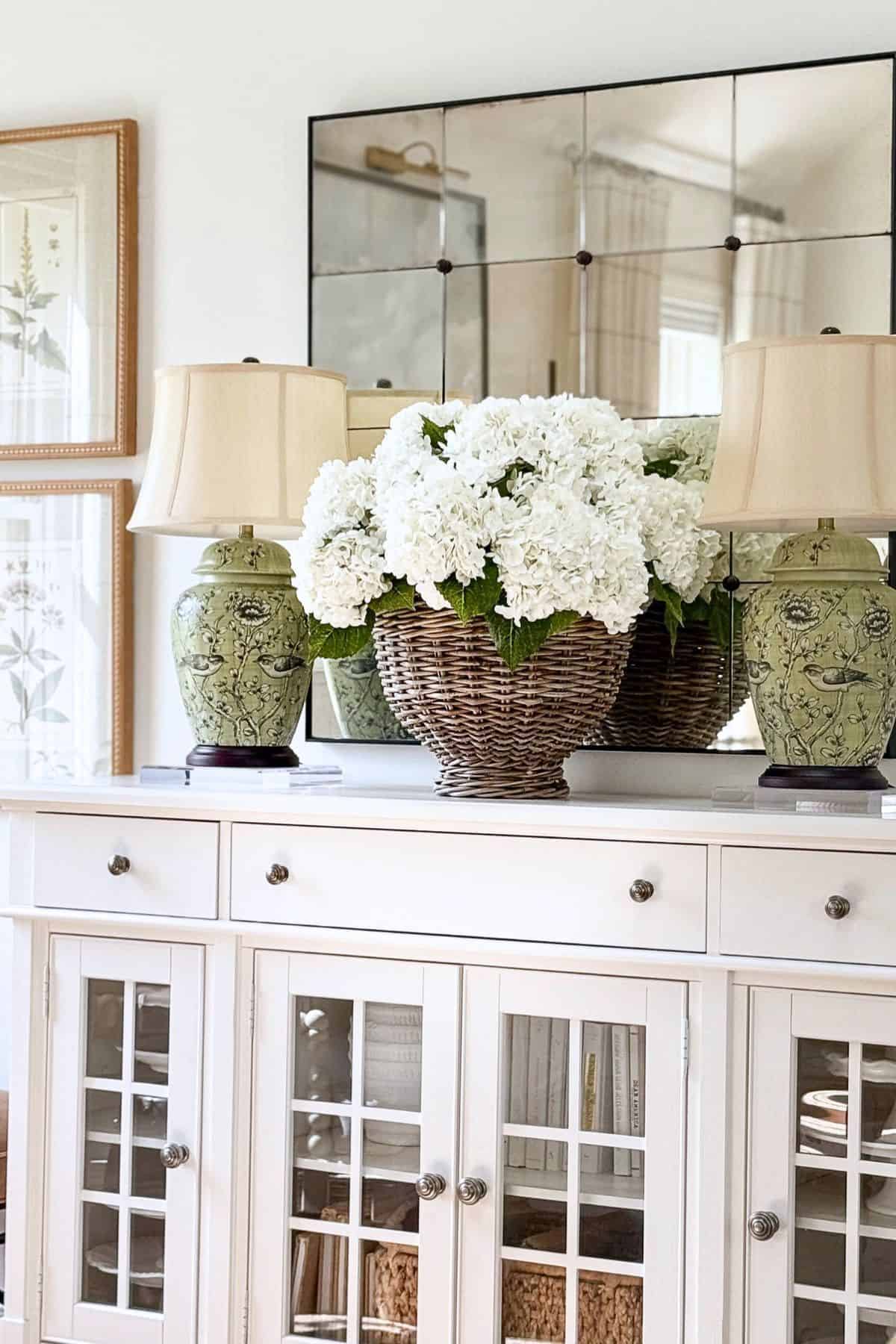
A lamp also needs to hold its own against the other elements in the surrounding space. A large mirror, a substantial piece of furniture, or a bold piece of art all demand a lamp with enough presence and visual weight to stand confidently alongside them. A lamp that is too slight will simply disappear next to strong, substantial pieces.
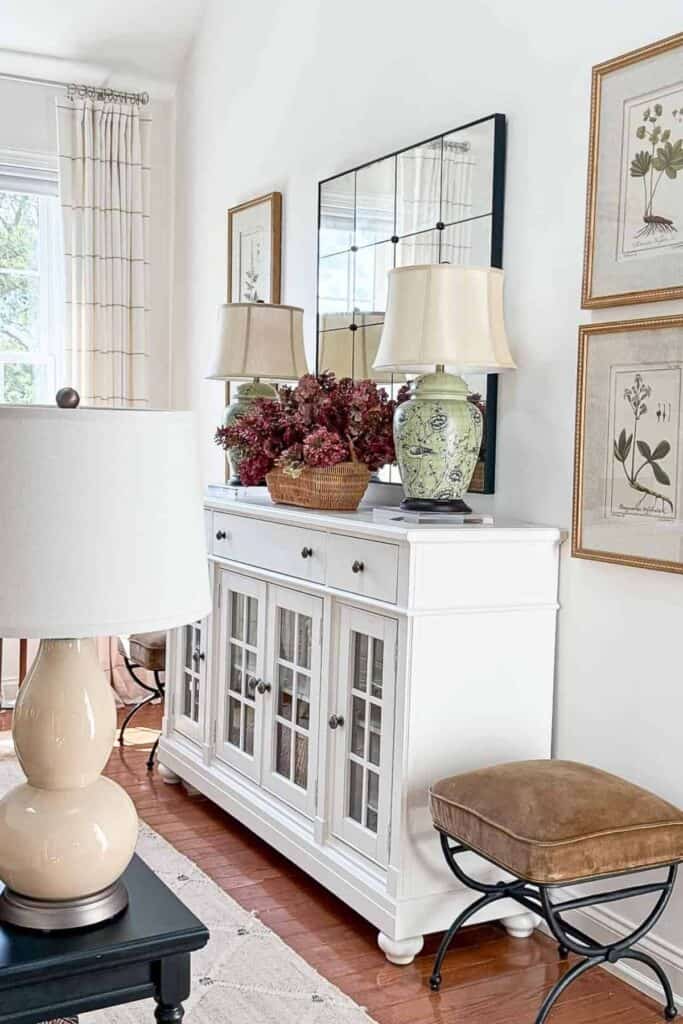
This is something I learned firsthand while searching for lamps for my white buffet. I knew those lamps needed enough height, presence, and personality to hold their own against a large buffet and a substantial mirror behind it. A small lamp or one that did not make a statement would have been completely lost in that setting. Knowing the visual weight your lamp needs to carry before you shop is just as important as knowing the right height and width.
🌿 TIP BOX: Stand back and look at the whole wall or area where your lamp will live. Take note of the largest, most visually strong elements in that space,the furniture, the art, the mirror. Your lamp needs to feel like it belongs in that company, not like it snuck in uninvited.
Style and Look
Once you know the size you need, the really fun part begins. A table lamp is not just a light source; it is a decorating statement. The right lamp brings color, texture, pattern, and personality to a space in a way very few other accessories can. So before you shop, think about what your room is asking for.
Lamp Base Style and Material
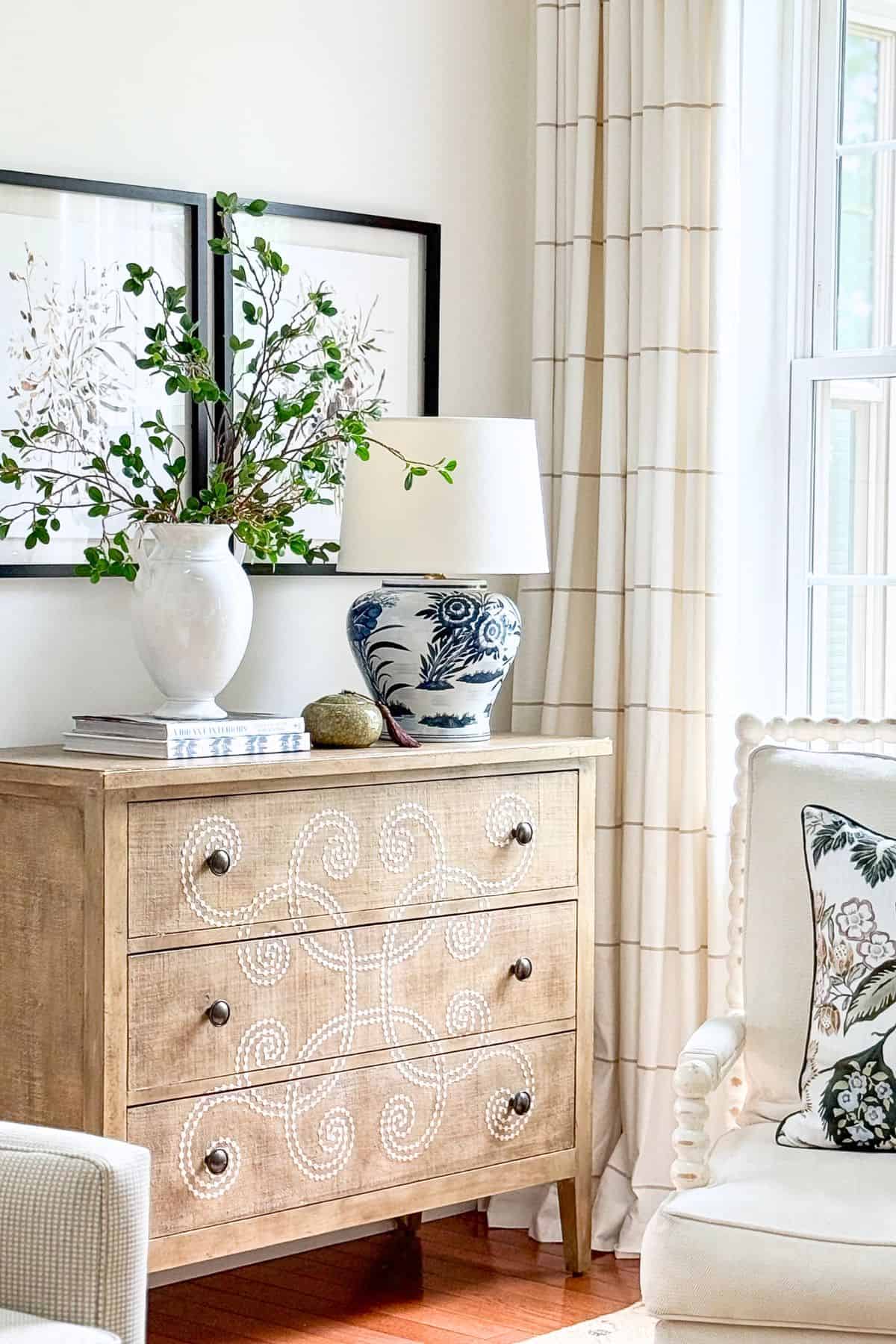
When it comes to lamp bases, ceramic is my first choice almost every time. It is the most versatile material. It works beautifully in traditional rooms, transitional spaces, casual settings, and more formal ones too. Within ceramic, my absolute favorite style is the ginger jar. There is something about that classic rounded shape that feels timeless and endlessly beautiful to me.
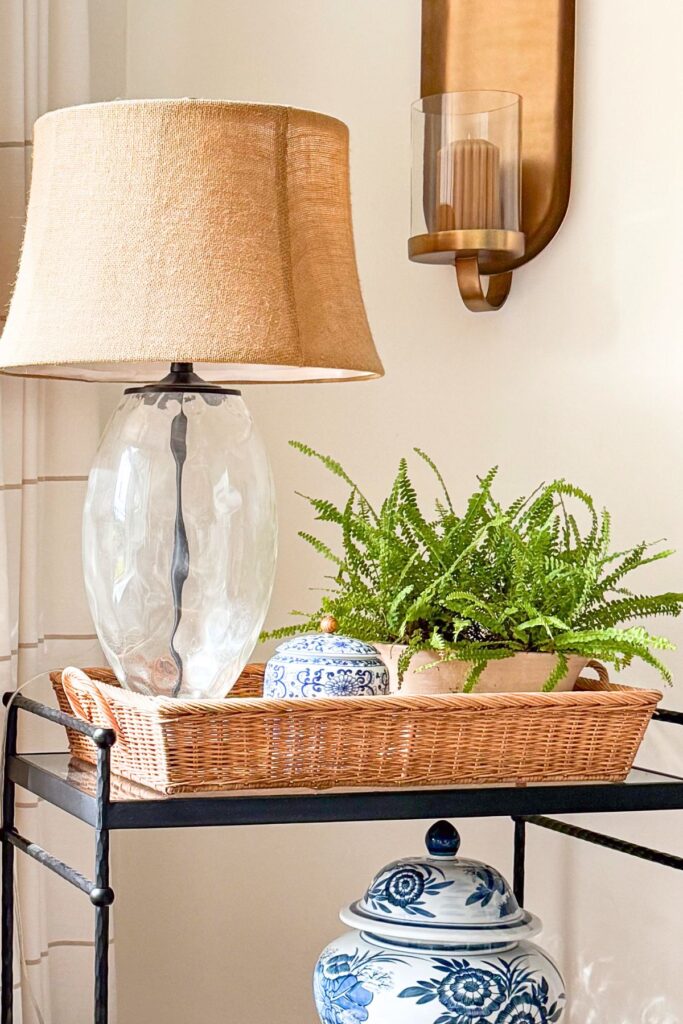
Glass bases can be absolutely beautiful in the right situation. I have a lamp with a clear glass base that I genuinely love, but honestly, what I fell in love with first was the burlap shade and the lamp’s beautiful height. Since it was glass rather than crystal, I felt it worked with my style beautifully. Sometimes a lamp earns its place because one or two things about it are just exactly right.
Statement Lamps vs. Neutral Lamps
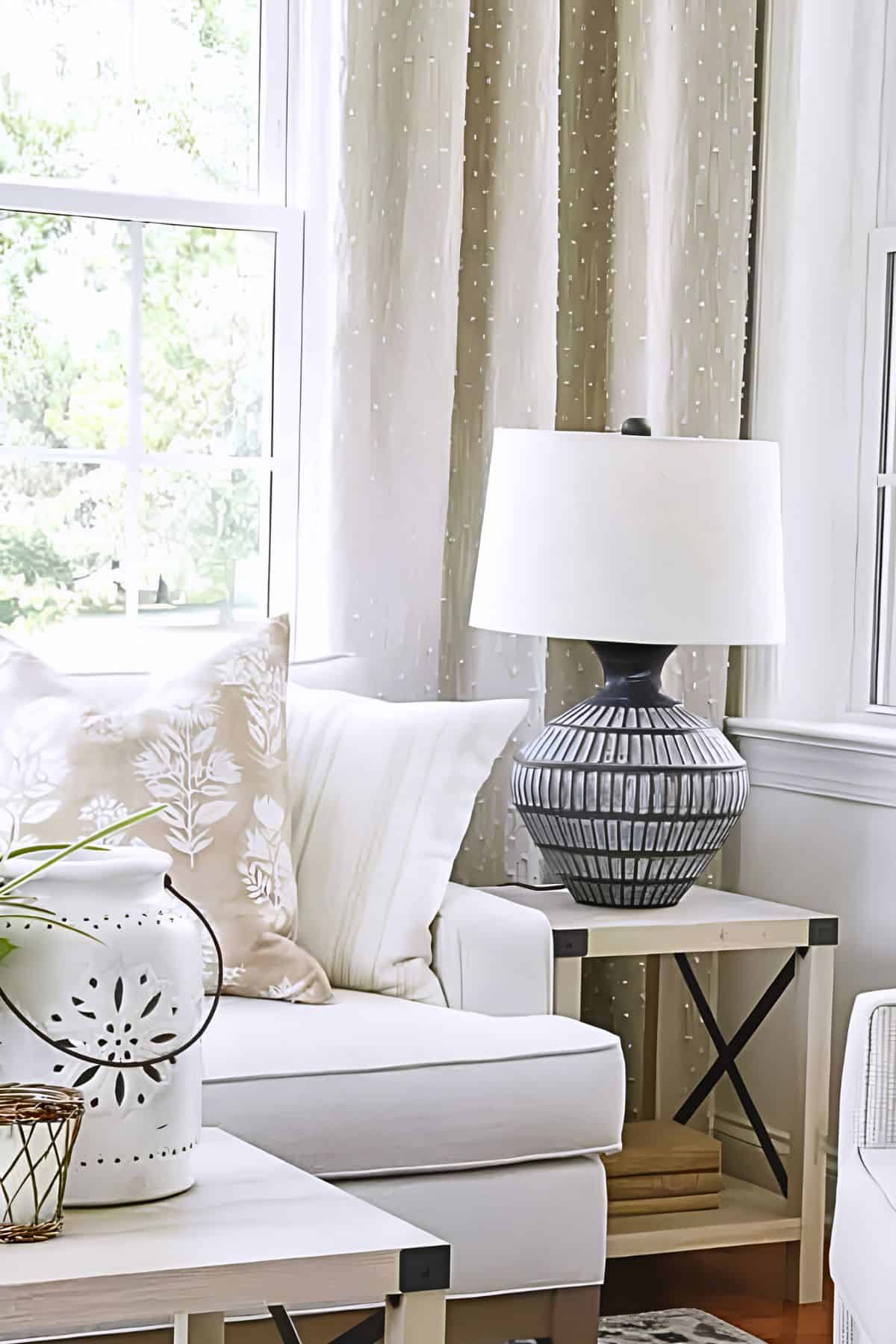
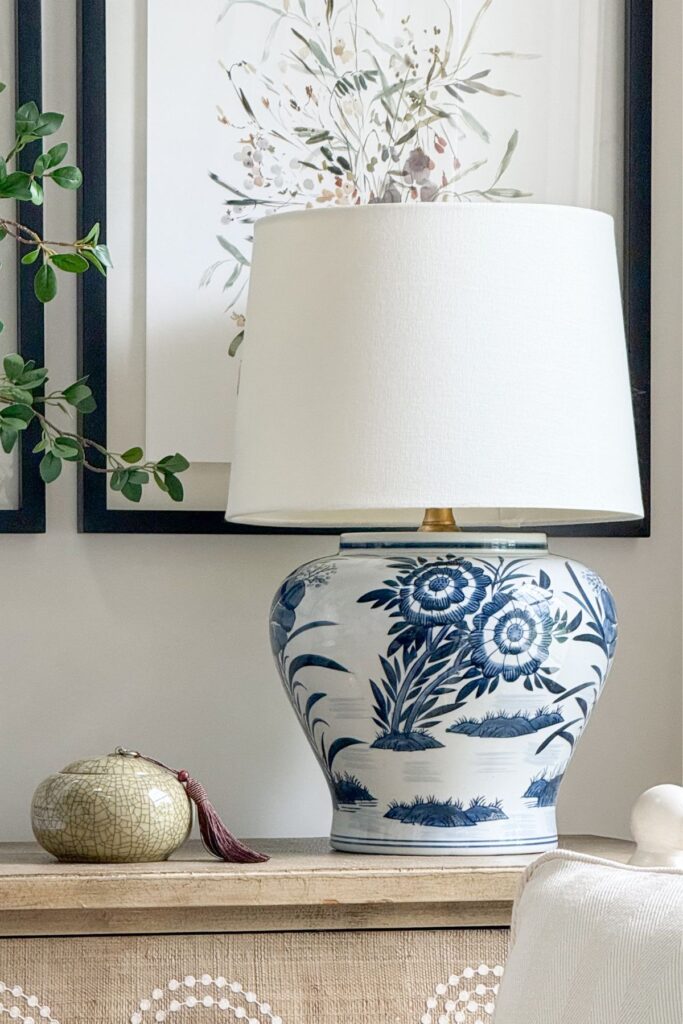
Here is one of the most useful lamp styling secrets I know, and it is something I practice in my own living room. Not every lamp in a room needs to be a statement piece. In fact, if every lamp is competing for attention, the room starts to feel too busy.
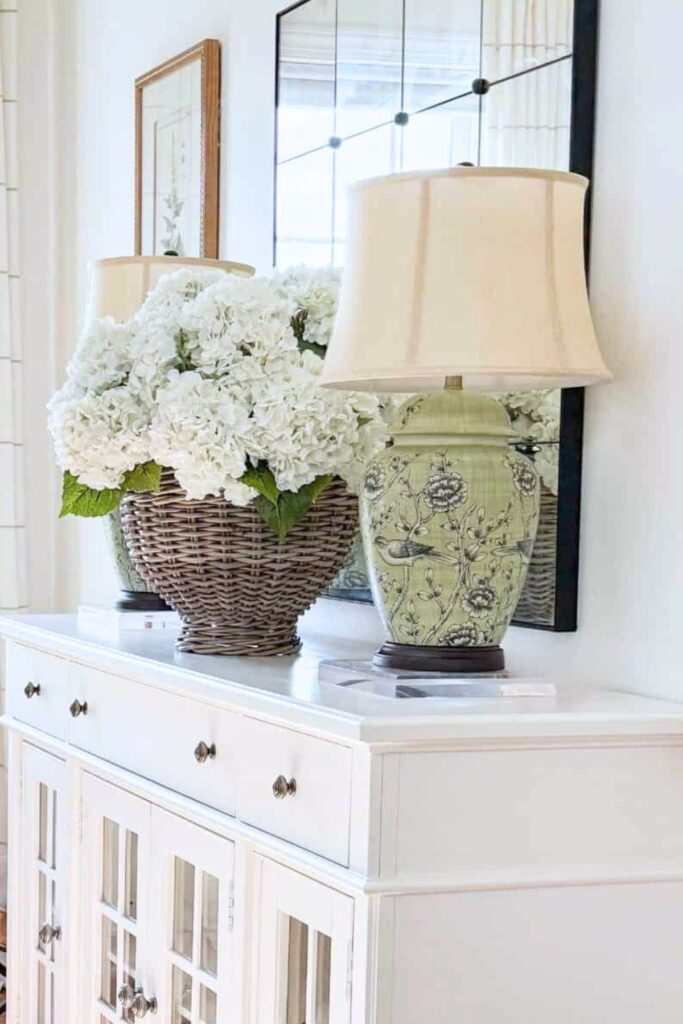
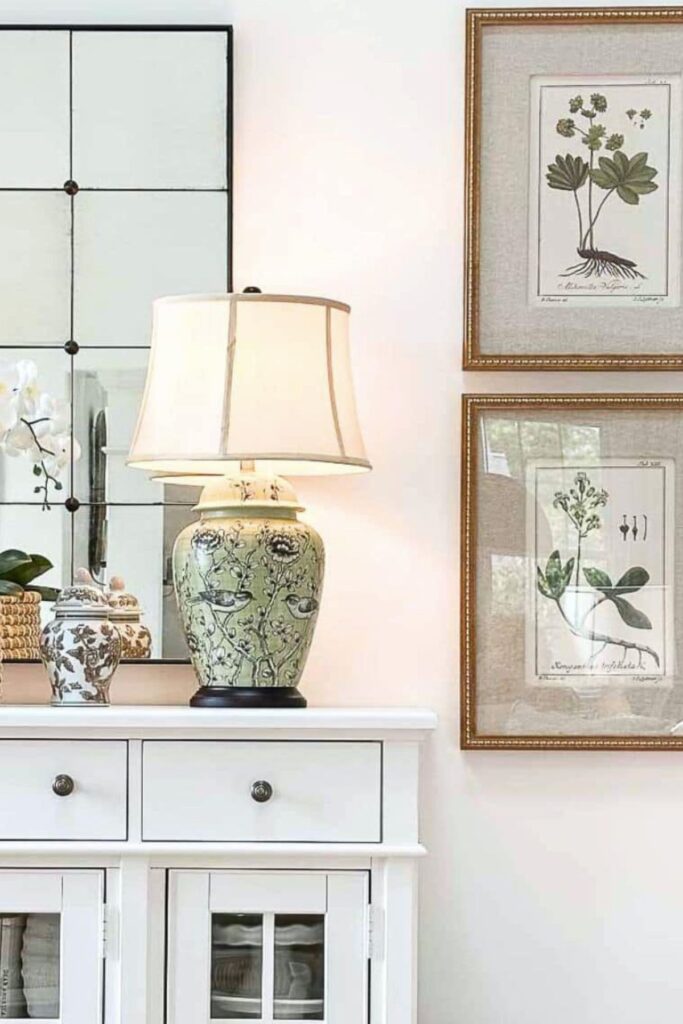
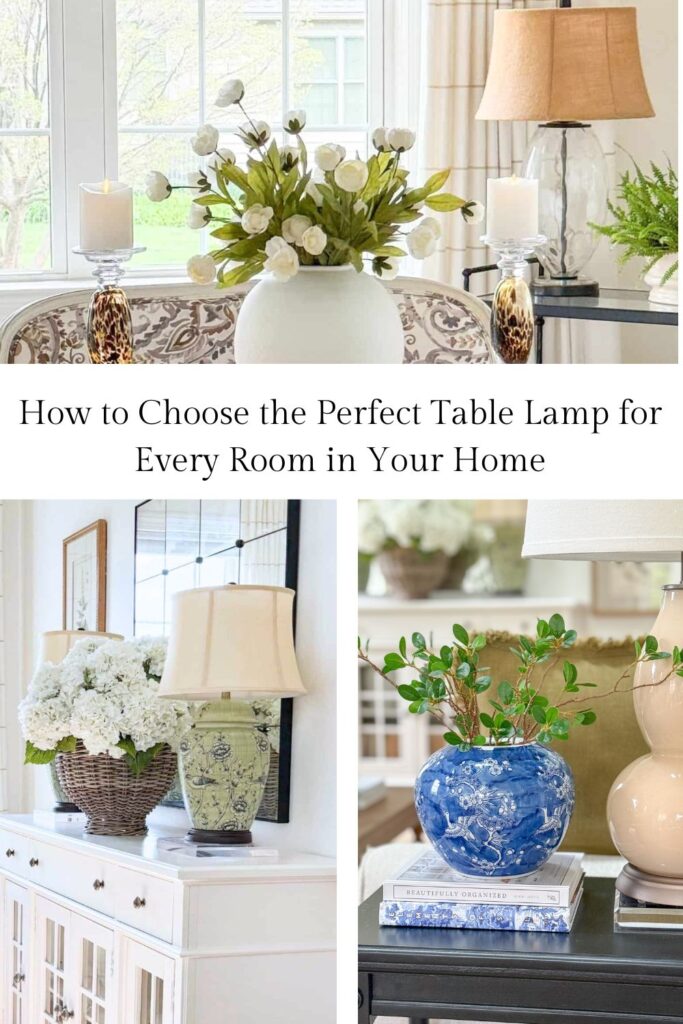
In my living room, the green ginger-jar lamps on the buffet make a clear statement. They bring color, pattern, and personality to that side of the room. On the opposite side, a beautiful blue-and-white ginger jar lamp holds its own as another focal point.
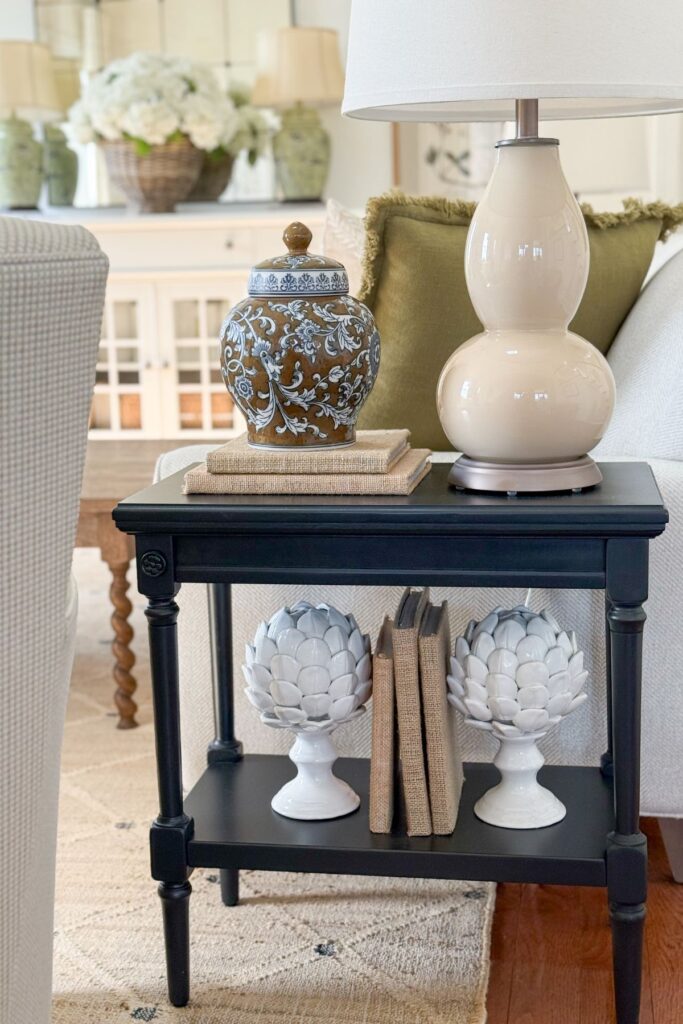
But between those two statement lamps, the tall, neutral double-gourd ceramic lamps on the black end tables do something just as important. They bring balance. They have a lovely shape and quiet presence without adding more color or pattern to compete with everything else. The room feels collected and calm rather than chaotic because of that balance.
Think of it this way: statement lamps are like a bold piece of jewelry. Neutral lamps are the beautiful outfit underneath that makes the jewelry shine.
🌿 TIP BOX: When placing lamps in a room, ask yourself which ones should speak and which ones should listen. A room with one or two statement lamps balanced by quieter neutral ones will always feel more pulled together than a room where every lamp is fighting for attention.
Lampshade Shape and Color
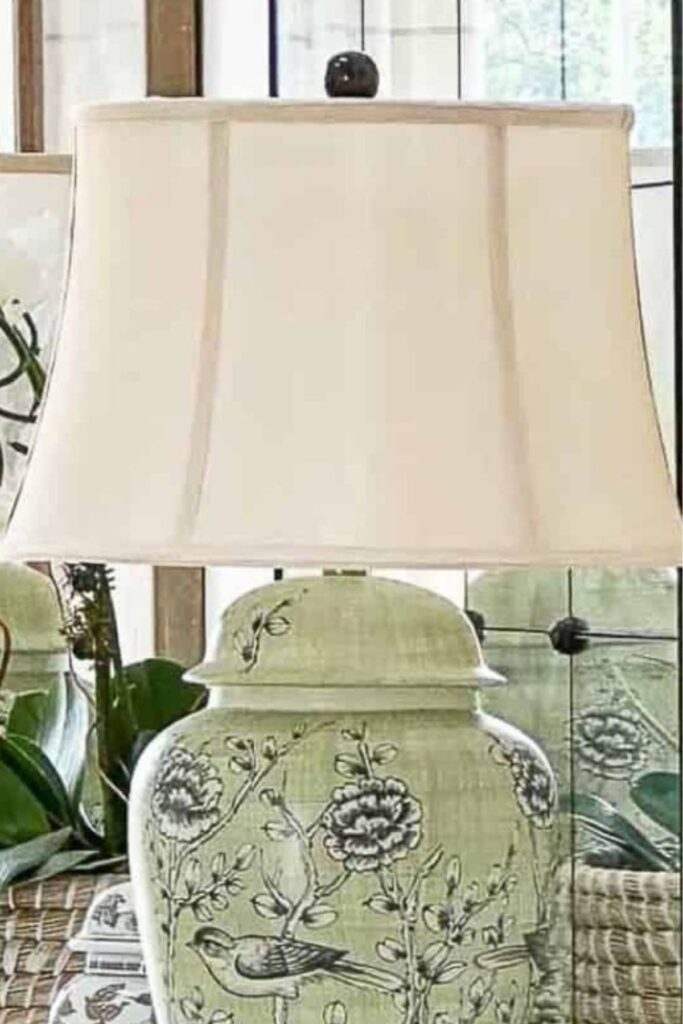
I went through a drum shade stage for years, and I still think they are clean and handsome. But over time I have come to love something a little different — a shade with graceful movement and a gentle curve. Not a deeply flared bell shape, but something in between. A shade that has just enough shape to add quiet beauty to the room. You may not consciously notice it, but you will feel it. The right shade shape adds a subtle, almost subliminal layer of beauty that makes a room feel more finished and considered.
For shade color, I almost always reach for a soft warm white or a linen shade over a stark crisp white. Bright white shades can feel cold and jarring, especially against warm walls. A soft warm shade glows beautifully when the lamp is lit and feels so much more inviting.
And please do not overlook burlap shades. In my dining room, a burlap shade does two things I love: it adds wonderful texture and visual interest against my warm white walls, and it works beautifully with the natural, organic elements in my color story.
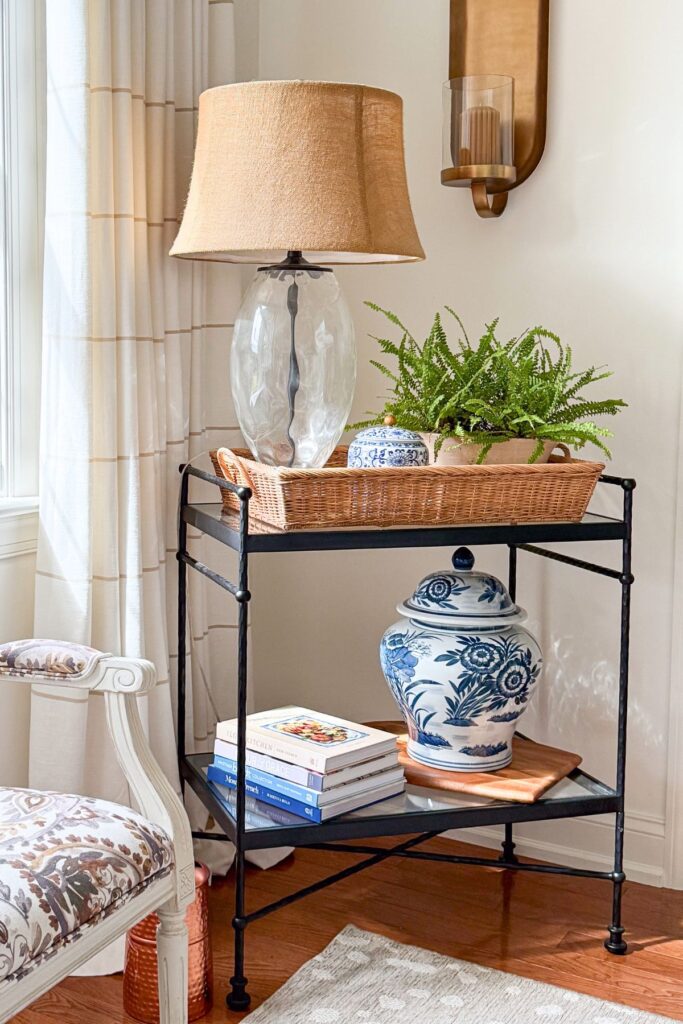
A burlap shade is an easy and often very affordable way to add warmth and texture to a room that needs a little more of both.
Where to Place Table Lamps in Your Home
Most people think about table lamps in the obvious places, a nightstand, an end table, a console. And those are all wonderful spots. But once you understand the two simple principles behind good lamp placement, you will start seeing opportunities for lamps all over your home that you never considered before.
Place a Lamp Where You Need a Pool of Light
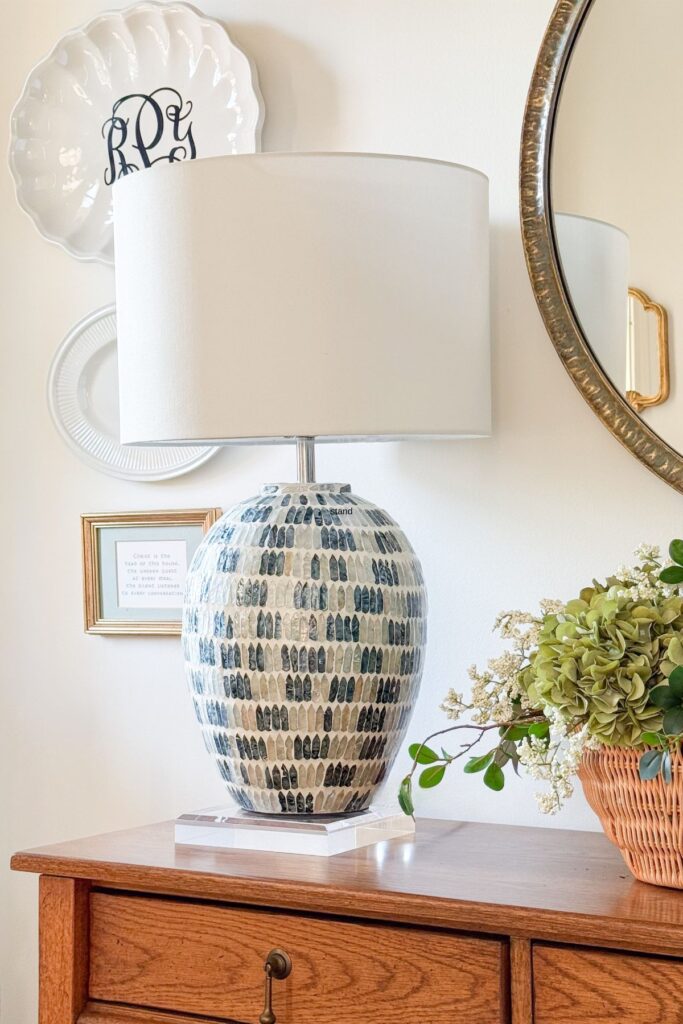
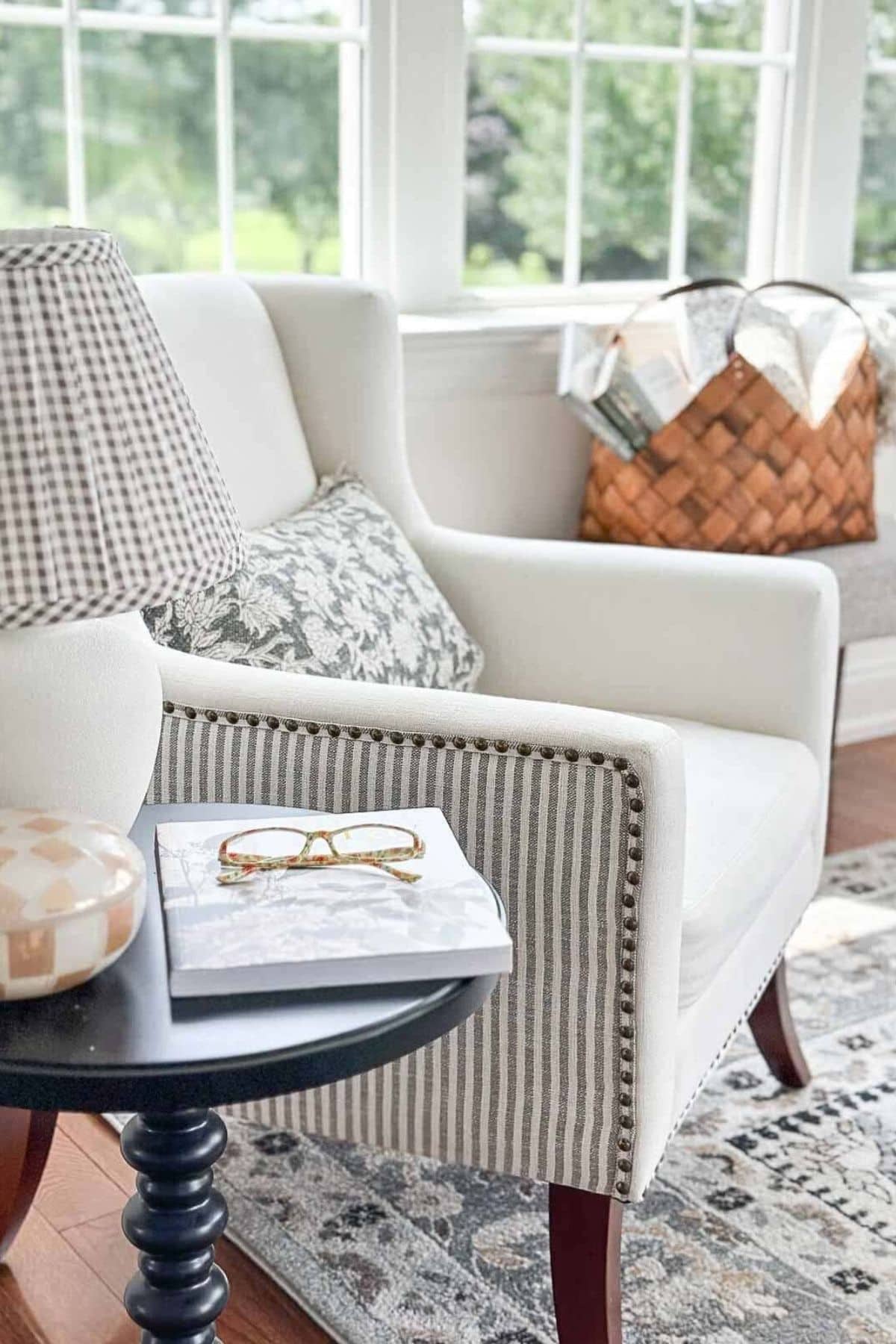
Overhead lighting is flat, and I never use it. It floods a room evenly and efficiently, but it does not create warmth or intimacy. A table lamp does something completely different. It creates a pool of light — a warm, focused glow that draws you in and makes a corner or a surface feel inviting and alive.
Look around your home with fresh eyes. Where are the dark corners that feel a little cold or unfinished? Where do you sit and wish you had better light for reading or relaxing? Where does a surface feel flat and lifeless? Those are your lamp opportunities.
Place a Lamp Where It Visually Makes Sense
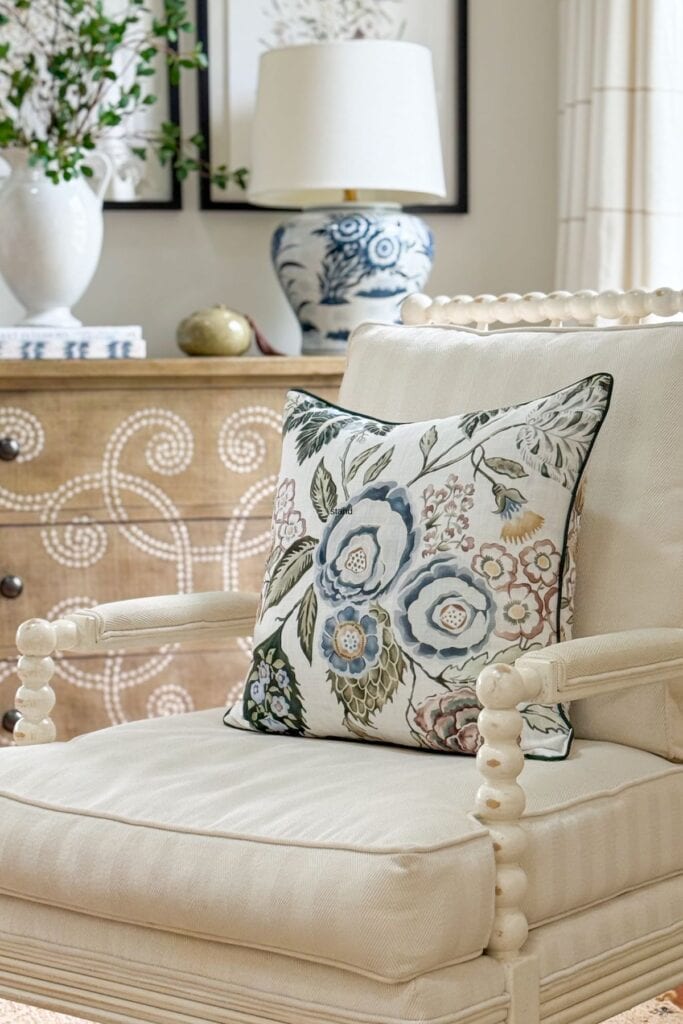
The second question to ask is purely visual. Where would a lamp add something beautiful to the space? Where would it anchor a vignette, balance a room, or bring a surface to life? Lamp placement is as much about how a room looks as it is about how it functions. The best lamp placements do both at the same time.
This is something I think about every time I add a lamp to a new spot in my home. Does it serve a purpose? Does it look right? When the answer to both questions is yes, you have found your spot.
Think Beyond the Obvious — The Kitchen Counter Lamp
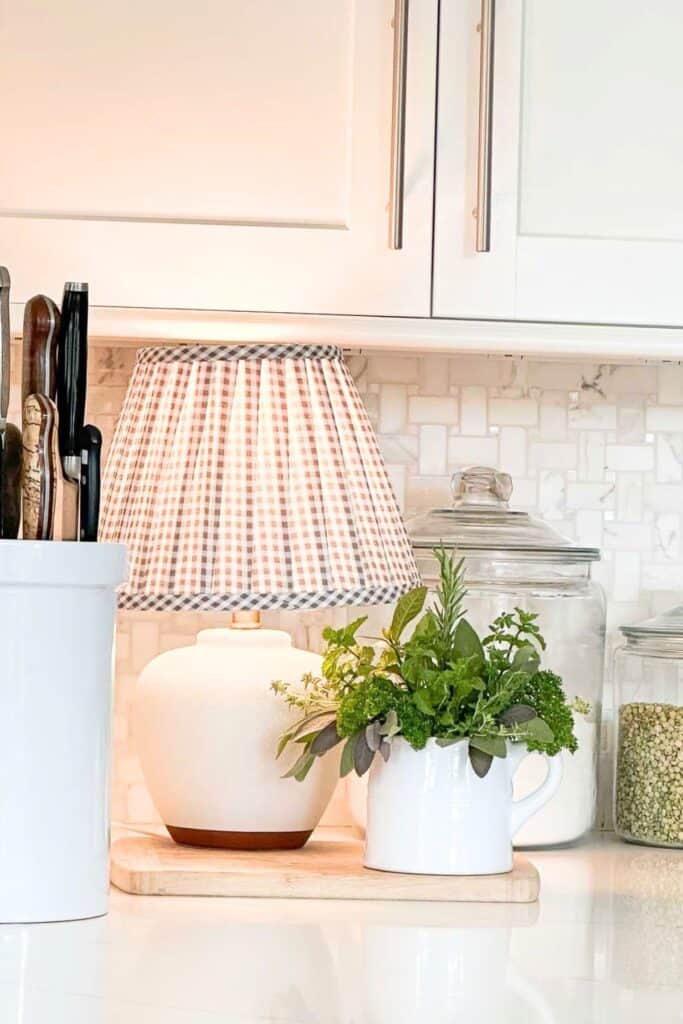
My favorite and most unexpected lamp placement is one I almost talked myself out of — a small lamp on my kitchen counter. And it has become one of my most commented-on and beloved decorating decisions at Tanglewood.
My kitchen is bright and white, but one corner of the counter felt a little cold to me. A little too utilitarian. I wanted something to make it softer, more homey, and to bring a little life into that space. So I tried a small lamp, about 10 to 12 inches tall, with the most charming brown-and-white pleated gingham shade. And it completely changed that corner.
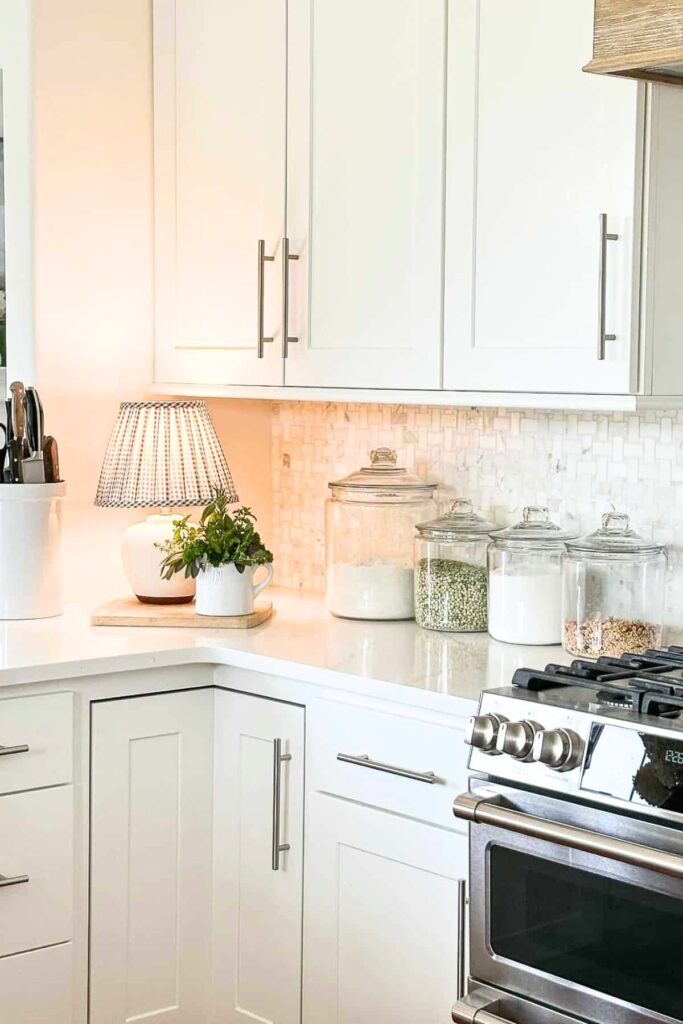
I placed it on a small cutting board, which gave it a textural base and created a little vignette feel. I tucked a white pitcher of fresh herbs from my raised kitchen garden right beside it: rosemary, mint, sage, and whatever else was growing beautifully that week. The warm glow of that little lamp against the white cabinets and marble backsplash is just so cozy and inviting. It is exactly what that corner needed.
🌿 TIP BOX: Do not limit your lamp thinking to traditional furniture surfaces. A small lamp on a kitchen counter, a bathroom shelf, a mudroom table, or even a bookcase can add a pool of warm light and a touch of softness to spaces that tend to feel purely functional. Sometimes the most unexpected placement makes the biggest difference.
How to Style a Lamp Vignette
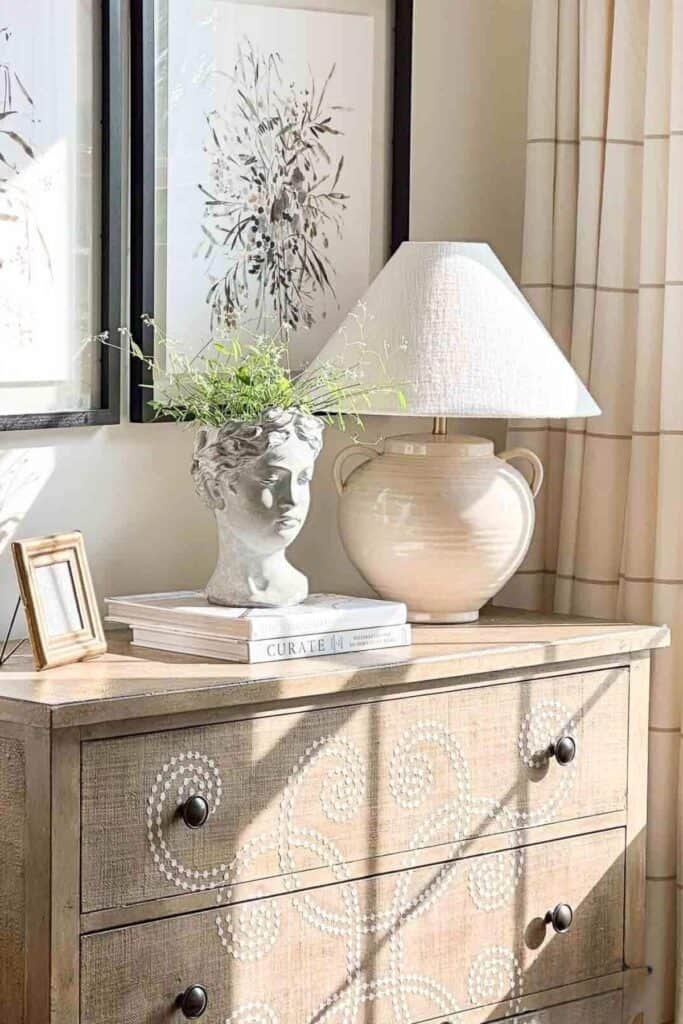
A lamp should rarely stand completely alone on a surface. Unless it is a large, very commanding statement lamp that truly needs nothing around it, a lamp looks its best as part of a vignette. Think of a vignette as a thoughtful grouping of objects that belong together: pieces that complement each other in height, texture, and style to create one beautiful, curated moment in a room.
The key to a great lamp vignette is varying height. Your lamp is almost always the tallest element. Build around it with objects of different heights. Here are a few items I like to use with a lamp
- stack of books
- a small plant or greenery
- a pretty object you love.
- a candle
The eye needs places to travel and rest, and varying height gives it that natural movement.
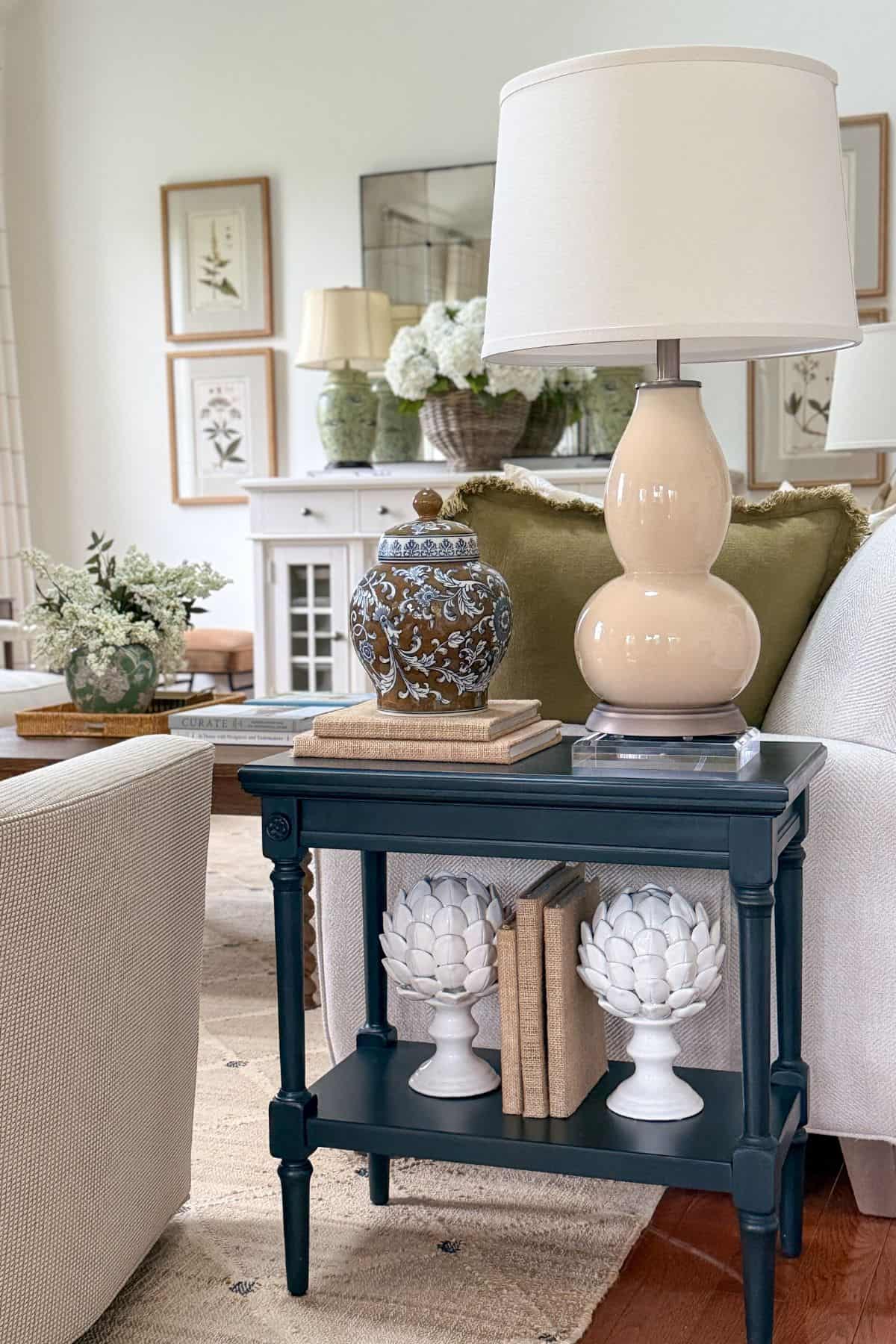
In my living room, I styled the neutral double gourd lamp on a small black end table. Because the table was compact, the lamp occupied much of the surface area. To give the smaller accent pieces enough presence without making the area feel busy, I stacked a couple of decor books under the blue ginger jar.
That little lift made all the difference. The lower shelf of the end table gave me a second surface to decorate lightly with a pair of artichoke finials and a few books, creating an overall vignette that felt complete from top to bottom. Every single element was intentional. The goal was a look that felt curated but casual, collected but not stiff. Something that held its own at the end of the sofa without competing with anything else in the room.
If you love the look of burlap wrapped books and want to make your own, I have a simple DIY right here on StoneGable: How to Make Burlap Wrapped Books
🌿 TIP BOX: When styling a lamp vignette, think in threes. The lamp, one medium height object, and one lower object or grouping creates a natural, pleasing visual rhythm. Keep it simple, keep it intentional, and leave a little breathing room so the vignette feels curated rather than cluttered.
A Quick Word About Lightbulbs
The right lightbulb makes an enormous difference in how a lamp looks and feels in a room, and it is something most people never think about until something feels off. Color temperature is the key. Bulbs with a warm white color temperature — around 2700 to 3000 Kelvin — give off that beautiful, golden, inviting glow that makes a room feel cozy and welcoming. Cooler bulbs, sometimes labeled daylight or bright white, cast a bluish light that can feel clinical and cold, especially in a living space.
🌿 TIP BOX: Always choose warm white bulbs for table lamps in living rooms, bedrooms, and any space where you want warmth and ambiance. Look for bulbs labeled “warm white” or “soft white” (although I feel this is too white for most of my rooms) with a color temperature of 2700 to 3000 Kelvin. This one small detail can completely change the mood a lamp creates in a room.
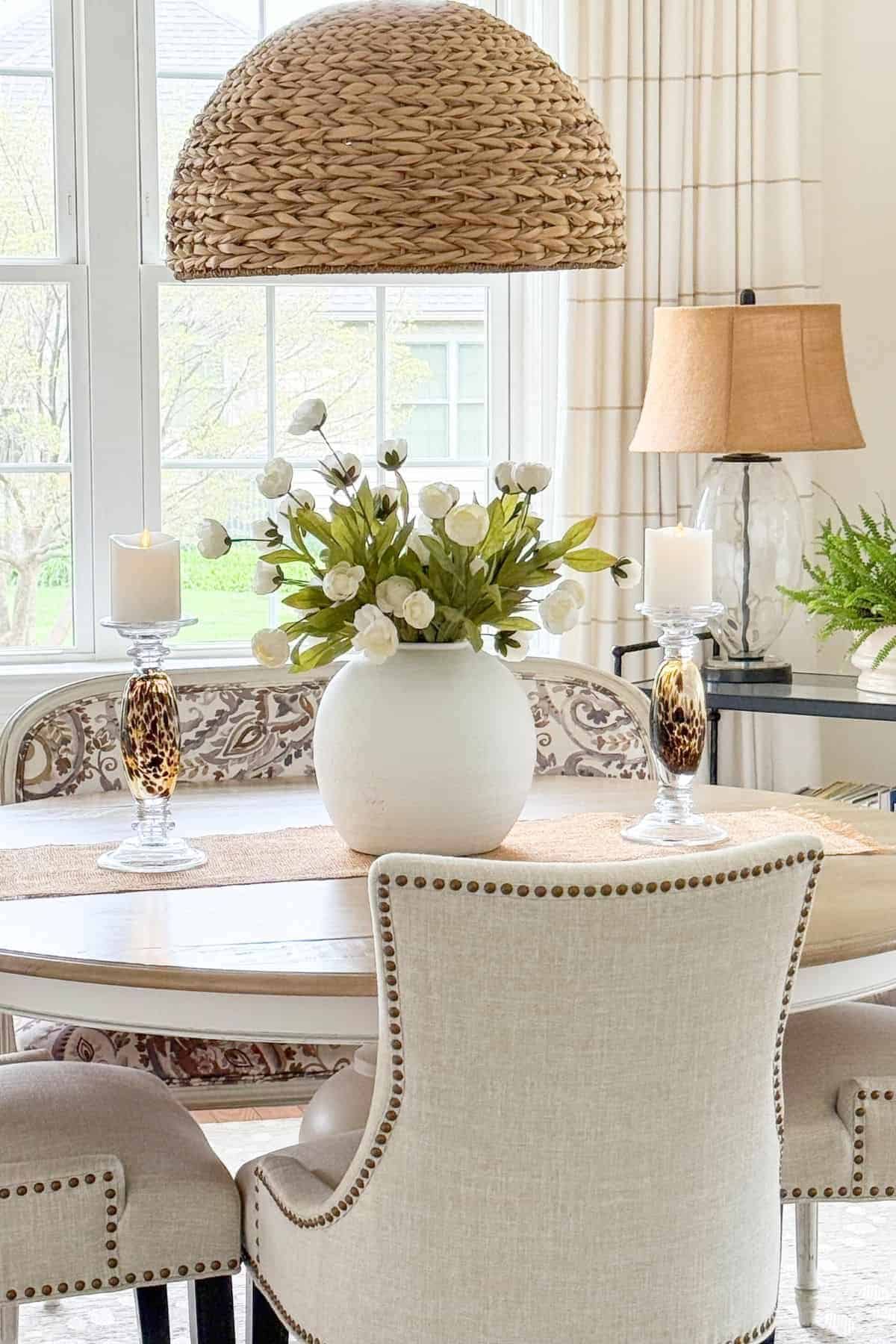
Table lamps are one of the most powerful and personal decorating tools you have. They create warmth, add beauty, tell a story, and when chosen and placed thoughtfully, they make every room in your home feel more finished and alive. From finding the perfect size and scale, to choosing a base and shade you genuinely love, to discovering unexpected placement ideas you never considered before, I hope this post gave you real confidence and lots of helpful tips to look at your own home with fresh eyes.
Take your time when you shop. Know what you need. And do not settle. The right lamp, like my green ginger jar lamps that took months to find, is always worth the wait.
More Beautiful Decorating Ideas for Your Home
Each of these posts features lamps in real room settings, so you will find even more ideas and inspiration for how to use table lamps beautifully throughout your home.
How to Keep a Tidy and Attractive Company Ready Foyer
How to Decorate Your Home on a Budget: Simple Ideas That Really Work
Beautiful decorating does not have to be expensive, and lamps are one of the most affordable ways to add warmth and personality to a room. This post is packed with smart, practical ideas that make a real difference in how your home looks and feels.
How to Develop Your Decorating Eye: 6 Simple Tips to Get Better at Decorating
Learning to see your home the way a decorator does changes everything, including how you choose and place lamps. This post offers six practical, confidence-building tips to help you trust your instincts and decorate with a surer, more beautiful hand.
How to Make Your Home Look Cohesive Using Simple Decorating Ideas
A cohesive home is one where every room feels connected and intentional, and the lamps you choose play a bigger role in that than you might think. This post breaks down one of the most important and often overlooked principles of good decorating in a way that is simple, practical, and immediately useful.
What to Put on a Small End Table
A small end table is one of the most important decorating surfaces in a room, and getting it right makes such a difference. This post walks you through exactly what to place on a small end table for a look that feels curated, balanced, and beautiful every time.
Simple Answers to Common Table Lamp Questions
If you have ever stood in a lighting store feeling completely overwhelmed, you are in very good company. These are the questions I hear most often about table lamps, and I am happy to share what I have learned — sometimes the hard and costly way!
This is so important, and honestly it is the area where I made the most costly mistakes before I learned a few useful measurements. A table lamp should generally be between 24 and 34 inches tall, measured from the base to the top of the shade. When you are seated next to it, the bottom of the shade should fall right at eye level. This keeps the light comfortable and the bulb completely hidden from view. Before you shop, measure your surface and know your numbers. It will save you so much frustration.
The bottom of your lampshade should be at eye level when you are seated next to it. That one measurement changes everything.
In my home, lamps almost always match when placed in pairs on end tables flanking the sofa, on a buffet, or on matching nightstands in a bedroom. My traditional style works best that way, and I love the polished, balanced look it creates. That said, if your style is less traditional or leans toward a cottage feel, mismatched lamps would not only work beautifully but also be charming. My one suggestion is to limit yourself to one mismatched pair per room. More than that and the room can start to feel a little busy and cluttered.
Know your style and let it guide your lamp decisions. There is no single right answer here.
A lampshade that is too small or too large is very easy to notice and very hard to unsee once you do. I have tried to talk myself into liking a lampshade that was the wrong size, and it simply never works. The mistake is just too glaring. As a general rule, the shade should be roughly twice the width of the lamp base (though I often break this rule and say it should be at least a little larger than the base width) and about two-thirds the height of the base. Those two proportions together create a lamp that looks balanced, intentional, and just right.
When in doubt, take your lamp base to the store and try shades on it before you buy.
Ask yourself two questions. First, where do you need a warm pool of light? Second, where would a lamp visually make sense and add beauty to the space? When the answer to both questions is the same spot, that is your place. Do not limit yourself to the obvious surfaces either. Some of the most beautiful and unexpected lamp placements are the ones that make guests stop and smile. My kitchen counter lamp is proof of that.
Walk through your home with fresh eyes and look for corners or surfaces that feel a little flat or cold. That is almost always where a lamp belongs.
For me, the answer is always warm white, every single time. I find that even soft white reads a little too cool and too white for the warm, inviting atmosphere I want in my home. Look for bulbs labeled warm white with a color temperature of around 2700 Kelvin. That warm golden glow is what makes a lamp feel like a lamp rather than an overhead light fixture. It is a small detail that makes an enormous difference in how a room feels at night.
Once you switch to warm white bulbs throughout your home, you will never go back. It is that noticeable a difference.
Happy decorating, friends…

Would you please share a link for the grey/blue lamp that is in the pic under the titled section “place the lamp where you need a pool of light” ? Thank you for your valuable information.
Aren’t they fun lamps! I found them at HomeGoods and they were so inexpensive.You are so welcome, Laura!
Great tips! Thanks! Would add one more – consider spray painting the electrical cord if it contrasts too much with the wall or furniture where you would like to place it. I have some great lamps that came with ugly yellow/gold electrical cords that were really bugging me because they were so distracting. I have spray painted various cords white, brown or black depending on where I have the lamps, so the cord is camouflaged into the wall or furniture. Can always quickly repaint if I ever move the lamp.
PS. I LOVE your organized blog and tips and faith-filled posts. So encouraging!
What a wonderful tip, and not one I have every thought of. Now, I know what to do with my mismatching, ugly cords.
Hello Yvonne !
I too love lamps ! Way back , I received a little white milk glass lamp as a wedding gift ! I found that the only place it would work was on my tiny little apartment kitchen counter !! Many moves later , a lamp , usually now brass , has been on my kitchen counters ! I have noticed my 3 daughters also keep a sweet lamp on one of their counters !! Love it !
Aww, you have passed down a very good idea to your daughters. Many home decorators don’t think about lamps, but they are one of the most important and beautiful items we can add to our homes. Happy Day!
We all need to band together and ask GE to bring back the pink lightbulbs. They make everyone look good. They are also a long lasting lightbulbs, I used them in my living rooms, Family room and bedrooms
I never used pink lightbulbs. Sounds pretty