How To Know What A Room Really Needs
How to know what a room really needs when something feels off, so you can make confident decisions instead of guessing and second-guessing.
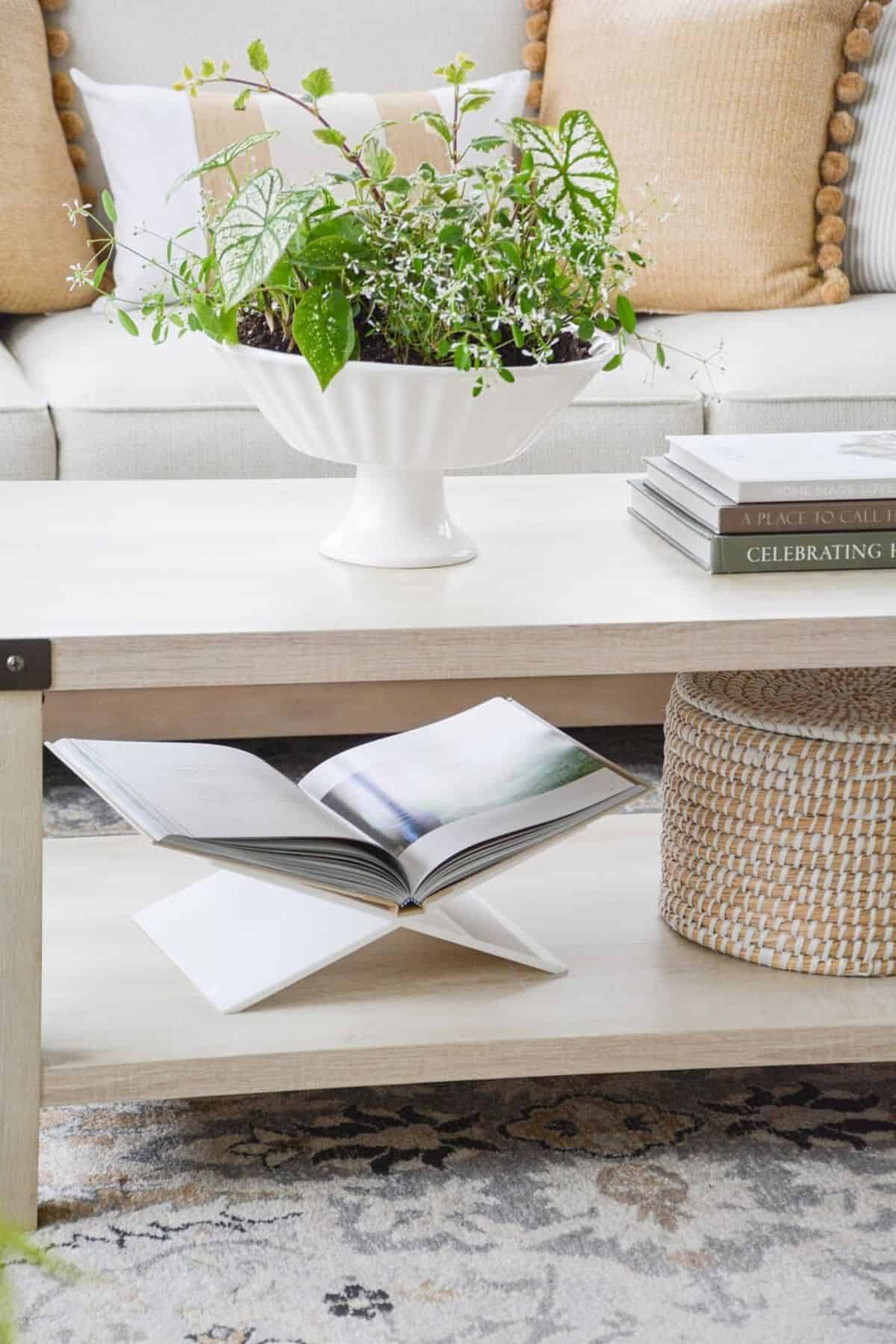
Most of us are not starting with an empty room. We are standing in a space that is already full of furniture, things we chose carefully, and pieces we still like. And yet, something feels off. The room is close, but it is not settled.
That is usually when decorating starts to feel frustrating. You move a chair. You add a pillow. You bring something new into the room, hoping it will be the answer. Sometimes it helps for a little while, but the room still does not feel finished.
I have been there many times in my own home. I learned that the problem is rarely that a room needs more. Most of the time, it needs clarity. Before anything changes, the room is already telling you what it needs. The challenge is learning how to slow down and listen.
Start By Asking One Honest Question
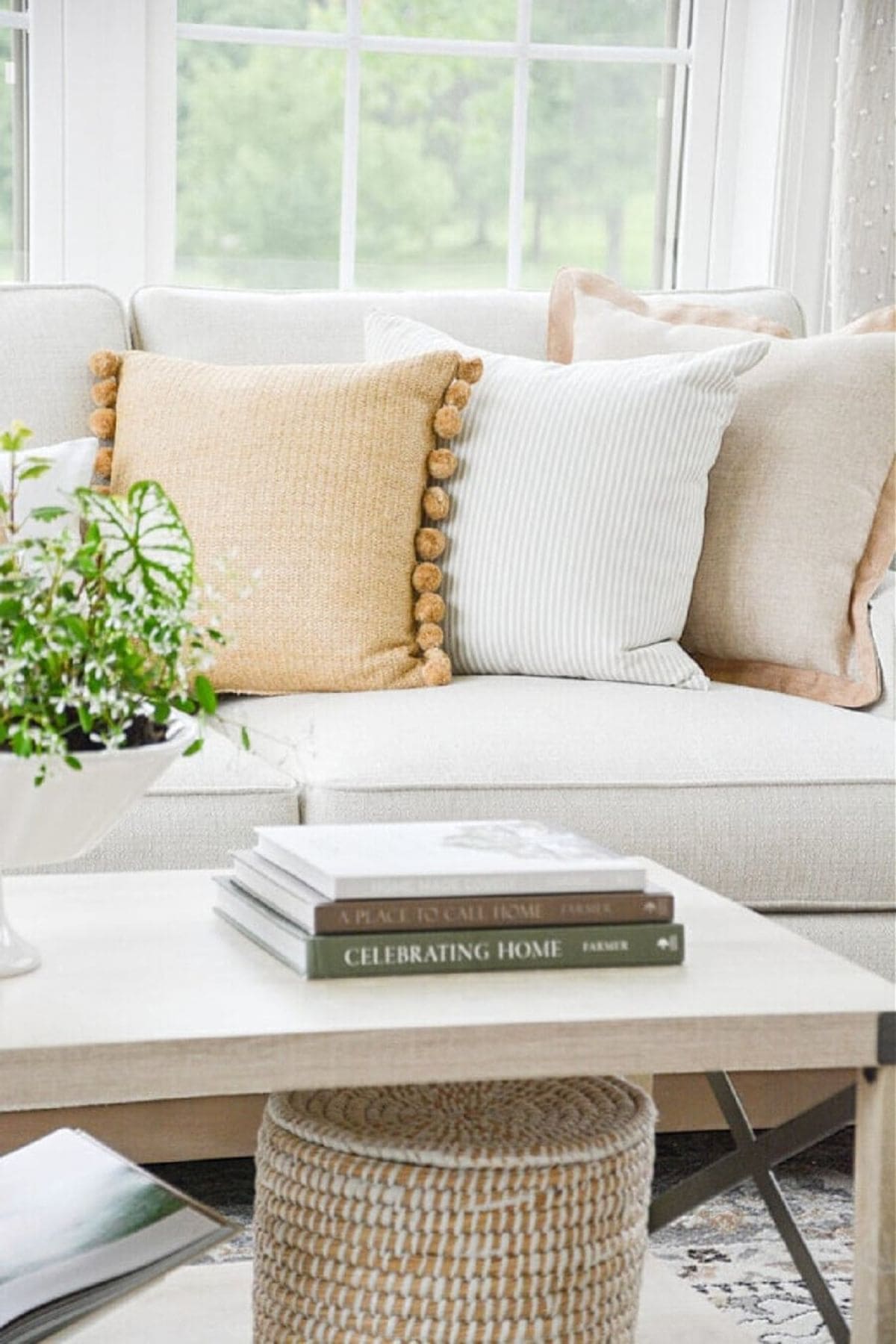
Before I change anything in a room, I stop and ask myself one honest question.
What is not working in this room right now?
Not what I want it to look like someday. Not what I saw online. Just what feels off when I spend time in the space.
This matters because when a room feels unsettled, there is almost always a reason. It might feel crowded. It might feel flat. It might feel heavy on one side or awkward to walk through. Sometimes the room feels fine until you sit down, and then you notice something that bothers you every time.
I have learned not to rush past that feeling. I sit in the room and pay attention to where my eye goes first and where it gets stuck. I notice what I avoid using and what I naturally gravitate toward. Those small observations are clues.
If you are not sure what feels off, sit in the room at different times of day. Morning and evening light often reveal very different issues.
When you name what is not working, you give yourself a place to start. Without that clarity, it is easy to keep moving furniture, buying something new, or changing accessories without ever addressing the real issue.
This one question slows everything down in a good way. It turns decorating from guessing into decision-making. And once you answer it honestly, the room often becomes much easier to understand.
Why A Room Feels Off When You Like The Furniture
One of the most confusing things about decorating is when a room feels off, even though you genuinely like the furniture in it.
This happens more often than you might think.
Most rooms are put together over time. A sofa you loved came first. A chair was added later. A table was moved in from another room. Each piece may be lovely on its own, but that does not always mean they are working well together in that space.
Sometimes the issue is scale. A room can feel unsettled when too many large pieces compete for attention, or when everything sits at the same visual height. Other times it is flow. You may notice that walking through the room feels awkward, or that you never quite know where to sit or place things.
And sometimes, the room is simply trying to do too much. It wants to be a living room, a reading space, and a catch-all area all at once. When that happens, nothing feels quite right.
This is important to understand because it means the problem is not your taste. It is not that you chose the wrong things. The room just needs a little clarity.
Once you see that, decorating becomes less emotional and much more manageable. You stop questioning every decision you have made and start looking at how the pieces relate to each other. That shift alone can make a big difference.
What I Look For First When Furniture Is Already There
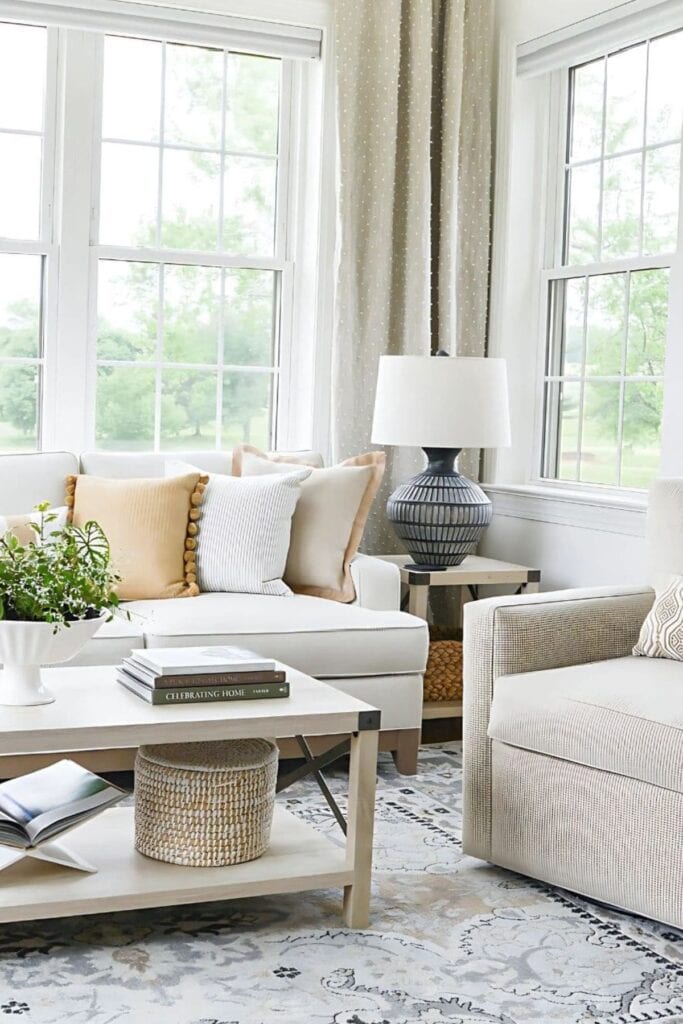
When a room is already furnished, I do not start by thinking about what to add. I start by looking at how the room is actually working.
When I am trying to understand a room with furniture already in it, I look for a few specific things.
- How the room is really being used, not how I think it should be used
- Whether the furniture placement feels easy to move through
- If the visual weight feels balanced or heavy on one side
- Where everything sits in relation to height
When these things are off, a room can feel unsettled even if every piece is one I like. Often, small adjustments using what is already there make a noticeable difference.
Before buying anything new, I want the room to feel calmer and more comfortable just by seeing it clearly.
If you want to understand this more deeply, I wrote a post called “Scale and Proportion: Your Key to Better and Easier Decorating,” which explains why rooms can feel off even when the furniture is good.
How To Decide What Stays And What Changes
This is where decorating can feel tricky. Not because the pieces are bad, but because something about the room feels cold or unsettled.
I always begin with one honest question.
Is this helping the room feel warm and balanced, or is it making the space feel stark?
Let me show you what I mean.
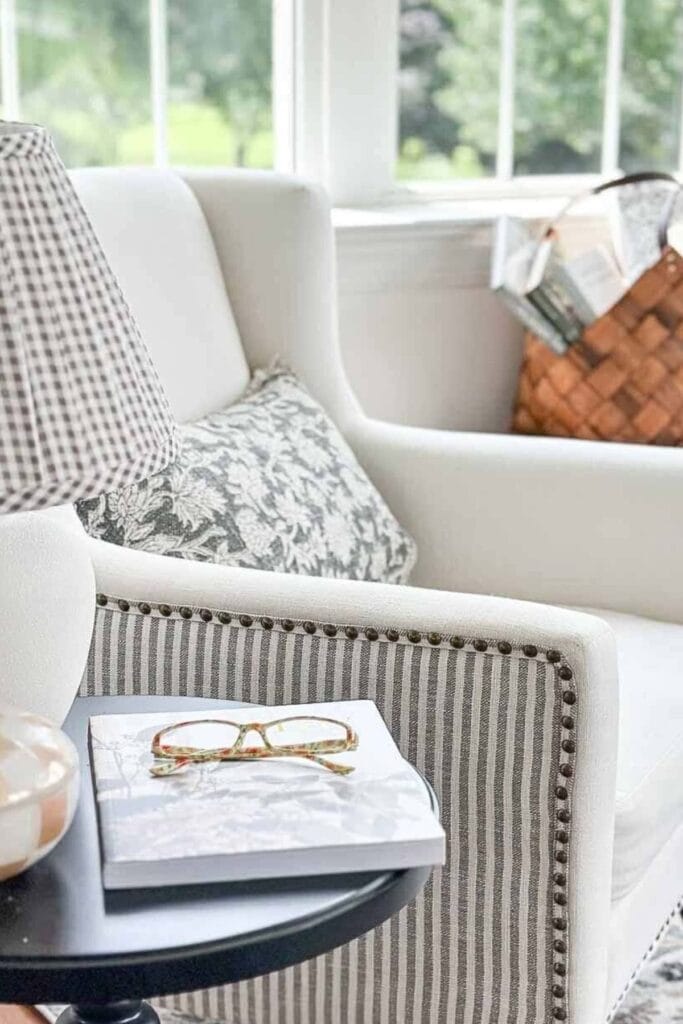
In the first image, the tan chair is comfortable and perfectly fine on its own. But in this space, the combination of the chair, the small black table, and the slim floor lamp feels a little stark. The dark table base and sharper lines create contrast, but not the cozy kind. The corner feels more functional than inviting.
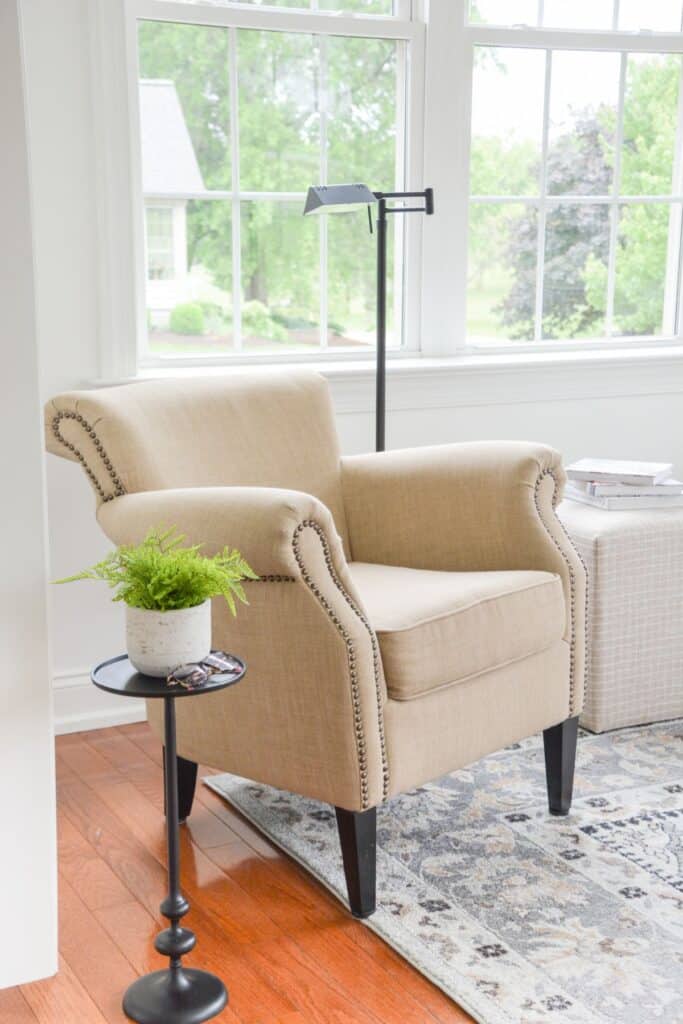
Nothing is technically wrong. But the room does not feel layered or welcoming. It feels slightly unfinished.
Instead of buying something new, I looked around my home and brought in pieces I already owned.
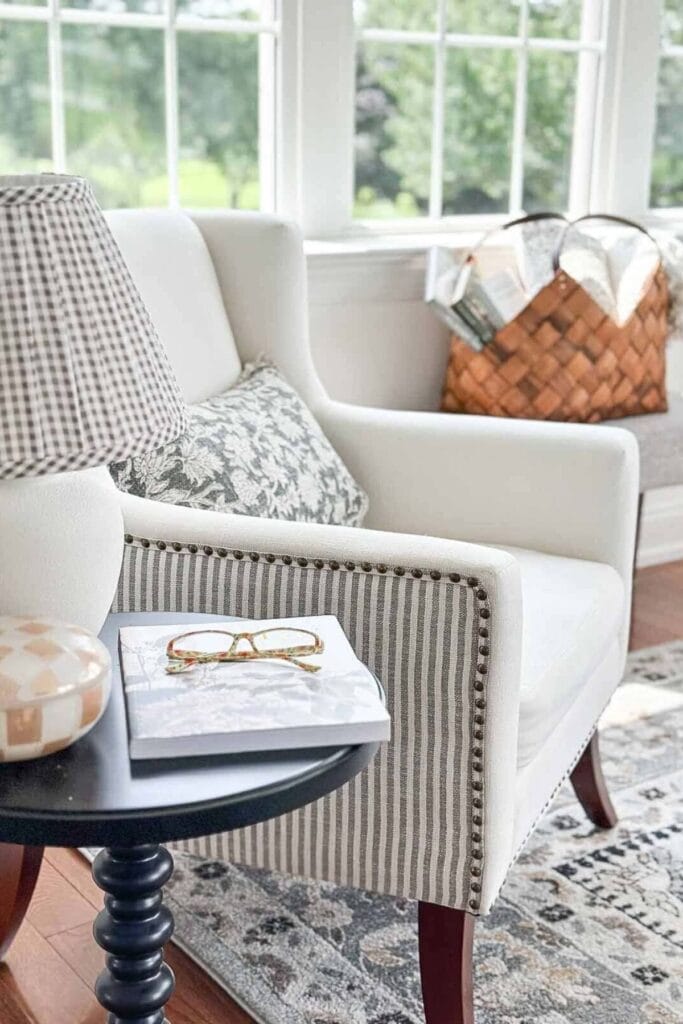
By changing the chair, softening the lines, and adding warmer textures, the whole corner began to feel different. The striped fabric adds movement. The layered pillows bring in pattern and depth. The styling on the table feels intentional rather than sparse.
The space feels warmer and more settled, even though nothing dramatic happened.
That is what deciding what stays and what changes really looks like. It is not about replacing everything. It is about noticing when a space feels cold, flat, or disconnected and asking what small shift could bring warmth and cohesion.
Sometimes that means editing. Sometimes it means rearranging. Sometimes it means pulling something from another room that simply works better.
In this case, the solution was already in my home.
When you start looking at your room through that lens, decorating becomes much less about shopping and much more about choosing wisely.
What To Fix Without Changing Everything
When a room feels off, it is easy to assume something big needs to change. In my experience, starting small usually works best.
When I begin making changes, I almost always work in this order.
- Furniture placement
- Editing extra decor
- Lighting
When a room feels off, start with placement, editing, and lighting before buying anything. Those three changes solve more problems than new decor ever will.
In this small sitting area, the footprint of the furniture stayed mostly the same. There was no room to dramatically rearrange anything. The sofa remained where it was. The rug did not move. The tables stayed within the same general area.
But one small adjustment made a noticeable difference.
In the first image, the chair was positioned more square to the wall. It worked, but it felt slightly closed off. The corner read as separate rather than connected to the rest of the room.
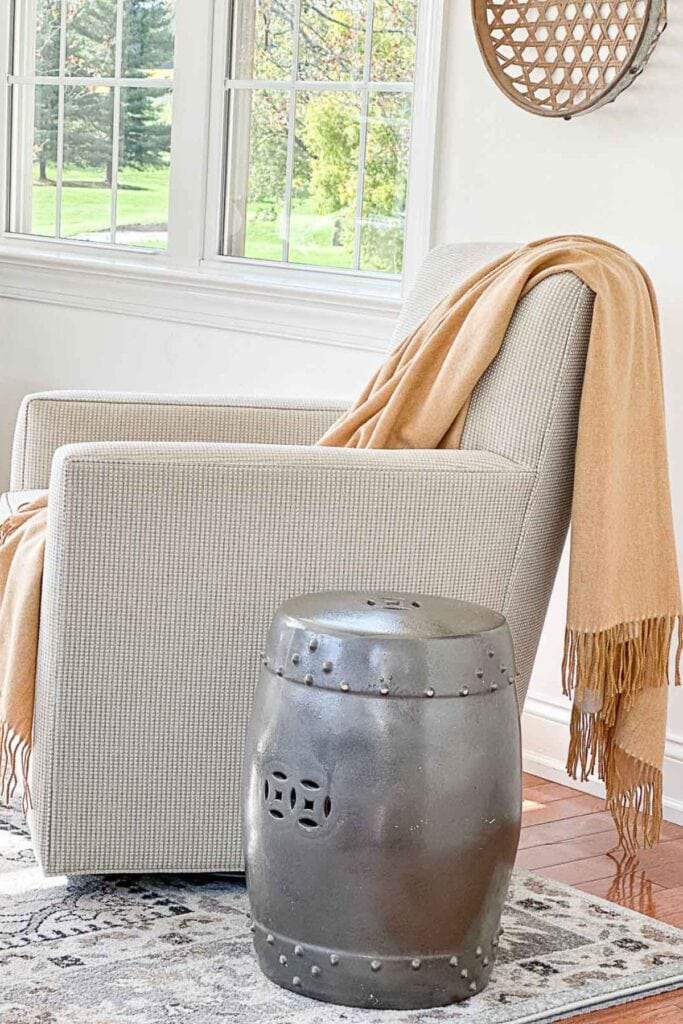
When I moved the chair closer to the coffee table and adjusted its angle slightly, everything changed.
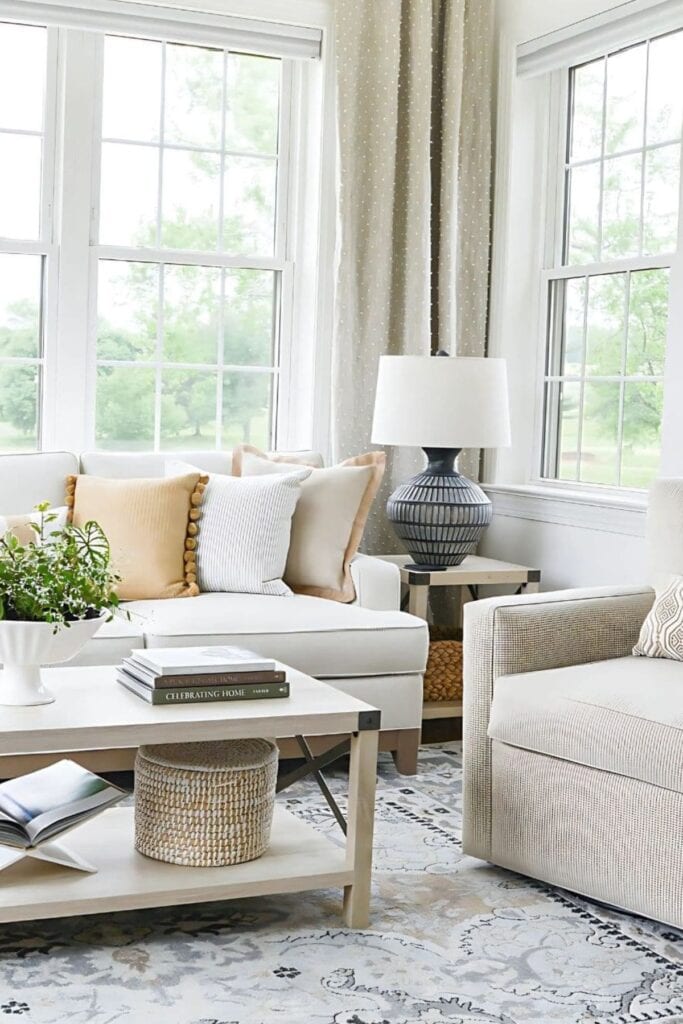
By turning the chair toward the coffee table and sofa, the seating area became more conversational. The room felt more open and intentional. The flow improved without moving anything to a new location.
This is what I mean when I say furniture placement comes first.
In a small room, you often cannot change the footprint. But you can refine it. A few inches forward. A slight turn. A more thoughtful alignment with the rug or coffee table. Those small adjustments help the room feel settled instead of stiff.
When placement supports conversation and movement, the entire space relaxes.
Why Adding More Rarely Solves A Problem
When a room feels unfinished, it is tempting to think it needs one more thing. One more pillow. One more chair. One more accessory. I know I’ve been on that decorating roller coaster.
Most of the time, that extra item only distracts from the real issue.
If a room feels crowded, adding more will not fix it. If it feels flat, another small object rarely changes that. And if the furniture is not working well together, new decor simply compounds the problem.
Your room is probably asking for less. Less clutter. Less competition. Less pressure to make everything work together.
If you feel the urge to add something, try removing one thing first. Often that is what the room is actually asking for.
The coffee table is a perfect example of this.
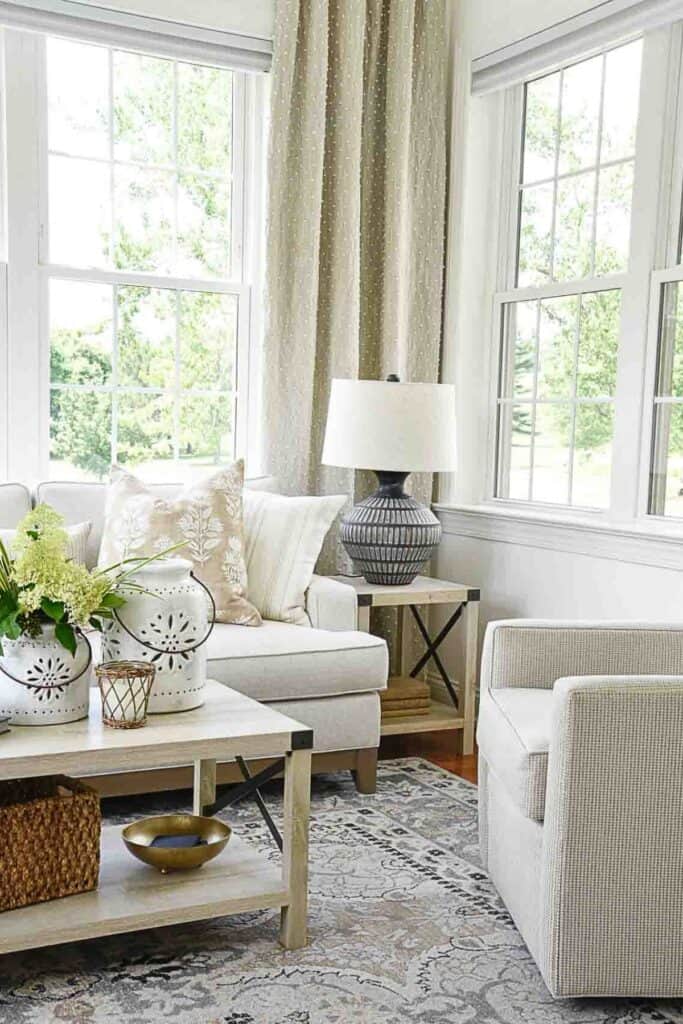
In the first image, the table holds several items. None of them are wrong. Each piece is pretty on its own. But together, they compete for attention. The surface feels busy, and your eye does not know where to rest.
In the second image, fewer items are styled with intention. There is still interest and layering, but the table has breathing room. The space feels calmer and more settled.
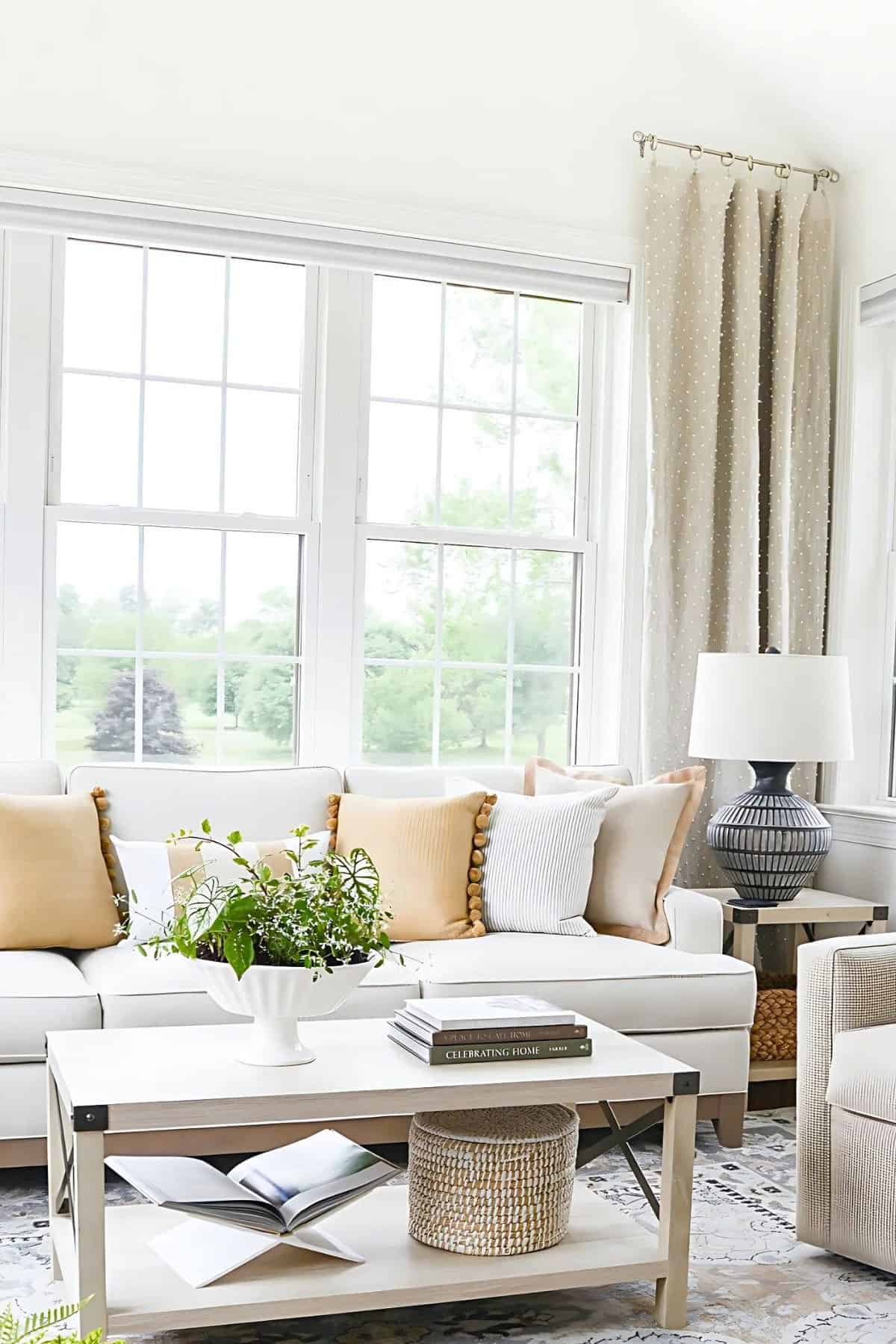
The difference is not that the room needed more decor. It needed less. Editing allowed the strongest pieces to stand out and gave the room clarity.
That is often what a space is asking for.
Once a room has space to breathe, it often feels finished in a way it never did before. And when you add something later, it feels intentional rather than hopeful.
Give Your Room Time To Settle
One of the most helpful things I have learned over the years is to give a room time.
Decorating does not have to happen all at once, and it rarely should. Most rooms come together in layers. You make a few thoughtful changes, live with them for a while, and then notice what the room is asking for next.
When you allow a room to settle, you start to see it more clearly. You notice what you enjoy using and what you do not. You notice whether the space feels comfortable at different times of day. Those small observations are what lead to the best decisions.
I remind myself that a room does not need to be finished to be enjoyed. It just needs to feel comfortable and workable for the season you are in. Over time, rooms evolve naturally, and that is part of what makes a home feel personal.
If there is one thing I hope you take away from this, it is that you do not need to rush or start over to make a room feel right.
Most of the time, the answers are already in the room. They come from paying attention, making a few thoughtful changes, and giving yourself permission to live with those choices for a while.
Helpful Posts To Read Next
A Practical Guide To The Art Of Gracious Living At Home
This post is about slowing down and creating a home that supports everyday living with intention, warmth, and care.
7 Simple Decorating Tips For An Uncluttered Looking Home
Straightforward, practical ideas that help rooms feel calmer and more pulled together without a big overhaul.
10 Minute Decorating Ideas That Make a Real Difference in Your Home
Quick, meaningful changes you can make when time is short, but your room needs attention.
Decorate Your Living Room to Stand the Test Of Time
Thoughtful guidance for creating a living room that feels comfortable, balanced, and lasting rather than trendy.
12 Decorating Rules You Should Never Break (or Almost Never)
A look at the decorating principles that make rooms work, and when it is okay to bend them.
How To Make A Room Feel Personal, Lived In, And Welcoming
Ideas for adding warmth and personality so a room feels like it truly belongs to the people who live there.
Frequently Asked Questions About How To Know What A Room Really Needs
I always tell people to start by paying attention to how the room feels when you are actually using it. Does it feel crowded, awkward, or unsettled? That feeling is not random. It is the room telling you something is not quite working. Once you name what feels off, the room usually becomes much easier to understand.
I almost always start with furniture placement, editing extra decor, and lighting. Those three things have the biggest impact and usually do not require buying anything new. Once those basics are in place, it becomes much clearer whether the room needs anything else at all.
This is very common. Liking individual pieces does not always mean they are working well together in that space. The issue is usually balance, scale, or flow, not your taste. Once those things are addressed, the room often settles quickly.
I stop when the room feels comfortable and easy to live in. If I can sit down without mentally rearranging things, the room is finished for now. That does not mean it will never change, but it does mean it is settled enough to enjoy.
Happy decorating, friends…



Hi Yvonne
Thank you for all the great tips!
I have a narrow living room with a white sofa against the free wall and 2 arm chairs across from the sofa. The coffee table looks off but I am not sure if its size or the room needs a different coffee table. Any suggestions would be greatly appreciated 😊
Hi Linda, I can better help if you send me images in an email. [email protected].
I am saving this for eternity and when I get “that feeling”, I am going to sit quietly and reread this to ground me….and my room!!!! Thank you!!!!❤️
I am memorizing this scripture, Deborah. The Lord is a strong tower, the righteous run into it and are saved.Pro 18:10. This is helpful to me in times of anxiety. God bless you.